Inklingo

case

/KAH-seh/

(that) I marry

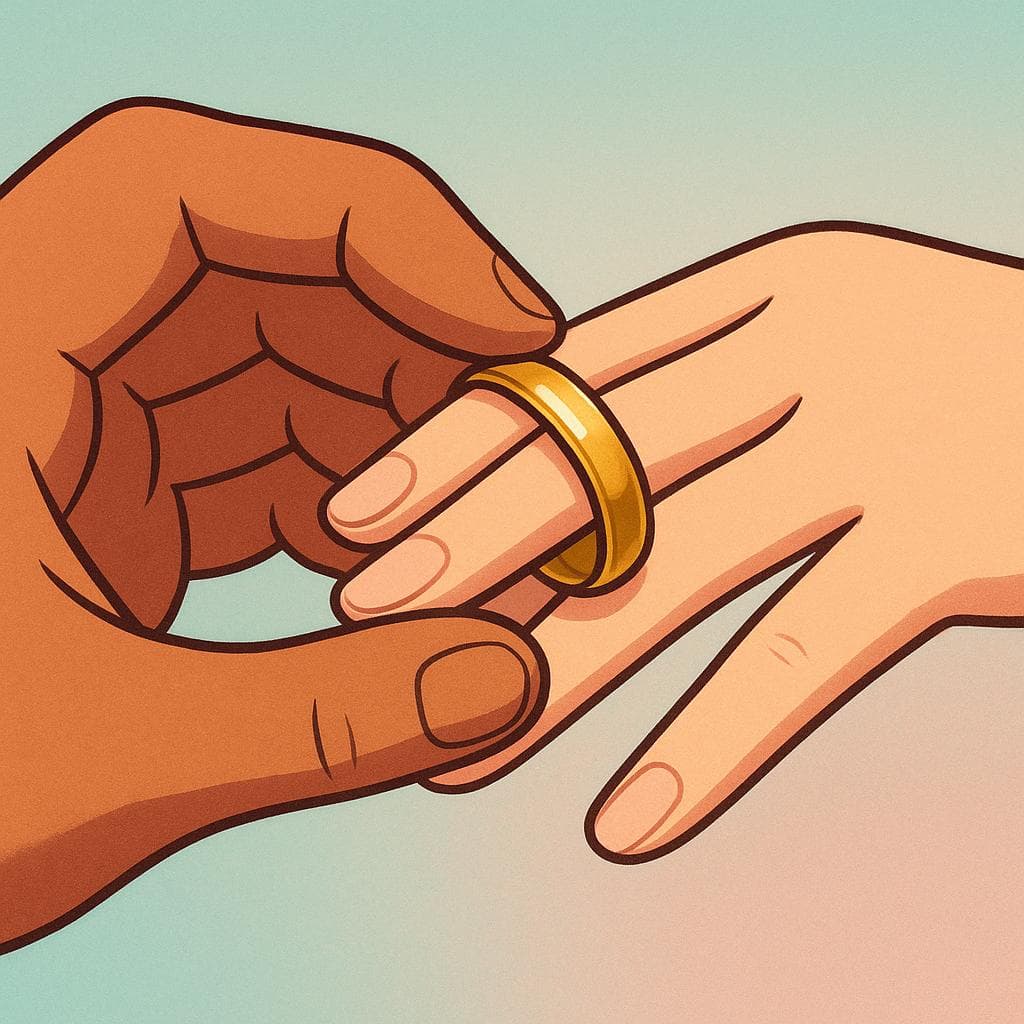
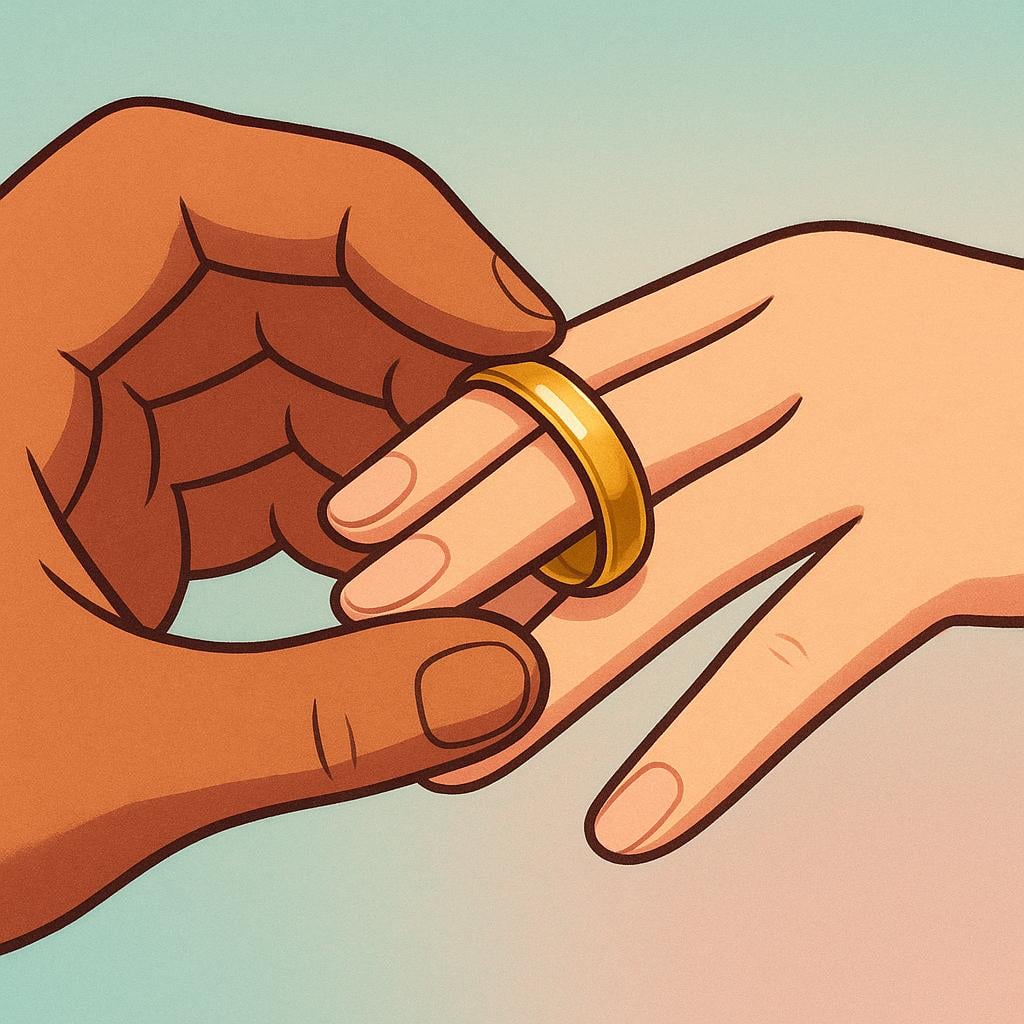
A person's hand sliding a golden wedding ring onto the ring finger of another person's hand.

The image shows the commitment implied by case (that I marry).

case(Verb)

A2regular ar

(that) I marry

?

Present Subjunctive, 1st person singular

,

(that) he/she/it marry

?

Present Subjunctive, 3rd person singular

,

Marry

?

Formal command (Usted imperative)

Also:

get married

?

often used reflexively as 'se case'

📝 In Action

Mi madre quiere que me case con un buen hombre.

A2

My mother wants me to marry a good man.

No creo que ella se case tan joven.

B1

I don't think she will marry so young.

Por favor, oficial, case a la pareja inmediatamente.

B2

Please, officer, marry the couple immediately. (Formal command)

Word Connections

Synonyms

  • unir (to unite)
  • contraer matrimonio (to contract marriage)

Antonyms

  • divorciarse (to divorce)

Common Collocations

  • casarse por la iglesiato marry in church
  • casarse por lo civilto have a civil wedding

💡 Grammar Points

Subjunctive Mood

The form 'case' is used when expressing desire, doubt, emotion, or necessity about someone marrying. This is the special verb form (subjunctive) Spanish uses when the main part of the sentence expresses uncertainty or influence.

Formal Commands

'Case' is also the formal way to tell one person (usted) to perform the action of marrying, often used by a superior or in a ceremony.

❌ Common Pitfalls

Forgetting 'se'

Mistake: "Espero que él case."

Correction: Espero que él se case. (The verb is usually 'casarse' when the subject is the one getting married, meaning 'to marry oneself.')

⭐ Usage Tips

Remember the 'se'

If you are talking about someone getting married (the main event), use the reflexive form 'casarse.' If you are talking about the person performing the ceremony (like a priest or judge), use the non-reflexive 'casar.'

Two brightly colored puzzle pieces fitting together perfectly to form a solid connection.

This image illustrates case meaning (that) it matches, showing two elements fitting perfectly.

case(Verb)

B1regular ar

(that) it matches

?

Present Subjunctive, 3rd person singular

,

(that) it harmonizes

?

Present Subjunctive, 3rd person singular

Also:

(that) it fits

?

Referring to colors or tastes

,

pair with

?

Referring to food and wine

📝 In Action

Dudo que esta camisa case con ese pantalón.

B1

I doubt this shirt matches those pants.

El chef sugirió un vino que case perfectamente con el postre.

B2

The chef suggested a wine that pairs perfectly with the dessert.

Es crucial que el diseño case con la identidad de la marca.

C1

It is crucial that the design fits the brand's identity.

Word Connections

Synonyms

  • combinar (to combine)
  • pegar (to go with (informal))

Antonyms

  • desentonar (to clash)

Common Collocations

  • casar coloresto match colors
  • casar saboresto harmonize flavors

💡 Grammar Points

Subjunctive for Opinion/Doubt

When using 'case' to talk about matching or fitting, it often follows expressions of doubt or opinion (like 'dudo que' or 'no creo que') because the matching is not a definite fact.

⭐ Usage Tips

Formal Alternative to 'Combinar'

While 'combinar' is often used for matching clothes, 'casar' sounds more sophisticated and is preferred in discussions of interior design, cooking, or high-level compatibility.

🔄 Conjugations

indicative

present

él/ella/ustedcasa
yocaso
casas
ellos/ellas/ustedescasan
nosotroscasamos
vosotroscasáis

imperfect

él/ella/ustedcasaba
yocasaba
casabas
ellos/ellas/ustedescasaban
nosotroscasábamos
vosotroscasabais

preterite

él/ella/ustedcasó
yocasé
casaste
ellos/ellas/ustedescasaron
nosotroscasamos
vosotroscasasteis

subjunctive

present

él/ella/ustedcase
yocase
cases
ellos/ellas/ustedescasen
nosotroscasemos
vosotroscaséis

imperfect

él/ella/ustedcasara
yocasara
casaras
ellos/ellas/ustedescasaran
nosotroscasáramos
vosotroscasarais

✏️ Quick Practice

💡 Quick Quiz: case

Question 1 of 2

Which sentence uses the form 'case' correctly to express a wish?

📚 More Resources

Frequently Asked Questions

Why does 'case' sound like 'casa' (house) in Spanish?

They are related! The verb 'casar' (to marry/join) comes from the same root as the noun 'casa' (house), reflecting the ancient idea of marriage being the act of starting a new household.

How do I know if 'case' means 'marry' or 'match'?

Context is key! If the sentence mentions people, weddings, or relationships, it means 'marry.' If it mentions colors, clothing, food, or general compatibility, it means 'match' or 'pair.'