conflicto
“conflicto” means “conflict” in Spanish. It has 2 different meanings depending on context:
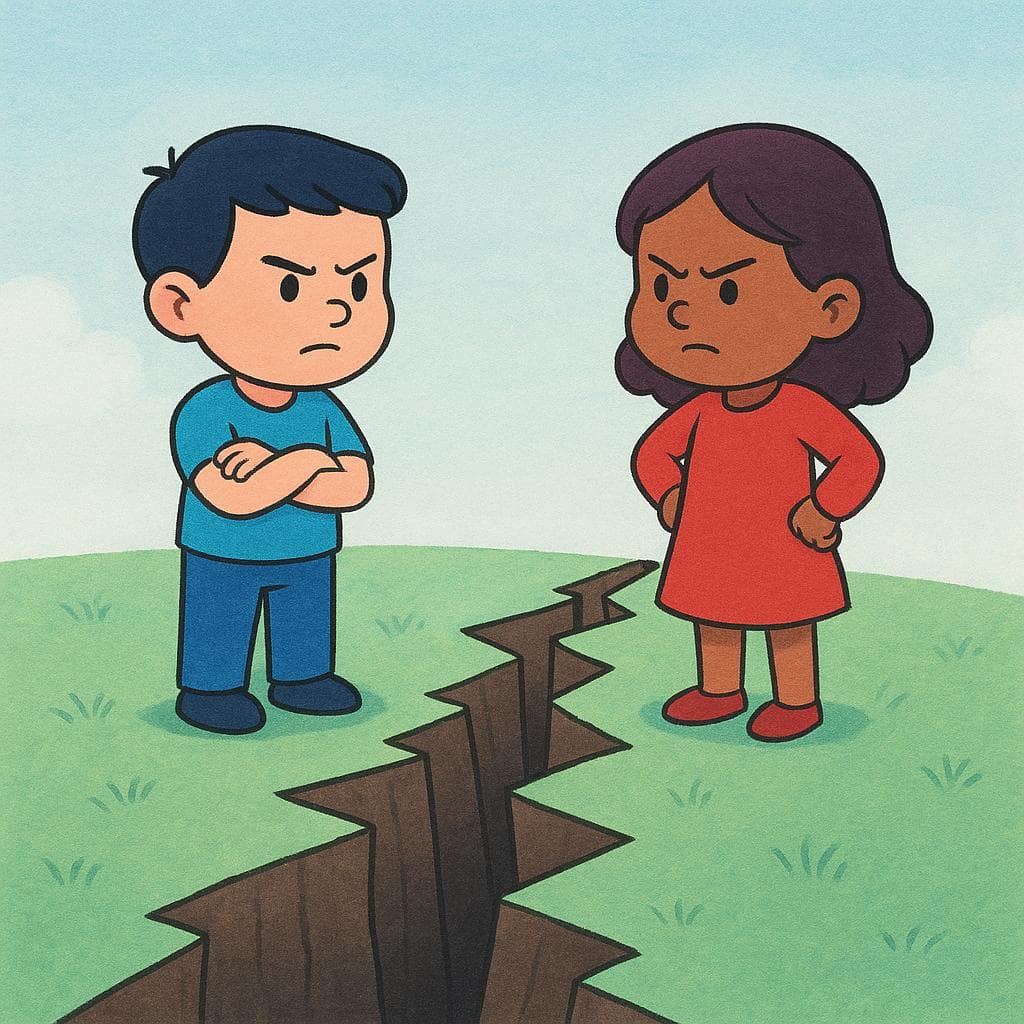

conflictAlso: dispute, struggle
📝 In Action
El conflicto duró varias semanas antes de que llegaran a un acuerdo.
A2The conflict lasted several weeks before they reached an agreement.
Hay un conflicto laboral entre la empresa y sus empleados.
B1There is a labor dispute between the company and its employees.
El país evitó un conflicto armado gracias a la diplomacia.
B2The country avoided an armed conflict thanks to diplomacy.
Word Connections
internal conflictAlso: dilemma, issue

📝 In Action
Sufre de un conflicto interno sobre si debe cambiar de carrera.
B1He suffers from an internal conflict about whether he should change careers.
La novela explora el conflicto entre el deber y el deseo.
C1The novel explores the conflict between duty and desire.
Word Connections
Translate to Spanish
✏️ Quick Practice
Quick Quiz: conflicto
Question 1 of 2
Which sentence uses 'conflicto' in the sense of a large-scale, external struggle?
📚 More Resources
👥 Word Family
🎵 Rhymes
📚 Etymology
The word comes directly from the Latin word 'conflictus,' which means 'a striking together' or 'a struggle.' It has been used in Spanish since the Middle Ages to describe a serious clash or confrontation.
First recorded: 15th century
Cognates (Related words)
💡 Master Spanish
Take your Spanish to the next level. Read 200+ illustrated and narrated Spanish stories tailored to your level with the Inklingo app!
Frequently Asked Questions
¿Es 'conflicto' siempre negativo?
Generalmente sí. 'Conflicto' describe una oposición o desacuerdo serio. Aunque a veces puede llevar a un cambio positivo, la palabra en sí misma implica dificultad o lucha.
¿Cuál es la diferencia entre 'conflicto' y 'problema'?
'Problema' es más general y se usa para cualquier dificultad, grande o pequeña (e.g., 'un problema de matemáticas'). 'Conflicto' casi siempre implica una confrontación entre personas, ideas, o fuerzas (e.g., 'un conflicto familiar').