Inklingo

cría

/KREE-ah/

offspring

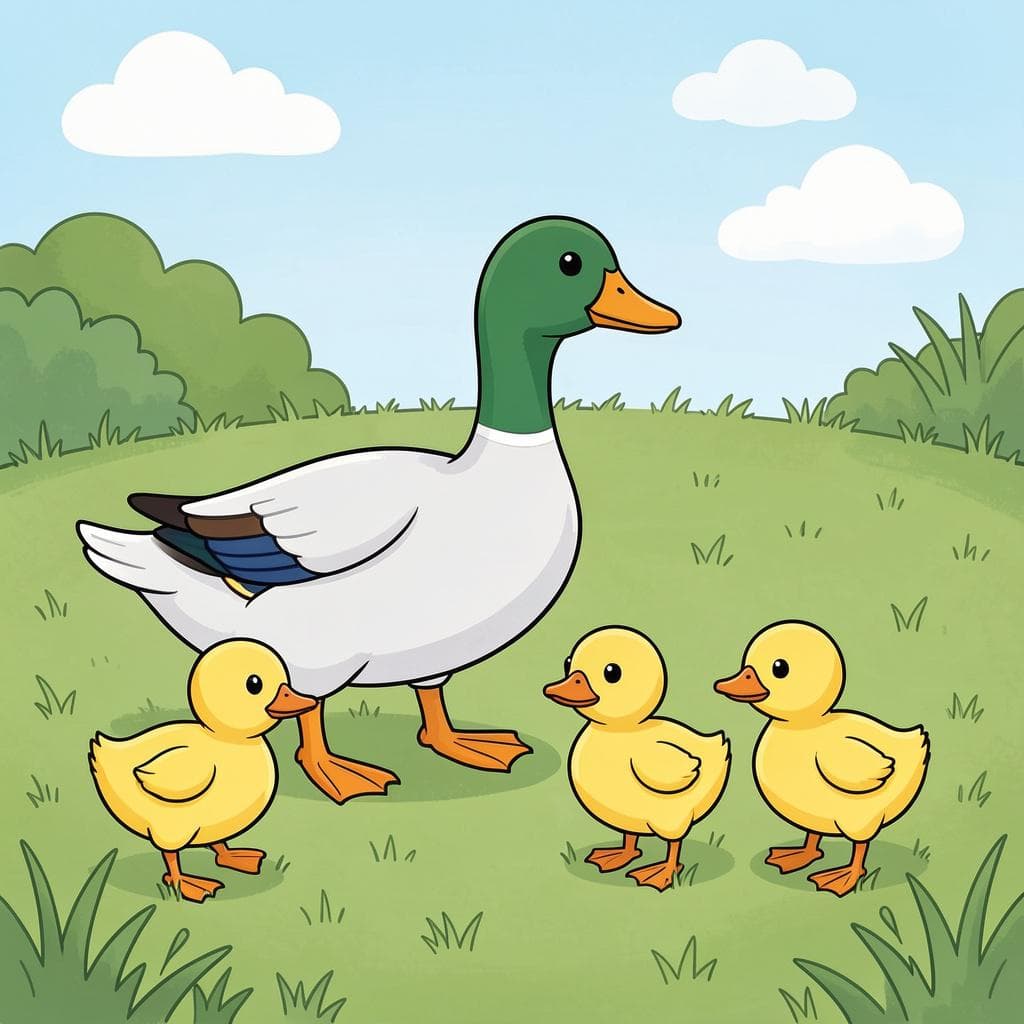
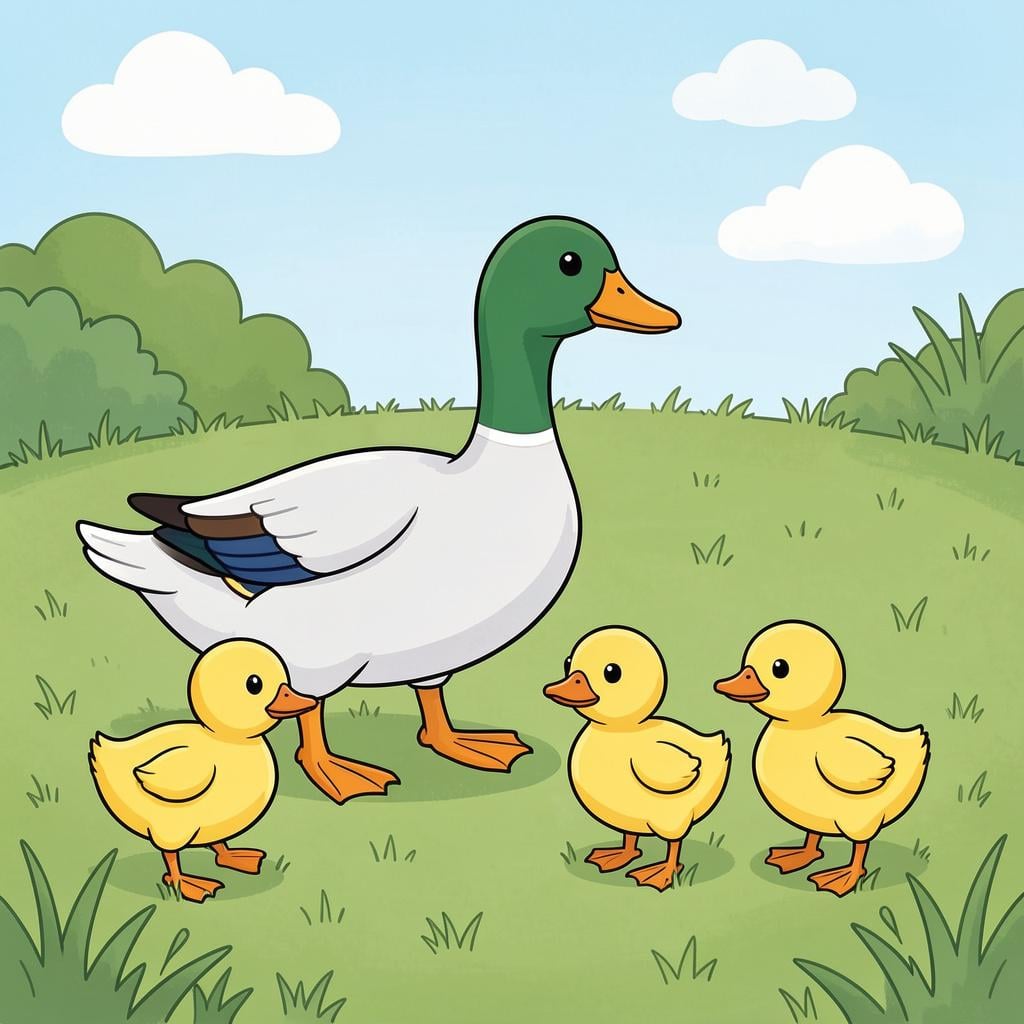
A mother duck followed by a line of small yellow ducklings.

A mother duck with her young offspring.

cría(noun)

fA2

offspring

?

general young of an animal

,

baby animal

?

specifically referring to the young

Also:

cub

?

young of large predators like lions or bears

,

chick

?

young of birds

,

nursling

?

young still being fed by mother

📝 In Action

La leona protege a su cría de los depredadores.

A2

The lioness protects her cub from predators.

Es una cría de apenas dos meses.

A2

It is a baby animal only two months old.

Word Connections

Synonyms

  • retoño (offspring/sprout)
  • cachorro (puppy/cub)
  • vástago (descendant)

Antonyms

  • progenitor (parent)
  • adulto (adult)

Common Collocations

  • en críain breeding season
  • cría de ganadolivestock offspring

💡 Grammar Points

Always Feminine

Even if the baby animal is male, the word 'cría' is always feminine. You would say 'una cría' for both a male and female baby.

❌ Common Pitfalls

Using it for humans

Mistake: "Calling a human baby 'una cría' in a formal setting."

Correction: Use 'bebé' or 'niño' instead. Using 'cría' for humans is very informal and can sometimes sound a bit rough or rural.

⭐ Usage Tips

Natural Sounding

Use 'cría' when you don't know the specific name for a baby animal (like calf or kitten). It's the perfect 'one-size-fits-all' word.

A person in overalls feeding a group of small lambs in a farm pen.

The act of breeding and caring for animals on a farm.

cría(noun)

fB1

breeding

?

the business or act of producing animals

,

rearing

?

the process of raising young

Also:

upbringing

?

less common, referring to raising children

📝 In Action

Mi abuelo se dedicaba a la cría de caballos.

B1

My grandfather was dedicated to horse breeding.

La cría intensiva requiere mucha inversión.

B2

Intensive rearing requires a lot of investment.

Word Connections

Synonyms

  • crianza (upbringing/raising)
  • cultivo (cultivation/farming)

Common Collocations

  • cría de avespoultry farming
  • cría en cautividadbreeding in captivity

💡 Grammar Points

Noun vs. Verb

In this context, 'la cría' is the activity itself (the noun), usually followed by 'de' and the type of animal.

A person kneeling down to help a small child tie their shoelaces.

A person raising and taking care of a child.

cría(verb)

A2regular with accent changes ar

he/she/it raises

?

taking care of children or animals

,

you (informal) raise

?

command form

📝 In Action

Ella cría a sus hijos con mucho amor.

A2

She raises her children with a lot of love.

¡Cría fama y échate a dormir!

B2

Create a reputation and then you can rest! (Idiom)

💡 Grammar Points

The Accent Mark

The 'í' in 'cría' has an accent mark to make sure you pronounce the 'i' and the 'a' as two distinct syllables. Without it, they would blend together.

Wait, no accent in the past?

Even though 'cría' has an accent, the 'I' forms in the past like 'crie' and 'crio' don't have them in modern spelling because they are short, single-sound words.

⭐ Usage Tips

Double Meaning

Remember that 'cría' can mean 'he raises' (a statement) OR 'raise!' (a command to a friend).

🔄 Conjugations

subjunctive

imperfect

ellos/ellas/ustedescriaran
yocriara
criaras
vosotroscriarais
nosotroscriáramos
él/ella/ustedcriara

present

ellos/ellas/ustedescríen
yocríe
críes
vosotroscriéis
nosotroscriemos
él/ella/ustedcríe

indicative

preterite

ellos/ellas/ustedescriaron
yocrie
criaste
vosotroscriasteis
nosotroscriamos
él/ella/ustedcrio

imperfect

ellos/ellas/ustedescriaban
yocriaba
criabas
vosotroscriabais
nosotroscriábamos
él/ella/ustedcriaba

present

ellos/ellas/ustedescrían
yocrío
crías
vosotroscriáis
nosotroscriamos
él/ella/ustedcría

✏️ Quick Practice

💡 Quick Quiz: cría

Question 1 of 2

Which sentence uses 'cría' as a noun meaning 'offspring'?

📚 More Resources

Word Family

criar(to raise/breed) - verb
criatura(creature/baby) - noun

Frequently Asked Questions

What is the difference between 'cría' and 'cachorro'?

'Cría' is a general term for any baby animal (birds, fish, mammals). 'Cachorro' is usually used for dogs, or specifically for the young of large predators like bears, wolves, and lions.

Is it okay to call my child 'mi cría'?

It is very informal and sounds a bit like you are joking or being very 'earthy.' In most cases, it's better to use 'mi hijo' or 'mi niño'.