cómic
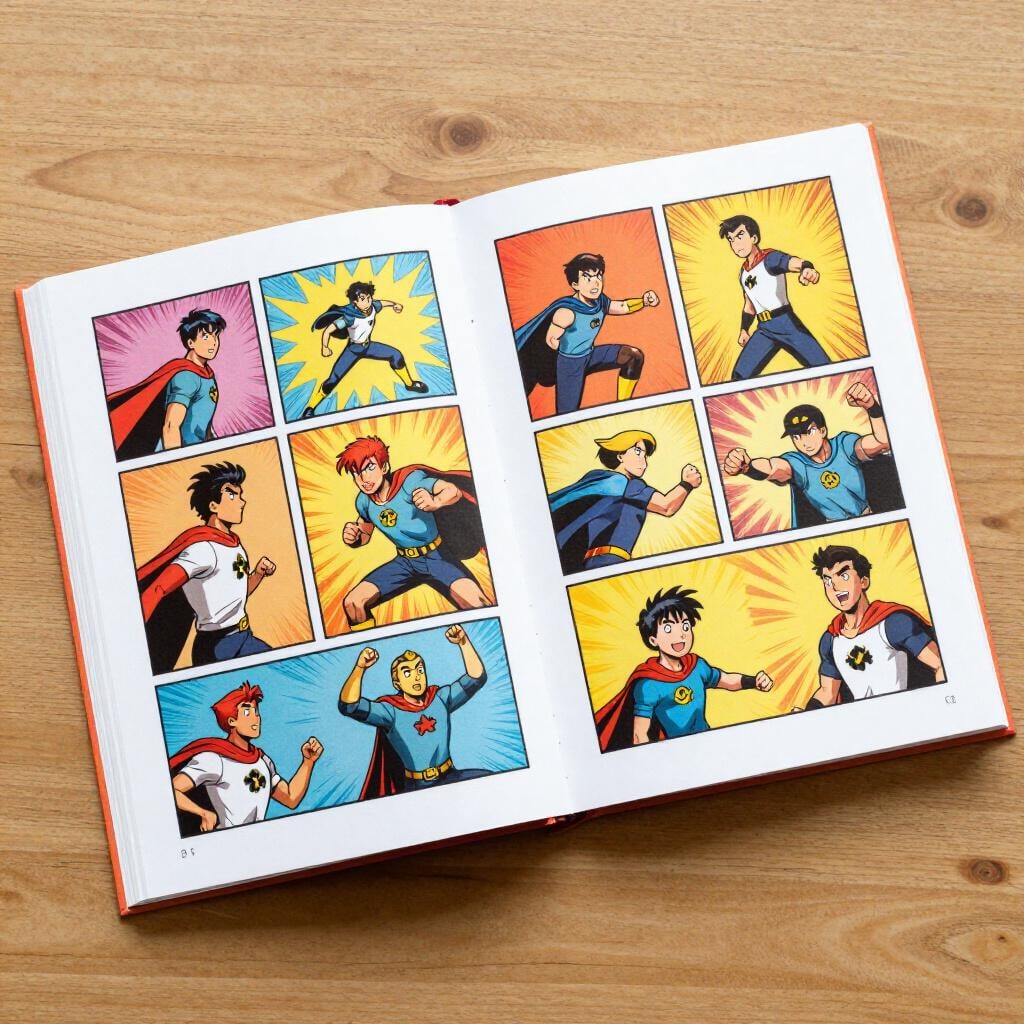
“cómic” means “comic book” in Spanish (a magazine or book that tells a story through pictures).
comic bookAlso: comic strip, graphic novel
📝 In Action
Tengo un cómic nuevo sobre superhéroes.
A1I have a new comic book about superheroes.
Leemos el cómic en el periódico todos los domingos.
A2We read the comic strip in the newspaper every Sunday.
Esta tienda vende cómics antiguos y muy valiosos.
B1This store sells old and very valuable comic books.
Word Connections
Translate to Spanish
Words that translate to "cómic" in Spanish:
✏️ Quick Practice
Quick Quiz: cómic
Question 1 of 3
What is the correct plural form of 'cómic'?
📚 More Resources
👥 Word Family
📚 Etymology
Borrowed directly from the English word 'comic', which comes from the Latin 'comicus', and originally from the Greek 'kōmikos' (relating to comedy).
First recorded: 20th century
Cognates (Related words)
💡 Master Spanish
Take your Spanish to the next level. Read 200+ illustrated and narrated Spanish stories tailored to your level with the Inklingo app!
Frequently Asked Questions
Is 'cómic' masculine or feminine?
It is masculine: 'el cómic' or 'los cómics'.
Can 'cómic' mean a comedian?
No. A comedian is 'un cómico' or 'una cómica'. 'Cómic' only refers to the illustrated book or strip.
What is the difference between 'cómic' and 'historieta'?
They mean essentially the same thing. 'Cómic' is a modern loanword from English, while 'historieta' is a traditional Spanish word.