discúlpenme
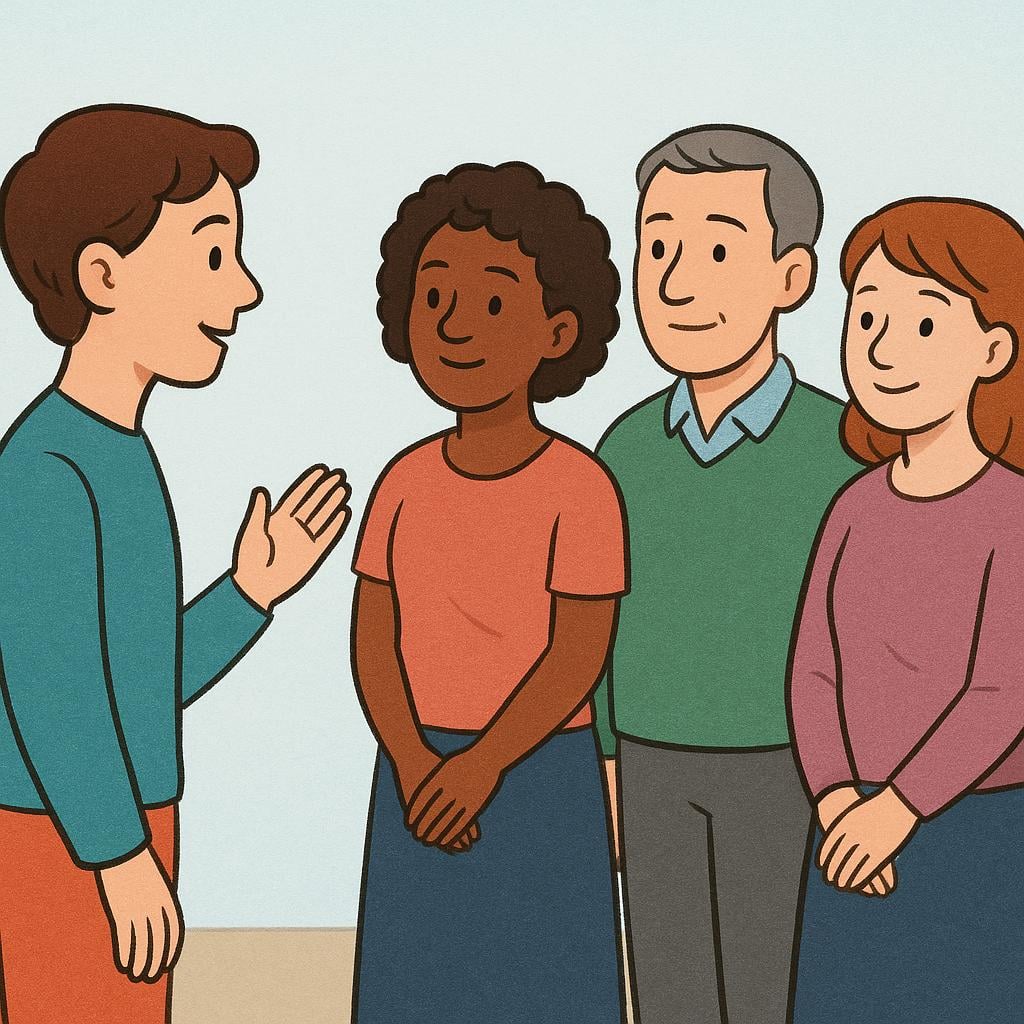
“discúlpenme” means “Excuse me (plural, formal)” in Spanish (Asking a group for attention or permission).
Excuse me (plural, formal), Forgive me (plural, formal)Also: Pardon me (plural, formal)
📝 In Action
Discúlpenme, señores, ¿podrían mover sus maletas?
B1Excuse me, gentlemen, could you move your bags?
Discúlpenme por llegar tarde, el tráfico fue terrible.
B1Forgive me for arriving late, the traffic was terrible.
Word Connections
Indicative
Imperfect
Present
Preterite
Subjunctive
Imperfect Subjunctive
Present Subjunctive
✏️ Quick Practice
Quick Quiz: discúlpenme
Question 1 of 1
If you are talking to your two best friends, which word would you use instead of 'discúlpenme'?
📚 More Resources
👥 Word Family
🎵 Rhymes
📚 Etymology
The verb 'disculpar' comes from the Latin prefix 'dis-' (meaning 'away' or 'apart') combined with 'culpa' (meaning 'fault' or 'blame'). Essentially, it means to remove or clear away the blame.
First recorded: 13th century (as disculpar)
Cognates (Related words)
💡 Master Spanish
Take your Spanish to the next level. Read 200+ illustrated and narrated Spanish stories tailored to your level with the Inklingo app!
Frequently Asked Questions
What is the difference between 'discúlpenme' and 'perdónenme'?
Both mean 'forgive me' or 'excuse me,' addressing a formal group. 'Discúlpenme' is generally softer and more common for interrupting or asking permission. 'Perdónenme' is often used for deeper apologies.
Why does 'discúlpenme' have an accent mark?
The accent mark is needed to preserve the original stress of the verb 'discúlpen' when the pronoun 'me' is attached. Without it, the stress would incorrectly shift to the last syllable.