emborrachar
“emborrachar” means “to make someone drunk” in Spanish. It has 2 different meanings depending on context:
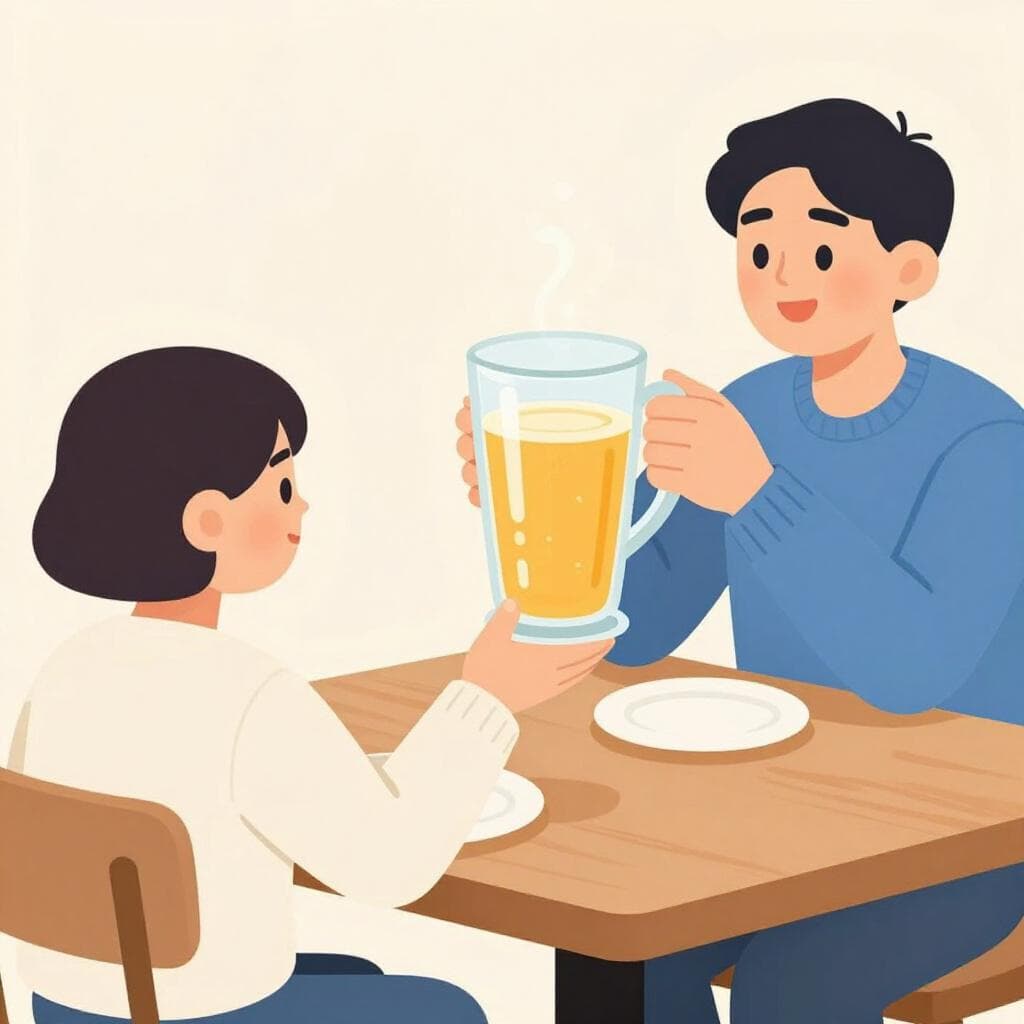

to make someone drunkAlso: to get drunk

📝 In Action
Ese vino tinto es muy fuerte y te va a emborrachar rápido.
B1That red wine is very strong and it's going to make you drunk quickly.
Ellos se emborracharon celebrando la victoria del equipo.
B1They got drunk celebrating the team's victory.
No me gusta emborracharme cuando salgo a cenar.
A2I don't like to get drunk when I go out to dinner.
Word Connections
to soak in alcohol

📝 In Action
Para esta receta, tienes que emborrachar el bizcocho con almíbar y ron.
C1For this recipe, you have to soak the sponge cake with syrup and rum.
Word Connections
Subjunctive
Imperfect Subjunctive
Present Subjunctive
Indicative
Preterite
Imperfect
Present
✏️ Quick Practice
Quick Quiz: emborrachar
Question 1 of 3
How do you say 'I am getting drunk' in Spanish?
📚 More Resources
👥 Word Family
📚 Etymology
Derived from the Spanish word 'borracho' (drunk). The origin of 'borracho' is uncertain but likely comes from the Catalan 'borratxa' or the Latin 'borra' (dregs/sediment found in wine).
First recorded: 16th century
Cognates (Related words)
💡 Master Spanish
Take your Spanish to the next level. Read 200+ illustrated and narrated Spanish stories tailored to your level with the Inklingo app!
Frequently Asked Questions
What is the difference between 'emborrachar' and 'emborracharse'?
'Emborrachar' is used when you make someone else drunk. 'Emborracharse' is used when you get drunk yourself.
Is 'emborrachar' a rude word?
Not inherently, but it's very direct. It describes the physical act of intoxication. Using 'beber demasiado' (drinking too much) is a softer way to describe it.
Does 'emborrachar' have a stem change in conjugation?
No, it is a perfectly regular -ar verb. It follows the same pattern as 'hablar' or 'cantar'.