hablarme
“hablarme” means “to talk to me” in Spanish (Infinitive form, often following another verb).
to talk to me
Also: to speak to me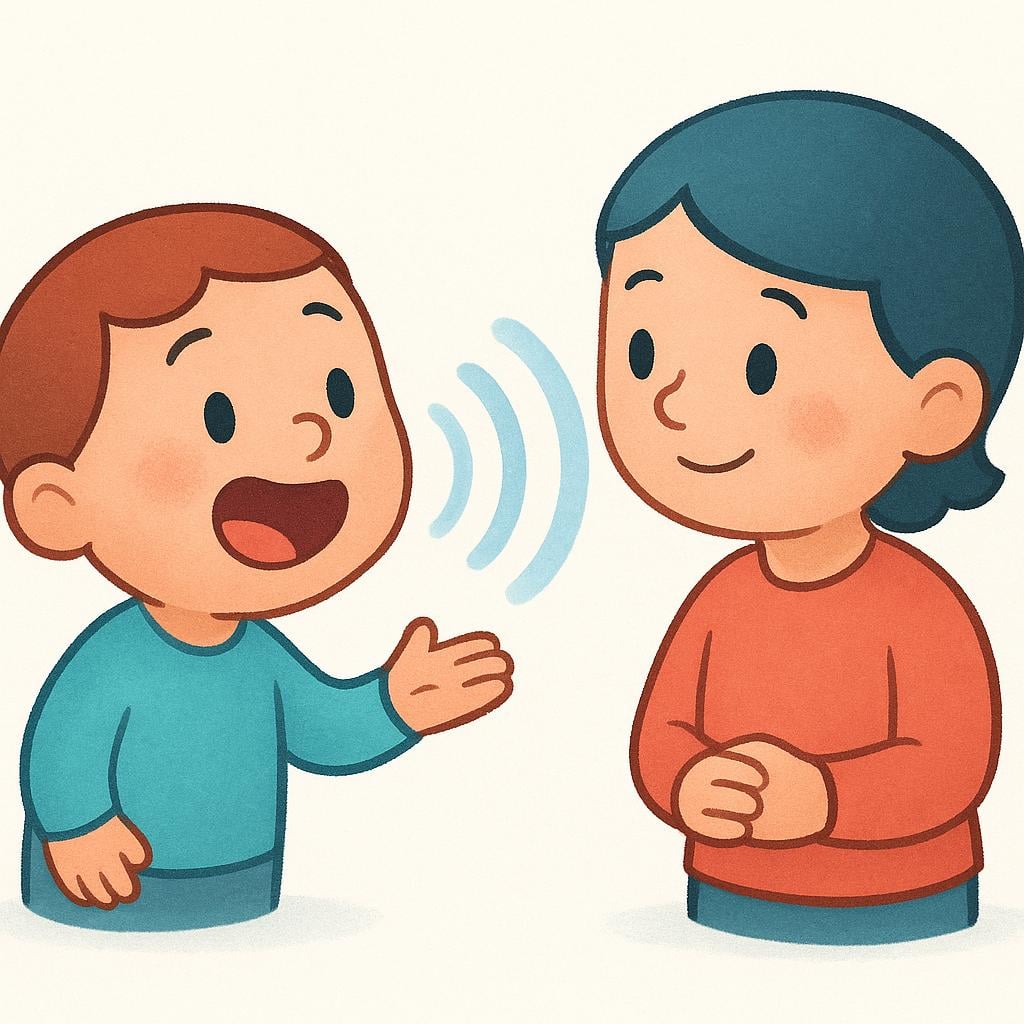
📝 In Action
Necesitas hablarme sobre el problema de inmediato.
A2You need to talk to me about the problem immediately.
¡Deja de gritar y empieza a hablarme con respeto!
B1Stop shouting and start talking to me with respect!
No quiero hablarme de ese tema nunca más.
B2I don't want to talk to me about that topic ever again. (Note: This is often used reflexively/pronominally when the action is directed at oneself, e.g., 'No quiero hablar de ese tema conmigo mismo.')
Indicative
Present
Imperfect
Preterite
Subjunctive
Present Subjunctive
Imperfect Subjunctive
✏️ Quick Practice
Quick Quiz: hablarme
Question 1 of 1
Which sentence correctly uses the pronoun 'me' when the verb 'hablar' is conjugated in the present tense?
📚 More Resources
👥 Word Family▼
📚 Etymology▼
The verb 'hablar' comes from the Latin word 'fabulari,' which meant 'to converse' or 'to chat,' related to 'fable' or 'story.' The 'me' is the short form of the Latin word 'mihi,' meaning 'to me.'
First recorded: The root verb 'hablar' appeared in the Spanish language around the 13th century.
Cognates (Related words)
💡 Master Spanish
Take your Spanish to the next level. Read 200+ illustrated and narrated Spanish stories tailored to your level with the Inklingo app!
Frequently Asked Questions
Why is 'me' attached to the end of 'hablar'?
Spanish attaches object pronouns like 'me' to the end of the verb when the verb is in its basic infinitive form ('hablar'), its '-ing' form (gerund), or when giving a positive command. This makes the phrase shorter and smoother.
How do I use 'hablarme' in a sentence?
You usually use 'hablarme' after another conjugated verb that sets up the action. For example: 'Necesitas hablarme' (You need to talk to me) or 'Voy a hablarme' (I am going to talk to myself/to me, though this is rare).