hacerla
“hacerla” means “to do it” in Spanish. It has 2 different meanings depending on context:


📝 In Action
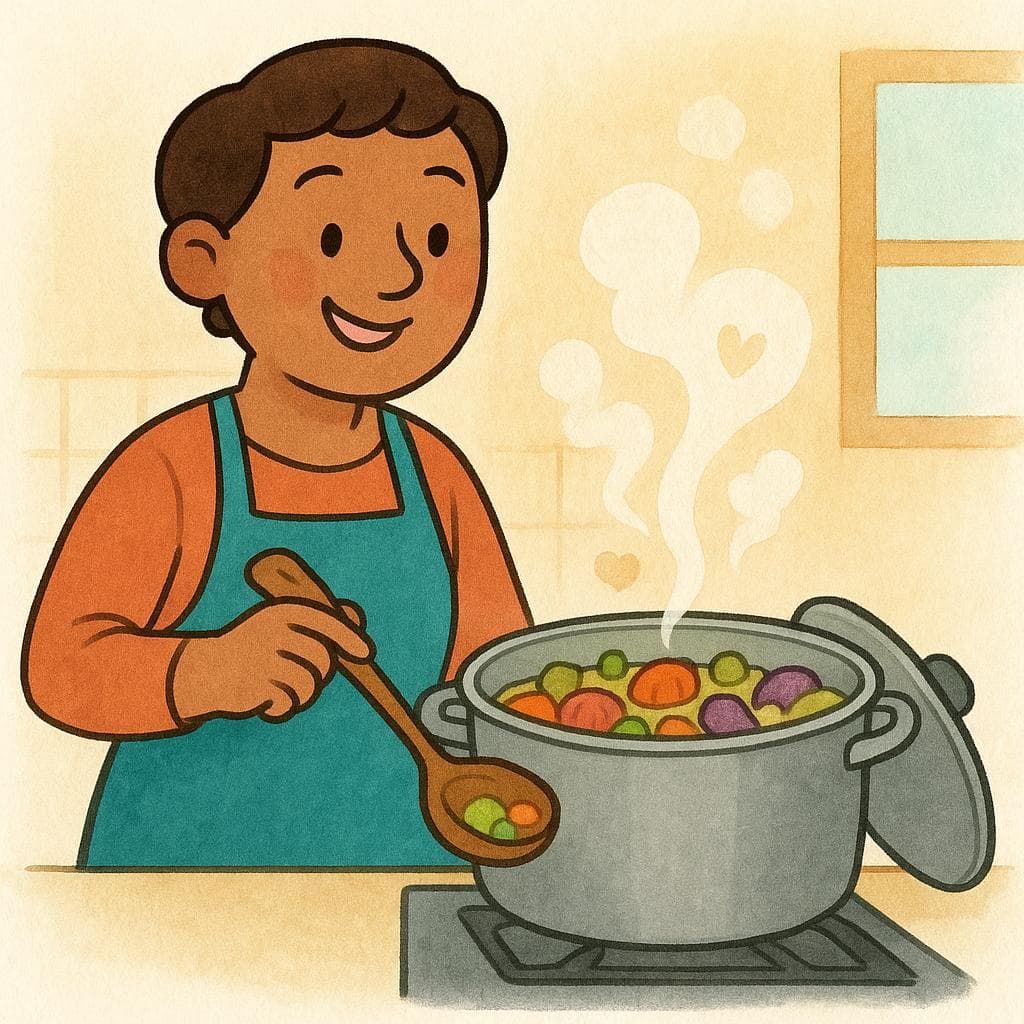
La cena está lista. ¿Vas a hacerla ahora?
A1Dinner is ready. Are you going to make it now?
La tarea es difícil, pero tengo que hacerla antes de medianoche.
A2The homework is difficult, but I have to do it before midnight.
No te preocupes por la reserva, ya estoy haciéndola.
B1Don't worry about the reservation, I am already making it.

📝 In Action
El examen era muy difícil, pero creo que la hice.
B1The exam was very difficult, but I think I succeeded (I pulled it off).
Si trabajas duro, vas a hacerla en esta compañía.
B2If you work hard, you are going to make it (succeed) in this company.
Llegamos tarde, pero logramos hacerla y entrar al concierto.
B2We arrived late, but we managed to make it and get into the concert.
Indicative
Present
Imperfect
Preterite
Subjunctive
Present Subjunctive
Imperfect Subjunctive
Translate to Spanish
Words that translate to "hacerla" in Spanish:
to succeed→✏️ Quick Practice
Quick Quiz: hacerla
Question 1 of 2
Which sentence uses 'hacerla' in its idiomatic sense (to succeed)?
📚 More Resources
📚 Etymology▼
'Hacerla' is formed by combining the Latin-derived verb *hacer* (from Latin *facere*, meaning 'to do' or 'to make') with the feminine direct object pronoun *la* (from Latin *illam*, meaning 'that one'). The literal meaning is ancient, but the idiomatic meaning ('to succeed') developed much later in modern Spanish usage.
First recorded: The base verb 'hacer' dates back to the 10th century, but the idiomatic use of 'hacerla' is a modern phrasal development.
Cognates (Related words)
💡 Master Spanish
Take your Spanish to the next level. Read 200+ illustrated and narrated Spanish stories tailored to your level with the Inklingo app!
Frequently Asked Questions
Why is the word written as one word ('hacerla') sometimes, but separated ('la hago') other times?
'Hacerla' is written as one word only when the verb is in its basic, unconjugated form (the infinitive), the gerund ('haciéndola'), or an affirmative command ('hazla'). In all standard tenses (present, past, future), the pronoun 'la' must separate and be placed before the verb ('la hago', 'la haré').
Does 'hacerla' always mean 'to succeed'?
No. Its primary, foundational meaning is the literal 'to do/make it,' where 'it' is a feminine noun like 'the job' or 'the dinner.' The meaning 'to succeed' is an idiomatic extension common in informal Spanish, where 'la' doesn't refer to a physical object but to the general goal or situation.