Inklingo

hacernos

/ah-SEHR-nos/

to make ourselves

Two smiling children standing side-by-side flexing their arms strongly and confidently, illustrating the concept of making themselves strong or ready.

The reflexive meaning of "hacernos" is "to make ourselves." These children are making themselves strong!

hacernos(Verb)

A2irregular (stem change, initial 'g', and full irregularity in preterite/future) er

to make ourselves

?

Reflexive action resulting in a state or identity

,

to become

?

Used for gradual or intentional change

Also:

to get (used to something)

?

When used with 'a' (hacernos a)

📝 In Action

Queremos hacernos millonarios antes de los 40.

B1

We want to make ourselves millionaires before 40 (or: We want to become millionaires).

Es difícil hacernos a la idea de que ya no está aquí.

B2

It's difficult for us to get used to the idea that he is no longer here.

Vamos a hacernos responsables del proyecto.

A2

We are going to make ourselves responsible for the project (or: We are going to take responsibility).

Word Connections

Synonyms

  • volverse (to become (often sudden change))
  • convertirse (to turn into)

Common Collocations

  • hacernos amigosto become friends
  • hacernos mayoresto grow up/get older

💡 Grammar Points

The 'nos' is part of the verb

When 'hacernos' is used, the 'nos' means 'ourselves.' It's like saying 'to make ourselves' or 'to become ourselves.' This is the reflexive form of the verb.

Placement of the Pronoun

When you have two verbs (like 'querer' + 'hacernos'), the pronoun 'nos' usually sticks to the end of the second verb (the infinitive), or it can be placed before the conjugated verb: 'Nos queremos hacer' or 'Queremos hacernos'.

❌ Common Pitfalls

Confusing 'Hacer' and 'Hacerse'

Mistake: "Usar 'hacer' cuando significa 'to become' (e.g., 'Hacemos doctores')."

Correction: Use 'hacernos' (or 'hacerse' in general) for transformation or identity: 'Vamos a hacernos doctores' (We are going to become doctors).

⭐ Usage Tips

Becoming Something

Use 'hacerse' when the change is often intentional, gradual, or related to profession/identity. Think of it as 'making yourself' into something.

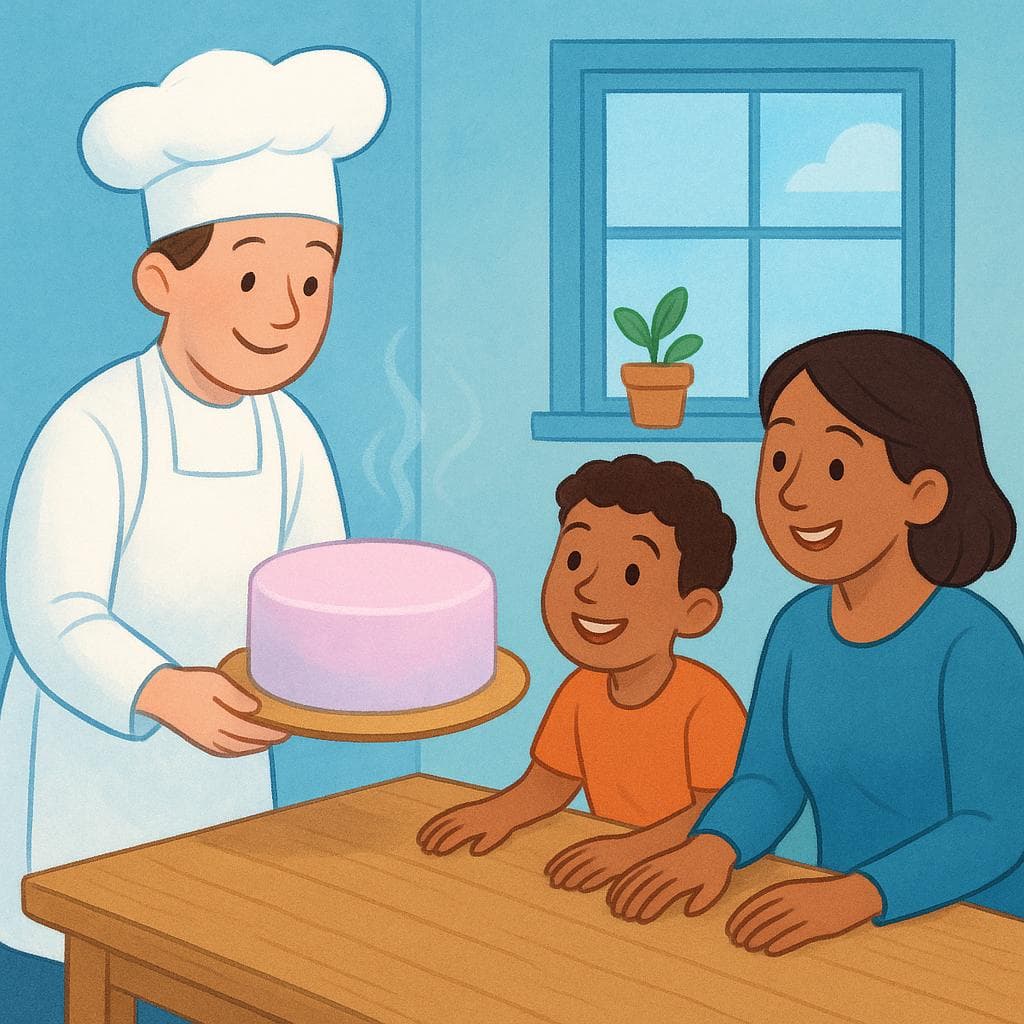
A friendly chef is placing a freshly baked cake onto a small dining table where two people are sitting eagerly waiting for the food.

This meaning of "hacernos" translates to "to make for us," as when a chef makes a delicious meal for us.

hacernos(Verb)

A1irregular er

to make for us

?

Indirect object (e.g., making a meal for us)

,

to do for us

?

Indirect object (e.g., doing a favor for us)

Also:

to cause us

?

When describing emotional effect (e.g., causing us to laugh)

📝 In Action

Necesitas venir a hacernos la comida hoy.

A1

You need to come and make lunch for us today.

¿Puedes hacernos un favor muy grande?

A1

Can you do a very big favor for us?

Sus chistes siempre logran hacernos reír.

B1

His jokes always manage to make us laugh.

Word Connections

Synonyms

  • prepararnos (to prepare for us)
  • ayudarnos (to help us)

Common Collocations

  • hacernos un caféto make us a coffee
  • hacernos sentirto make us feel

💡 Grammar Points

The 'nos' means 'to us'

In this case, the action of 'hacer' (to do/make) is directed 'to us.' The 'nos' is the indirect object, telling you who benefits from the action.

Indirect Object vs. Direct Object

The 'thing' being made (e.g., 'la cena') is the direct object, and 'nos' (us) is the indirect object, receiving the benefit of that action.

❌ Common Pitfalls

Forgetting the 'to us'

Mistake: "Saying 'Necesitas hacer la cena' (You need to make dinner) when you mean 'You need to make dinner for us'."

Correction: Include the pronoun to show who the action is for: 'Necesitas hacernos la cena'.

⭐ Usage Tips

Asking for Favors

Whenever you ask someone to do something for your group, you'll likely use this form: '¿Podrías hacernos este trabajo?'

🔄 Conjugations

indicative

present

él/ella/ustedhace
yohago
haces
ellos/ellas/ustedeshacen
nosotroshacemos (Nos hacemos: We become/make ourselves)
vosotroshacéis

imperfect

él/ella/ustedhacía
yohacía
hacías
ellos/ellas/ustedeshacían
nosotroshacíamos
vosotroshacíais

preterite

él/ella/ustedhizo
yohice
hiciste
ellos/ellas/ustedeshicieron
nosotroshicimos
vosotroshicisteis

subjunctive

present

él/ella/ustedhaga
yohaga
hagas
ellos/ellas/ustedeshagan
nosotroshagamos
vosotroshagáis

imperfect

él/ella/ustedhiciera
yohiciera
hicieras
ellos/ellas/ustedeshicieran
nosotroshiciéramos
vosotroshicierais

✏️ Quick Practice

💡 Quick Quiz: hacernos

Question 1 of 2

Which sentence uses 'hacernos' to mean 'to become' (Definition 1)?

📚 More Resources

Frequently Asked Questions

Why does 'hacer' change to 'hacernos'?

The word 'hacernos' is the base verb 'hacer' (to do/make) with the pronoun 'nos' (us/ourselves) physically attached to the end. This happens when the infinitive is used after another verb (like 'want' or 'need') or a preposition.

Is 'hacernos' always reflexive (meaning 'ourselves')?

No. 'Hacernos' can mean 'ourselves' (reflexive, like 'to become rich') OR it can mean 'to us' (indirect object, like 'to make a sandwich for us'). You have to look at the context to know which one it is.