huella
“huella” means “footprint” in Spanish. It has 2 different meanings depending on context:
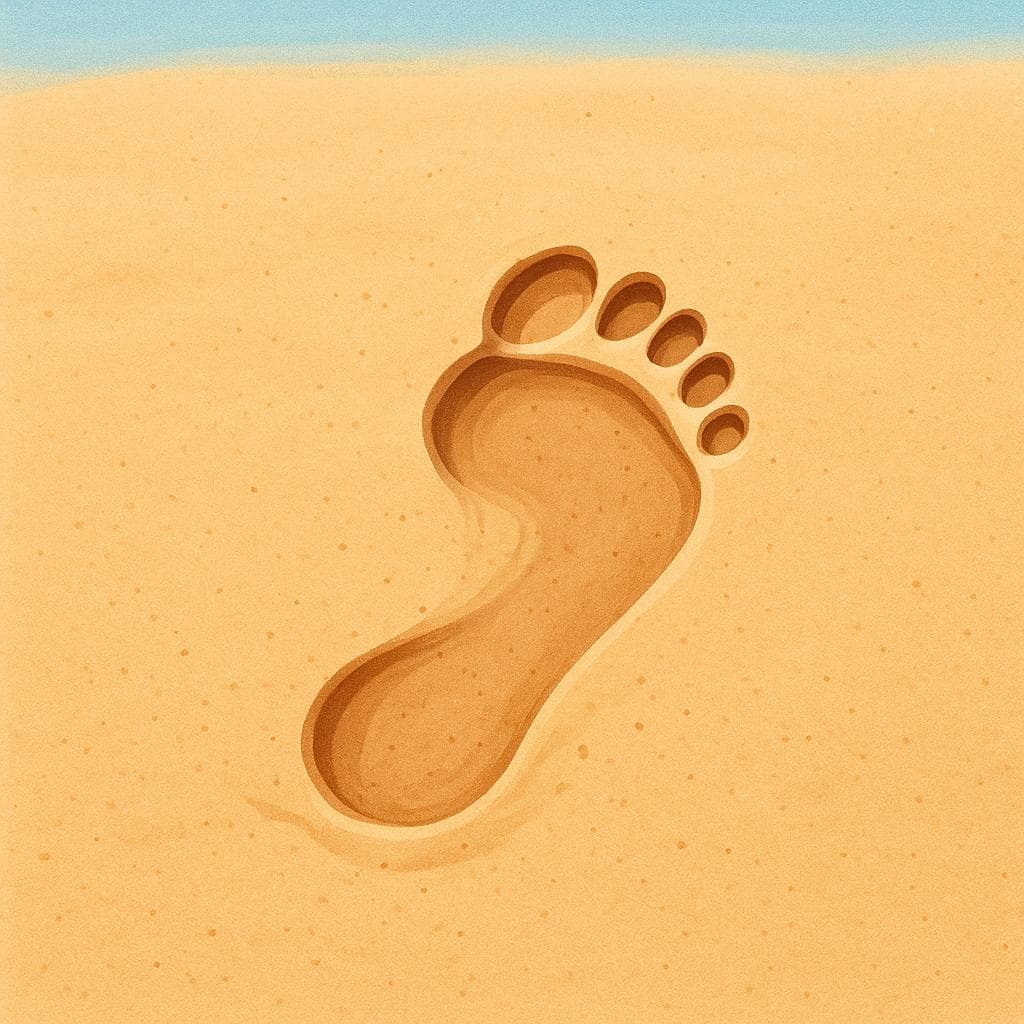

footprint, track, printAlso: tread

📝 In Action
El perro dejó huellas de barro por toda la casa.
A1The dog left muddy footprints all over the house.
La policía buscaba huellas dactilares en la ventana.
A2The police were looking for fingerprints on the window.
Vimos las huellas del venado en la orilla del río.
A2We saw the deer's tracks on the riverbank.
Word Connections
trace, impressionAlso: impact

📝 In Action
La civilización antigua dejó una huella imborrable en la historia.
B1The ancient civilization left an indelible trace on history.
Es importante reducir nuestra huella ecológica.
B2It is important to reduce our ecological footprint.
El profesor dejó una huella positiva en todos sus estudiantes.
B1The professor left a positive impression on all his students.
Word Connections
Translate to Spanish
✏️ Quick Practice
Quick Quiz: huella
Question 1 of 2
Which sentence uses 'huella' in its figurative (abstract) sense?
📚 More Resources
👥 Word Family
📚 Etymology
The word 'huella' comes from the Old Spanish word 'foya' or 'folla,' which meant a pit or a hole in the ground. Over time, the meaning shifted from the 'hole' itself to the 'mark' or 'impression' left by something stepping into the ground.
First recorded: Medieval Spanish (approx. 13th century)
Cognates (Related words)
💡 Master Spanish
Take your Spanish to the next level. Read 200+ illustrated and narrated Spanish stories tailored to your level with the Inklingo app!
Frequently Asked Questions
Is 'huella' masculine or feminine?
'Huella' is always a feminine noun. You must use feminine articles and adjectives with it (e.g., 'la huella,' 'una huella profunda').
How do I say 'carbon footprint' in Spanish?
The most common and correct phrase is 'huella de carbono.' This utilizes the abstract meaning of 'huella' as an impact or trace.