lesbiana
“lesbiana” means “lesbian” in Spanish. It has 2 different meanings depending on context:
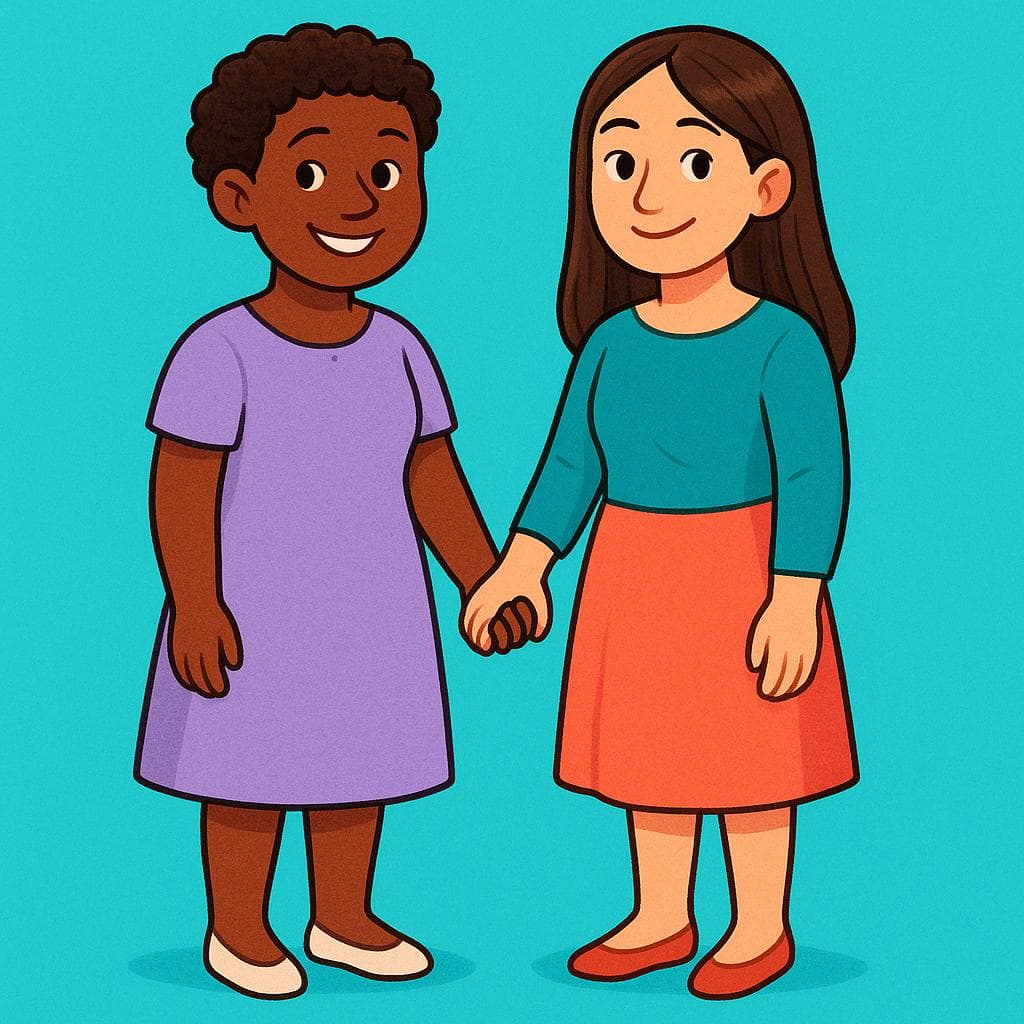

lesbian
📝 In Action
Mi hermana es lesbiana y se casó con su novia el año pasado.
B1My sister is a lesbian and married her girlfriend last year.
Se organizó una marcha del orgullo donde participaron muchas lesbianas.
B2A pride parade was organized where many lesbians participated.
Word Connections
lesbian

📝 In Action
Vimos una película lesbiana premiada en el festival.
B1We saw an award-winning lesbian film at the festival.
La cultura lesbiana tiene una historia muy rica.
B2Lesbian culture has a very rich history.
Word Connections
✏️ Quick Practice
Quick Quiz: lesbiana
Question 1 of 1
Which sentence correctly uses 'lesbiana' as a noun?
📚 More Resources
👥 Word Family
🎵 Rhymes
📚 Etymology
The word comes from the Greek island of Lesbos. This island was the home of the ancient poet Sappho, who wrote beautiful poetry expressing love and desire for women. Over time, the name of the island became associated with women who love women.
First recorded: 19th century (in its modern usage)
Cognates (Related words)
💡 Master Spanish
Take your Spanish to the next level. Read 200+ illustrated and narrated Spanish stories tailored to your level with the Inklingo app!
Frequently Asked Questions
Is 'lesbiana' the correct term, or are there other words?
'Lesbiana' is the universally accepted, standard, and neutral term in Spanish. While some informal slang terms exist regionally, this is the word you should always use in respectful conversation and writing.
What is the difference between 'lesbiana' (noun) and 'lesbiana' (adjective)?
As a noun, it refers directly to the person (e.g., 'Una lesbiana entró al cine'). As an adjective, it describes a concept or thing related to women who love women (e.g., 'Una película lesbiana').