mato
“mato” means “I kill” in Spanish. It has 2 different meanings depending on context:
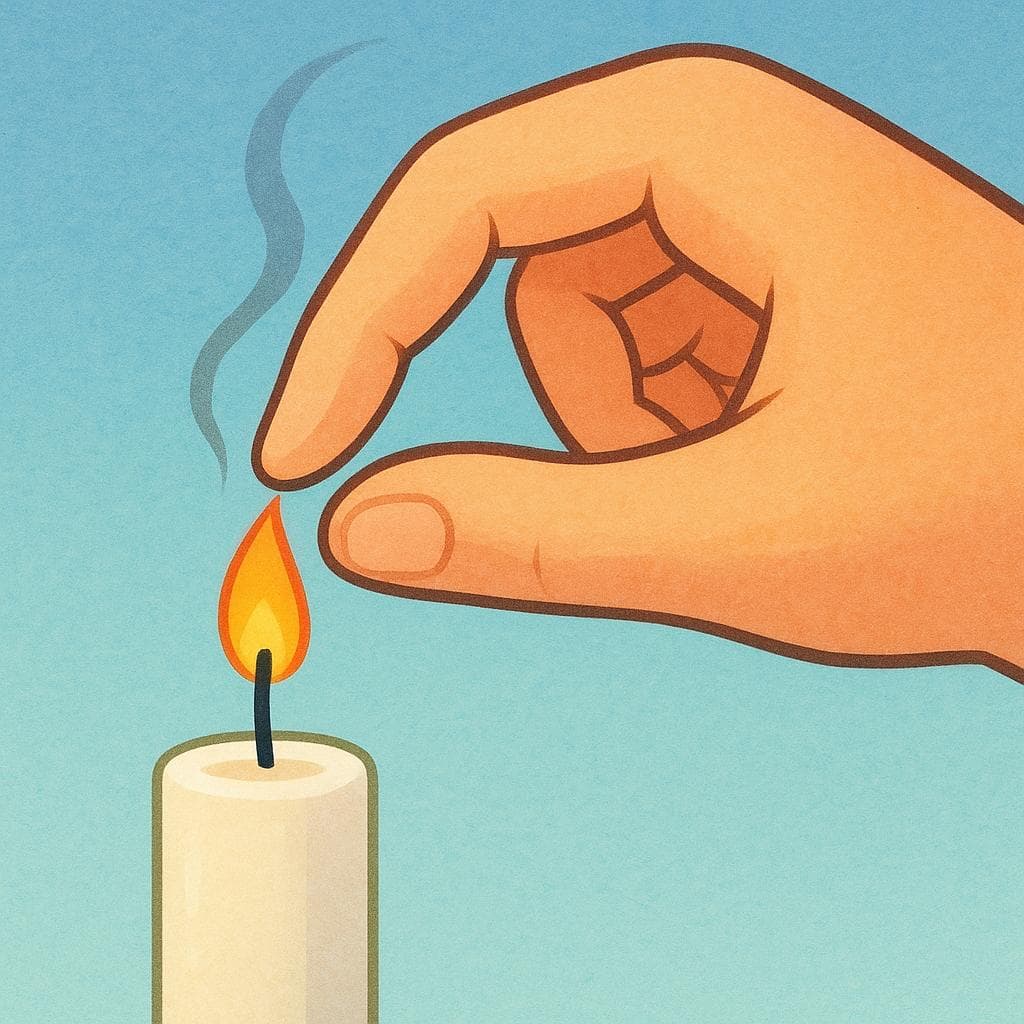

I kill
Also: I am killing, I put out
📝 In Action
Siempre mato las moscas con un periódico viejo.
A2I always kill the flies with an old newspaper.
Si no bebo café, mato a alguien del mal humor.
B1If I don't drink coffee, I'll kill someone from a bad mood. (Figurative)
bush, shrub
Also: thicket
📝 In Action
El perro se escondió entre el mato para evitar la lluvia.
B1The dog hid among the bush to avoid the rain.
Hay que podar ese mato, está tapando la ventana.
B2We have to prune that shrub; it's covering the window.
Indicative
Present
Imperfect
Preterite
Subjunctive
Present Subjunctive
Imperfect Subjunctive
Translate to Spanish
✏️ Quick Practice
Quick Quiz: mato
Question 1 of 1
Which sentence correctly uses 'mato' as the noun (bush)?
📚 More Resources
👥 Word Family▼
📚 Etymology▼
The verb form ('I kill') comes from the Latin verb *mactāre*, which originally meant 'to sacrifice' or 'to honor with a sacrifice,' but later evolved to mean 'to kill.' The noun form ('bush') likely has a separate, possibly pre-Roman Iberian origin related to vegetation.
First recorded: 13th century (verb sense)
Cognates (Related words)
💡 Master Spanish
Take your Spanish to the next level. Read 200+ illustrated and narrated Spanish stories tailored to your level with the Inklingo app!
Frequently Asked Questions
If 'mato' means 'I kill,' how do I say 'he kills'?
You would use the third-person form of the verb *matar*, which is 'mata' (él/ella mata). Remember that 'mato' only refers to the 'yo' (I) form.
Can I use 'mato' for 'bush' everywhere in the Spanish-speaking world?
While it is understood, 'arbusto' is more common in many Latin American countries. 'Mato' is very frequently used in Spain and certain regions like the Canary Islands.