miré
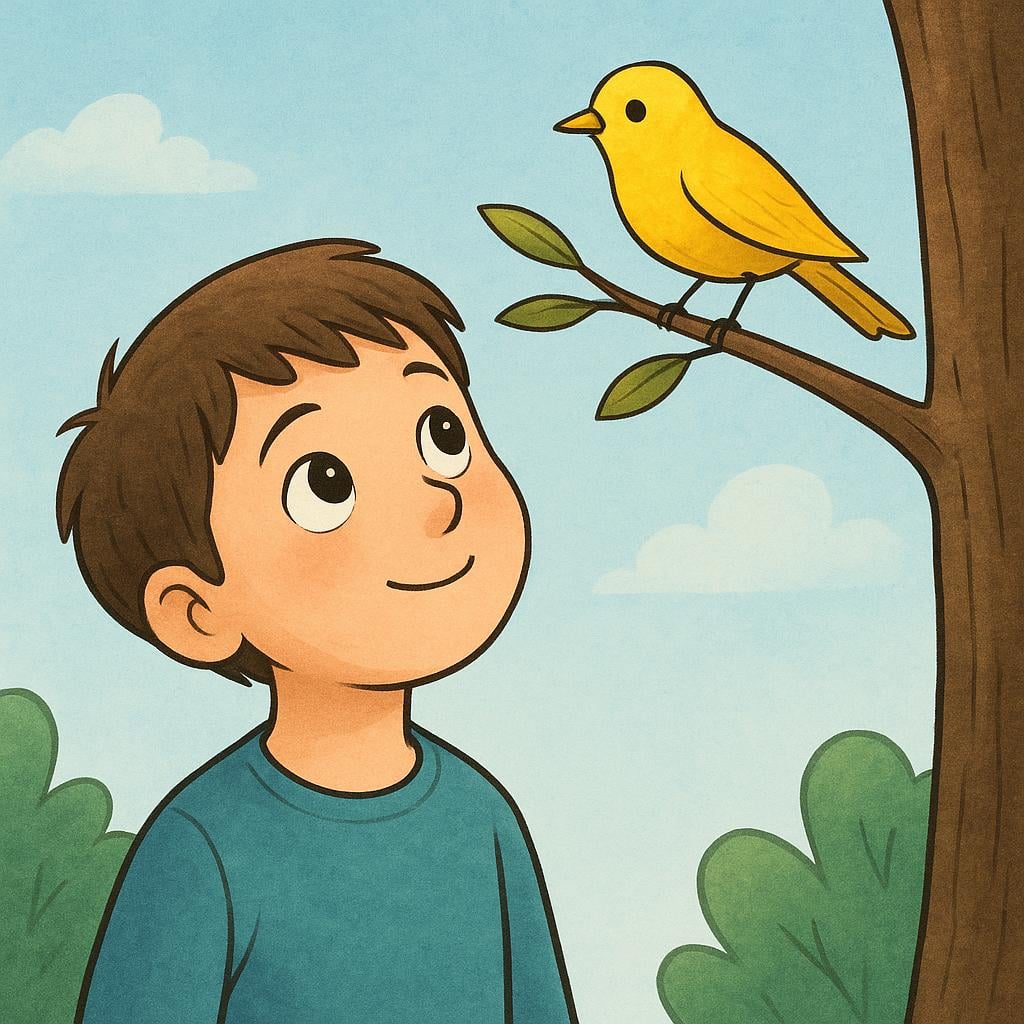
“miré” means “I looked” in Spanish (A completed action in the past).
I looked, I watchedAlso: I saw
📝 In Action
Miré el reloj y ya eran las diez.
A1I looked at the clock and it was already ten.
Ayer miré una película muy triste.
A1Yesterday I watched a very sad movie.
¿Viste la Luna? Sí, la miré por la ventana.
A2Did you see the Moon? Yes, I looked at it through the window.
Word Connections
Indicative
Present
Imperfect
Preterite
Subjunctive
Present Subjunctive
Imperfect Subjunctive
✏️ Quick Practice
Quick Quiz: miré
Question 1 of 2
Which sentence correctly uses 'miré' to describe a single, finished action?
📚 More Resources
👥 Word Family
📚 Etymology
Comes from the Latin verb *mirari*, which meant 'to wonder at' or 'to admire.' Over time, the focus shifted to the physical act of looking or watching.
First recorded: Around the 13th century (as *mirar*)
Cognates (Related words)
💡 Master Spanish
Take your Spanish to the next level. Read 200+ illustrated and narrated Spanish stories tailored to your level with the Inklingo app!
Frequently Asked Questions
Why does 'miré' need an accent mark?
The accent mark is essential because it shifts the stress to the last syllable, which is a characteristic of the 'yo' form in the simple past tense for regular -ar verbs. It also helps distinguish it from other verb forms like 'mire'.
If 'mirar' means 'to look,' how do I say 'I saw'?
While 'miré' can sometimes mean 'I saw' in the context of directing your gaze, the most common and direct translation for 'I saw' (the action of seeing) is 'vi,' which comes from the verb 'ver'.