Inklingo

olvidas

/ol-VEE-das/

you forget

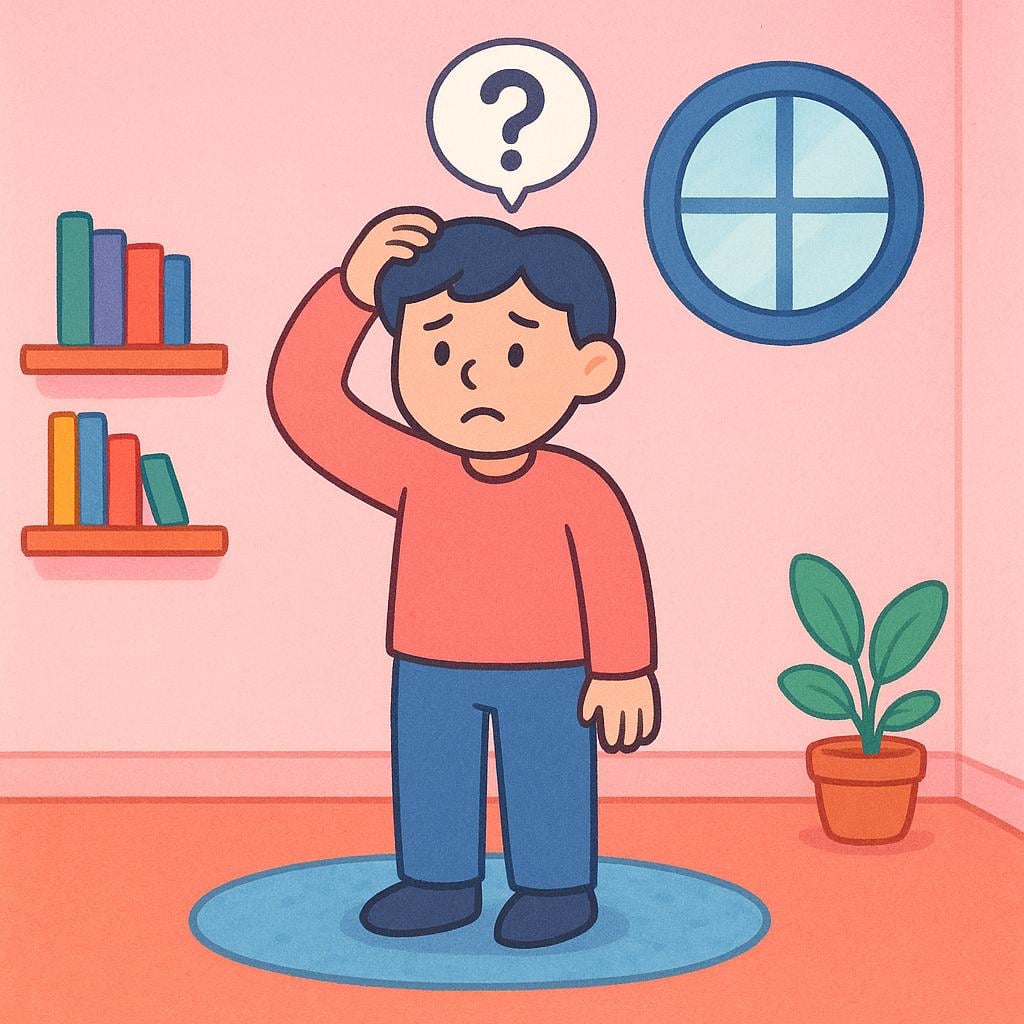
A storybook illustration of a person scratching their head with a puzzled expression, indicating they are trying to remember something they forgot.

The image shows someone struggling to recall information, illustrating the meaning 'you forget'.

olvidas(verb)

A2regular ar

you forget

?

informal singular, present action

Also:

you are forgetting

?

continuous action

📝 In Action

¿Por qué siempre olvidas mi cumpleaños?

A2

Why do you always forget my birthday?

Si olvidas las llaves, no podremos entrar.

B1

If you forget the keys, we won't be able to enter.

Word Connections

Synonyms

  • desmemoriar (to lose memory (less common))

Antonyms

  • recordar (to remember)
  • acordarse (to remember)

Common Collocations

  • olvidas la contraseñayou forget the password
  • olvidas todoyou forget everything

💡 Grammar Points

The 'Se' Difference

The verb 'olvidar' can be used alone (Tú olvidas...) or with 'se' (Tú te olvidas de...). Using 'te olvidas' emphasizes that the forgetting happened accidentally or that you actively neglected something.

Preposition 'de'

When using 'olvidarse' (the version with 'se'), you must usually follow it with the preposition 'de' before the thing you forgot: 'Te olvidas de la cita' (You forget about the appointment).

❌ Common Pitfalls

Missing the 'de'

Mistake: "Te olvidas la llave."

Correction: Te olvidas de la llave. (When using 'te olvidas', Spanish almost always needs the little word 'de' before the thing forgotten.)

⭐ Usage Tips

Use 'Se' for Accidents

If you want to say something was forgotten accidentally, use 'Se me olvidó' (I forgot it, literally 'It forgot itself to me'). This is much more common than 'Yo olvidé'.

A storybook image showing a set of keys abandoned on a picnic table as a person walks away in the distance, depicting an item left behind unintentionally.

This image illustrates the meaning 'you leave behind' by showing an item forgotten and left in a public place.

olvidas(verb)

B1regular ar

you leave behind

?

unintentionally leaving an item

Also:

you neglect

?

to fail to take care of something

📝 In Action

Siempre olvidas el paraguas en el autobús.

B1

You always leave the umbrella on the bus.

Si olvidas el pasado, no aprendes nada.

C1

If you forget/leave behind the past, you learn nothing.

Word Connections

Synonyms

  • abandonar (to abandon/leave)
  • desatender (to neglect)

Antonyms

Common Collocations

  • olvidas el cuadernoyou leave the notebook behind

💡 Grammar Points

Direct Object Use

When 'olvidas' means 'to leave something behind,' it acts like a normal verb and takes the forgotten item directly after it, without needing the word 'de'.

⭐ Usage Tips

Context Clues

If the thing being forgotten is a physical object (like a phone or keys), 'olvidas' often means 'you leave it behind.' If it's a memory or a task, it means 'you forget it.'

🔄 Conjugations

indicative

present

él/ella/ustedolvida
yoolvido
olvidas
ellos/ellas/ustedesolvidan
nosotrosolvidamos
vosotrosolvidáis

imperfect

él/ella/ustedolvidaba
yoolvidaba
olvidabas
ellos/ellas/ustedesolvidaban
nosotrosolvidábamos
vosotrosolvidabais

preterite

él/ella/ustedolvidó
yoolvidé
olvidaste
ellos/ellas/ustedesolvidaron
nosotrosolvidamos
vosotrosolvidasteis

subjunctive

present

él/ella/ustedolvide
yoolvide
olvides
ellos/ellas/ustedesolviden
nosotrosolvidemos
vosotrosolvidéis

imperfect

él/ella/ustedolvidara/olvidase
yoolvidara/olvidase
olvidaras/olvidases
ellos/ellas/ustedesolvidaran/olvidasen
nosotrosolvidáramos/olvidásemos
vosotrosolvidarais/olvidaseis

✏️ Quick Practice

💡 Quick Quiz: olvidas

Question 1 of 2

Which sentence correctly uses the pronominal form of 'olvidar'?

📚 More Resources

Word Family

olvido(forgetfulness/oblivion) - noun

Frequently Asked Questions

Is 'olvidas' formal or informal?

'Olvidas' is the 'tú' form, which means it is informal. You use it when speaking directly to a friend, family member, child, or anyone you address casually. For formal situations (like speaking to a boss or elder), you would use 'olvida' (the 'usted' form).

What is the difference between 'olvidas' and 'te olvidas'?

Both mean 'you forget.' 'Olvidas' is the simple version. 'Te olvidas' (the reflexive/pronominal version) is generally more common and is often used when the forgetting is viewed as accidental or involuntary, or when you are emphasizing the act of letting something slip your mind.