ostra
“ostra” means “oyster” in Spanish. It has 2 different meanings depending on context:
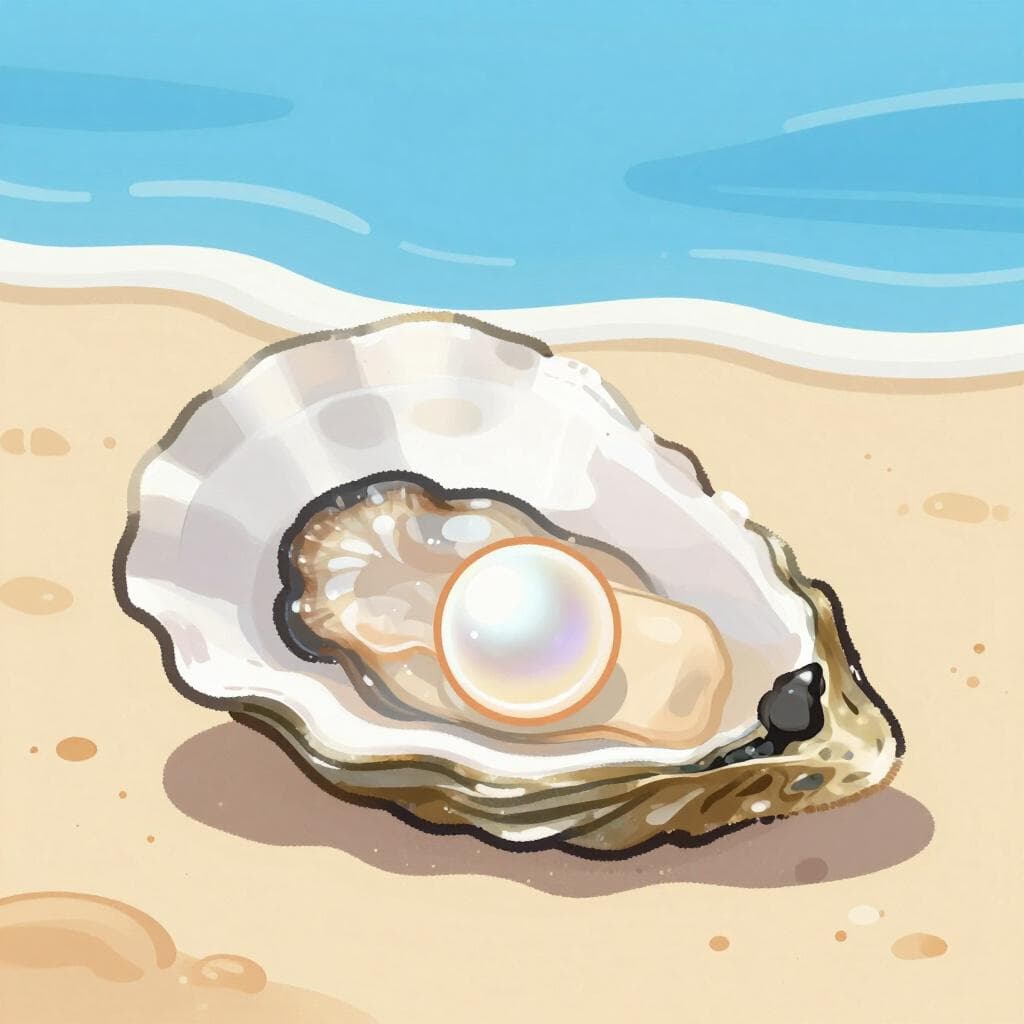

oysterAlso: clamshell

📝 In Action
Pedimos una docena de ostras frescas en el restaurante.
A2We ordered a dozen fresh oysters at the restaurant.
Es difícil encontrar una perla dentro de una ostra.
B1It is difficult to find a pearl inside an oyster.
Las ostras viven en el fondo del mar.
A1Oysters live at the bottom of the sea.
Word Connections
Gosh / Wow / Good griefAlso: Darn

📝 In Action
¡Ostra! Se me olvidó la cartera en casa.
B1Gosh! I forgot my wallet at home.
¡Ostra, qué sorpresa verte por aquí!
B1Wow, what a surprise to see you here!
¡Ostra! Ese coche es rapidísimo.
B2Wow! That car is really fast.
Word Connections
✏️ Quick Practice
Quick Quiz: ostra
Question 1 of 3
What does 'aburrirse como una ostra' mean?
📚 More Resources
👥 Word Family
🎵 Rhymes
📚 Etymology
From the Latin word 'ostrea', which refers to the same mollusk. It has been used in Spanish for centuries to describe both the animal and the shell.
First recorded: 13th century
Cognates (Related words)
💡 Master Spanish
Take your Spanish to the next level. Read 200+ illustrated and narrated Spanish stories tailored to your level with the Inklingo app!
Frequently Asked Questions
Is 'ostra' a bad word?
No, it is not. While it is related to a stronger word, 'ostra' is considered family-friendly and safe to use in most informal situations.
Can I use 'ostra' to mean 'wow' in Mexico?
While people will understand you, it sounds very 'Spanish from Spain.' In Mexico, you might hear '¡guau!' or '¡órale!' instead.
Does 'ostra' refer to the shell or the animal?
It refers to both! Just like in English, 'oyster' can mean the creature itself or the shell you find on the beach.