popa
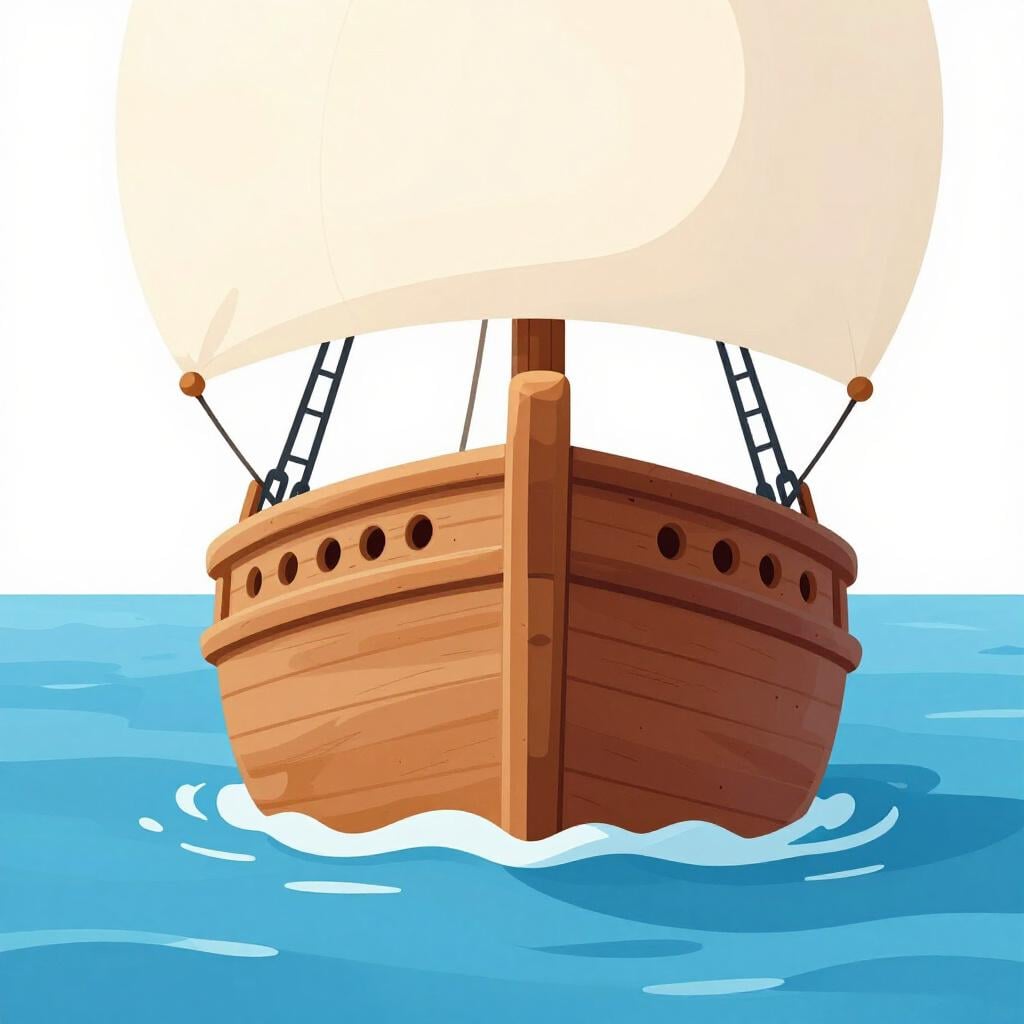
“popa” means “stern” in Spanish (the back part of a boat or ship).
sternAlso: aft
📝 In Action
El capitán se sentó en la popa para pescar.
A2The captain sat at the stern to fish.
El nombre del barco está escrito en la popa.
B1The name of the boat is written on the stern.
Nuestro nuevo negocio va viento en popa.
B2Our new business is going swimmingly (sailing smoothly).
Word Connections
✏️ Quick Practice
Quick Quiz: popa
Question 1 of 3
Where would you be if you were in the 'popa' of a boat?
📚 More Resources
👥 Word Family
📚 Etymology
From the Latin word 'puppis', which specifically referred to the rear section of a vessel where the helmsman stood.
First recorded: 13th century
Cognates (Related words)
💡 Master Spanish
Take your Spanish to the next level. Read 200+ illustrated and narrated Spanish stories tailored to your level with the Inklingo app!
Frequently Asked Questions
Can I use 'popa' for the back of a car?
No, 'popa' is strictly for boats. For a car, you would use 'la parte trasera' or 'el maletero' (the trunk).
Is 'popa' related to the English word 'poop'?
Yes! In a nautical sense, the 'poop deck' comes from the same Latin root. It refers to the deck that forms the roof of a cabin built in the rear (stern) of the ship.
How do I remember 'popa' vs 'proa'?
Think of 'Popa' as 'Past' (the part you already sailed past) and 'Proa' as 'Próximo' (the part that is closest to what's next).