Inklingo

quedarnos

/keh-DAHR-nos/

to stay

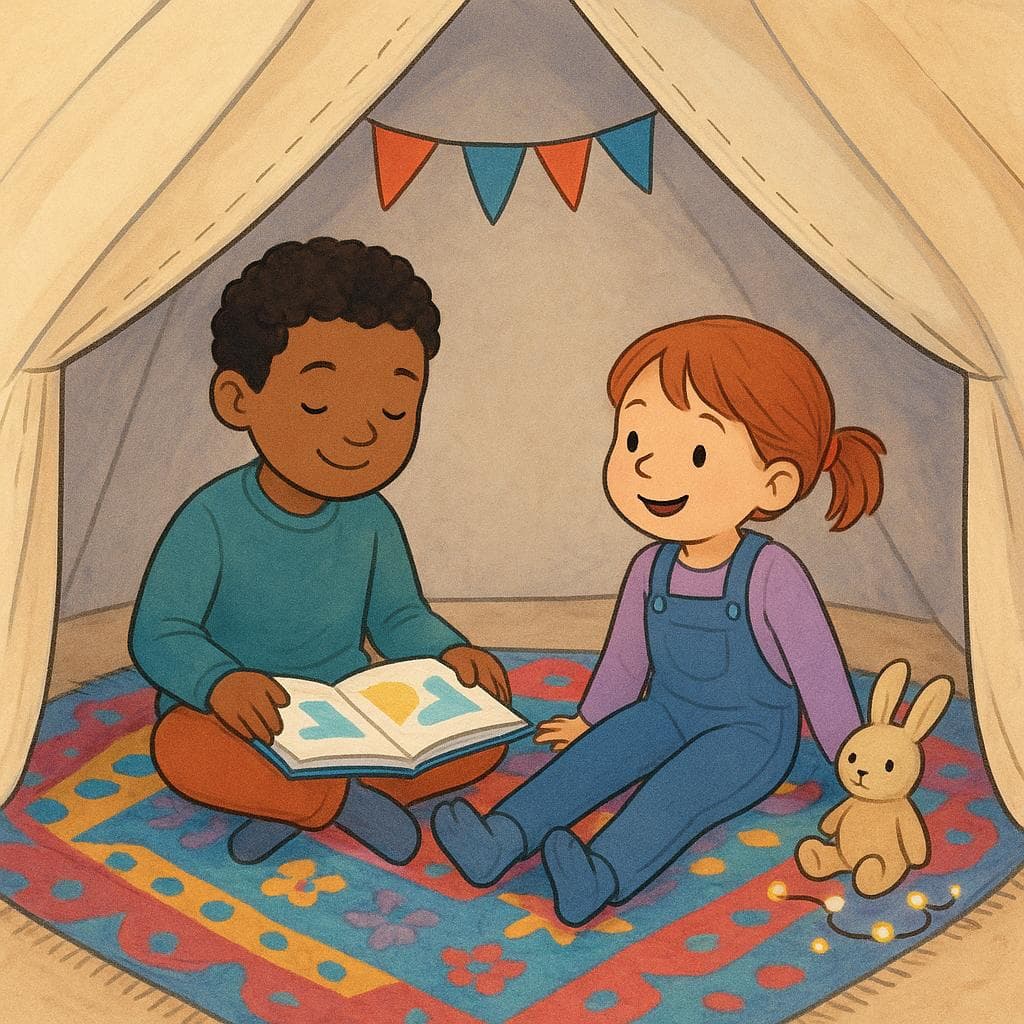
Two young friends sitting comfortably on a rug inside a brightly colored tent, smiling at each other, suggesting they are remaining in that location.

We decided to stay (quedarnos) inside the tent instead of going out.

quedarnos(verb)

A1regular (reflexive/pronominal) ar

to stay

?

remaining in a place

,

to remain

?

not leaving

Also:

to keep

?

choosing to possess something

,

to meet up

?

agreeing to a meeting time/place (reflexive/reciprocal use)

📝 In Action

Preferimos quedarnos en el hotel esta noche.

A1

We prefer to stay in the hotel tonight.

Antes de salir, tenemos que quedarnos tranquilos y pensar.

A2

Before leaving, we have to remain calm and think.

¿A qué hora vamos a quedarnos para cenar?

A2

What time are we going to meet up for dinner?

Word Connections

Synonyms

  • permanecer (to stay/remain)
  • alojarse (to stay (at a location))

Antonyms

Common Collocations

  • quedarnos a dormirto stay the night
  • quedarnos hasta tardeto stay late

💡 Grammar Points

The Reflexive 'Nos'

'Quedarnos' is the base verb 'quedar' with the reflexive pronoun 'nos' attached. This 'nos' means the action is done to or for 'us' (nosotros), making it 'we stay'.

Attaching the Pronoun

When using the infinitive form, the pronoun ('nos') is always attached to the end. The conjugated forms separate the pronoun: 'Nos quedamos' (We stay).

❌ Common Pitfalls

Forgetting the 'Nos'

Mistake: "Vamos a quedar aquí. (Using the non-reflexive 'quedar')"

Correction: Vamos a quedarnos aquí. (The reflexive 'quedarse' is needed when you mean 'to stay' or 'to remain' in a place.)

⭐ Usage Tips

Emphasis on Choice

Use 'quedarse' (quedarnos) to emphasize the decision to stay, rather than simply being located there. It implies a choice.

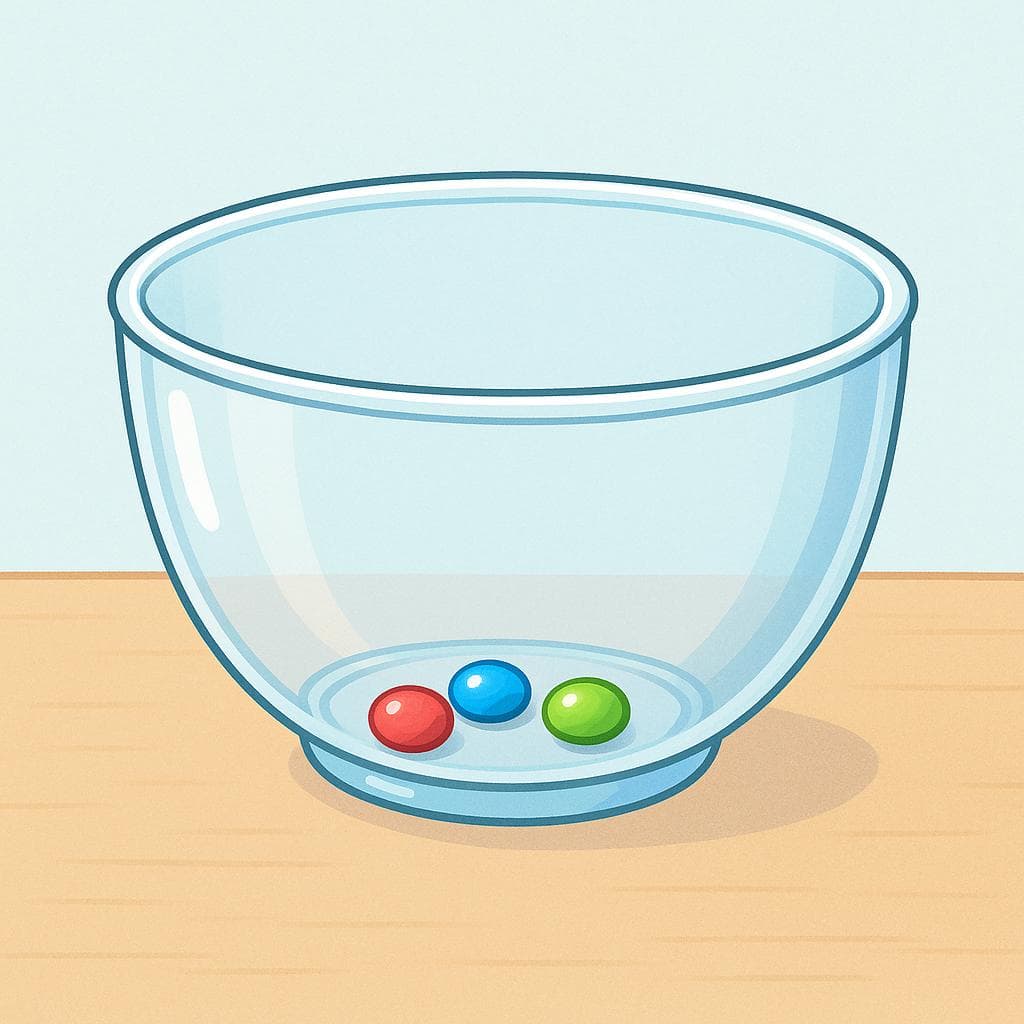
A large, clear glass bowl that is mostly empty, containing just three small, distinct colorful candies resting at the bottom.

After eating the contents, we are left with (quedarnos) only a few candies.

quedarnos(verb)

B1regular (reflexive/pronominal) ar

to be left with

?

having something remaining after consumption

,

to run out of

?

when used with 'sin' (e.g., to be left without)

Also:

to end up

?

describing the final result or appearance

,

to look

?

describing how something fits or looks (e.g., 'El vestido nos queda bien.')

📝 In Action

Tenemos que ahorrar para no quedarnos sin dinero antes de fin de mes.

B1

We have to save so we don't run out of money before the end of the month.

Si compramos eso, solo nos va a quedarnos un poco de cambio.

B2

If we buy that, we are only going to be left with a little change.

Después de la discusión, decidimos quedarnos en silencio.

B2

After the argument, we decided to end up in silence (remain silent).

Word Connections

Synonyms

  • resultar (to result)
  • sobrar (to be left over (impersonal))

Common Collocations

  • quedarnos sinto run out of
  • quedarnos cortosto be left short (of something)

💡 Grammar Points

Running Out of Things

To express that 'we ran out of' something, use the structure 'quedarnos sin + noun.' Example: 'quedarnos sin luz' (to run out of electricity).

Describing Appearance

The phrase 'quedarnos + adjective' describes the result of an action or how we look/feel: 'quedarnos cansados' (to end up tired).

❌ Common Pitfalls

Mixing up 'Left Over' Forms

Mistake: "Nosotros sobró dinero. (Using the impersonal 'sobrar' with a subject pronoun.)"

Correction: Nos quedamos con dinero. (Use 'quedarse con' to mean 'to be left possessing' or 'Nos quedó dinero' if using the impersonal form of 'quedar'.)

⭐ Usage Tips

Use with 'Con'

Use 'quedarnos con [something]' to mean 'to keep' or 'to possess something that remains.' We are left with it.

🔄 Conjugations

indicative

present

él/ella/ustedse queda
yome quedo
te quedas
ellos/ellas/ustedesse quedan
nosotrosnos quedamos
vosotrosos quedáis

imperfect

él/ella/ustedse quedaba
yome quedaba
te quedabas
ellos/ellas/ustedesse quedaban
nosotrosnos quedábamos
vosotrosos quedabais

preterite

él/ella/ustedse quedó
yome quedé
te quedaste
ellos/ellas/ustedesse quedaron
nosotrosnos quedamos
vosotrosos quedasteis

subjunctive

present

él/ella/ustedse quede
yome quede
te quedes
ellos/ellas/ustedesse queden
nosotrosnos quedemos
vosotrosos quedéis

imperfect

él/ella/ustedse quedara/quedase
yome quedara/quedase
te quedaras/quedases
ellos/ellas/ustedesse quedaran/quedasen
nosotrosnos quedáramos/quedásemos
vosotrosos quedarais/quedaseis

✏️ Quick Practice

💡 Quick Quiz: quedarnos

Question 1 of 1

Which sentence correctly uses 'quedarnos' to mean 'to run out of'?

📚 More Resources

Word Family

quedar(to be located, to fit, to be left) - verb

Frequently Asked Questions

Why does 'quedarnos' sometimes mean 'to meet'?

When 'quedarse' is used reciprocally (meaning the action goes both ways), it implies 'we arrange to meet each other.' For example, 'Quedamos a las siete' means 'We arrange to meet at seven.'

Is 'quedar' the same as 'quedarse'?

No. 'Quedar' (non-reflexive) usually means 'to be located,' 'to fit,' or 'to be left over.' 'Quedarse' (reflexive, like 'quedarnos') means 'to stay,' 'to remain,' or 'to keep' something—it focuses on the decision or state of the subject ('us').