Inklingo

quedarás

/keh-dah-RASS/

you will remain

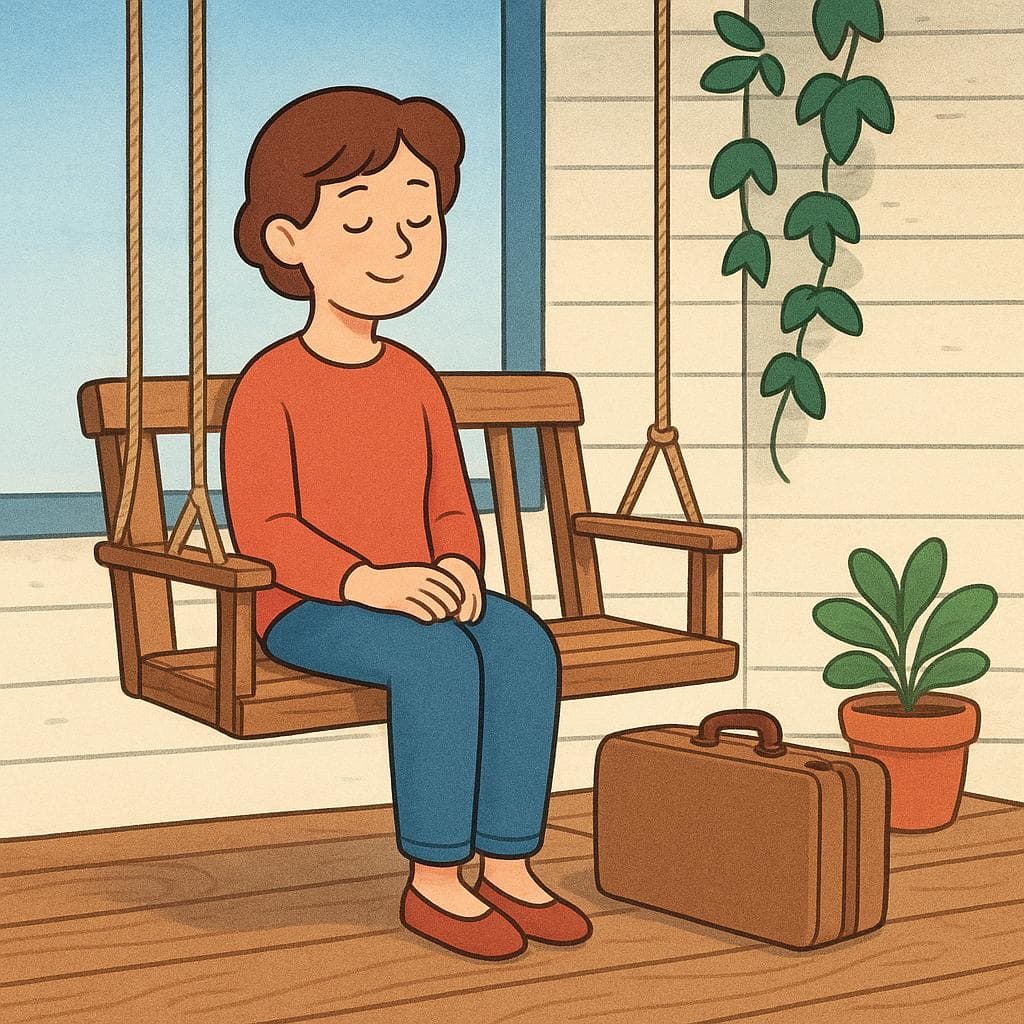
A person sitting comfortably on a wooden porch swing next to a closed small suitcase, looking relaxed and settled, illustrating the concept of staying or remaining in a place.

If you decide to stay, quedarás aquí. (You will remain here.)

quedarás(Verb)

A2regular ar

you will remain

?

staying in a location or state (informal 'tú')

,

you will be left with

?

result or quantity remaining (informal 'tú')

Also:

you will fit

?

e.g., clothes or space

📝 In Action

Si llegas tarde, quedarás sin pastel.

A2

If you arrive late, you will be left without cake.

En esa ciudad, quedarás cerca de la playa.

B1

In that city, you will be located near the beach.

Con esa dieta, quedarás mucho más delgado.

B1

With that diet, you will end up much thinner.

Word Connections

Synonyms

  • permanecerás (you will remain)
  • serás (you will be)

Common Collocations

  • quedarás a gustoyou will be satisfied
  • quedarás en deudayou will be indebted

💡 Grammar Points

The Future Tense

This form ('quedarás') tells you what 'you' (tú) will do or how 'you' will be in the future. It is generally used for definite plans or predictions.

Quedar vs. Quedarse

The simple form 'quedar' often means 'to be located' or 'to result in.' The reflexive form 'quedarse' (te quedarás) means 'to stay put' or 'to keep something for oneself.'

⭐ Usage Tips

Predicting Outcomes

Use 'quedarás' to predict how someone will feel or look after a process: 'Quedarás exhausto' (You will be exhausted).

Two friends standing under a large, distinct oak tree in a sunny park, smiling as they approach each other, signifying a planned meeting.

I hope quedarás conmigo mañana. (You will meet with me tomorrow.)

quedarás(Verb)

B1regular ar

you will meet

?

making an appointment (informal 'tú')

,

you will arrange to see

?

setting a time or place

📝 In Action

Dime la hora y quedarás con él en el café.

B1

Tell me the time and you will meet him at the cafe.

¿Cuándo quedarás con tu dentista para el chequeo?

B1

When will you arrange to see your dentist for the check-up?

Word Connections

Synonyms

  • te encontrarás (you will meet)
  • acordarás (you will agree)

Common Collocations

  • quedarás para cenaryou will arrange to have dinner
  • quedarás en un sitioyou will meet at a place

❌ Common Pitfalls

Using 'Reunir' for Casual Meetings

Mistake: "Usar 'te reunirás' para una cita casual con amigos."

Correction: Use 'quedarás' for casual meetups or dates. 'Reunir' (to gather/reunite) is better for formal meetings or large groups.

⭐ Usage Tips

Making Future Plans

This form is perfect for checking someone's availability or setting a future appointment. '¿A qué hora quedarás?' (What time will you meet?)

🔄 Conjugations

indicative

present

él/ella/ustedqueda
yoquedo
quedas
ellos/ellas/ustedesquedan
nosotrosquedamos
vosotrosquedáis

imperfect

él/ella/ustedquedaba
yoquedaba
quedabas
ellos/ellas/ustedesquedaban
nosotrosquedábamos
vosotrosquedabais

preterite

él/ella/ustedquedó
yoquedé
quedaste
ellos/ellas/ustedesquedaron
nosotrosquedamos
vosotrosquedasteis

subjunctive

present

él/ella/ustedquede
yoquede
quedes
ellos/ellas/ustedesqueden
nosotrosquedemos
vosotrosquedéis

imperfect

él/ella/ustedquedara/quedase
yoquedara/quedase
quedaras/quedases
ellos/ellas/ustedesquedaran/quedasen
nosotrosquedáramos/quedásemos
vosotrosquedarais/quedaseis

✏️ Quick Practice

💡 Quick Quiz: quedarás

Question 1 of 1

Which sentence correctly uses 'quedarás' to talk about a future appointment?

📚 More Resources

Frequently Asked Questions

What is the difference between 'quedarás' and 'te quedarás'?

'Quedarás' (simple form) usually talks about location, result, or making plans ('You will meet'). 'Te quedarás' (reflexive form) means 'you will stay' or 'you will keep something for yourself.' They look similar but have distinct uses.

Why does 'quedarás' end in -ás?

The -ás ending is the standard pattern for the 'tú' (informal you) form in the simple future tense for all -ar, -er, and -ir verbs in Spanish. It signals an action that will happen to 'tú' later.