salvé
“salvé” means “I saved” in Spanish (past action of rescuing).
I saved, I rescued
Also: I got out (of trouble)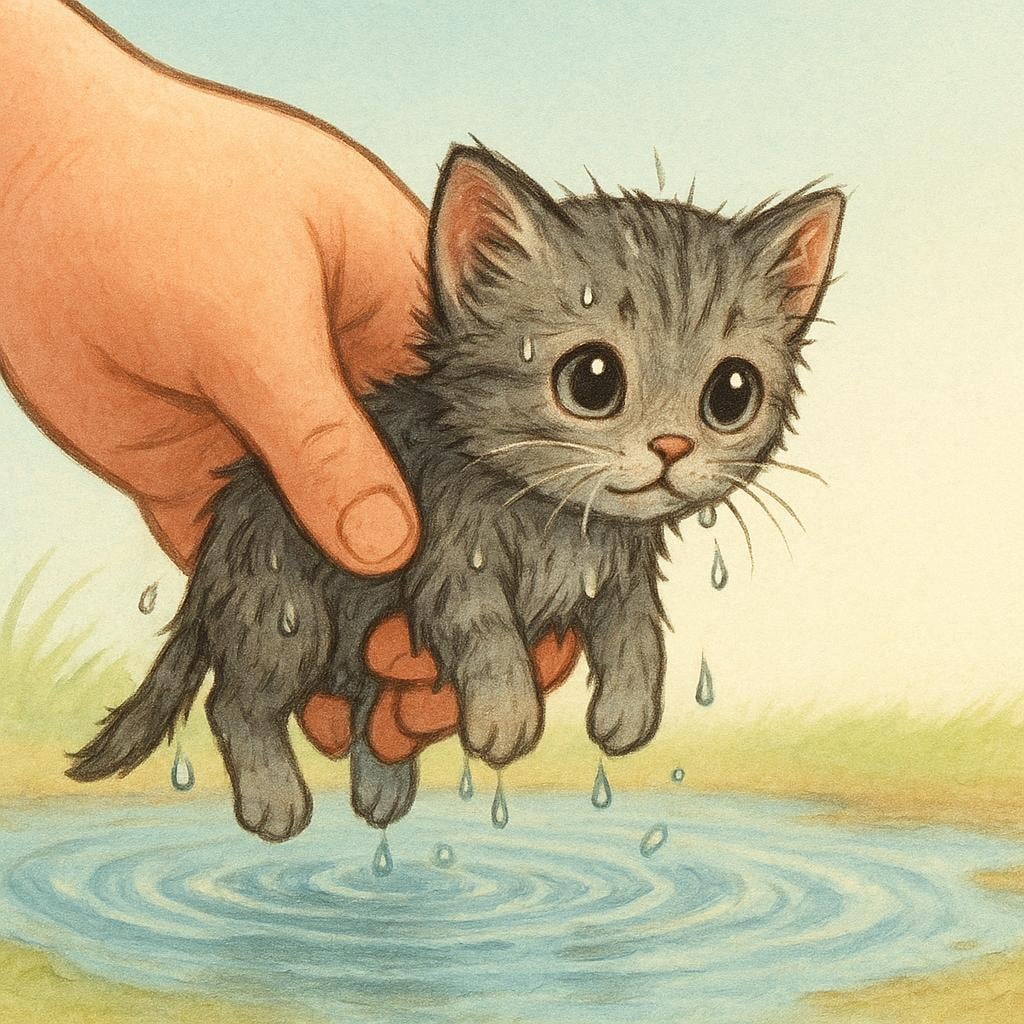
📝 In Action
Yo salvé a mi perro del río anoche.
A1I saved my dog from the river last night.
Gracias a ese dinero, salvé mi negocio.
B1Thanks to that money, I saved my business.
Pensé que perdería el juego, pero salvé el punto en el último segundo.
B2I thought I would lose the game, but I saved the point at the last second.
🔄 Conjugations
subjunctive
imperfect
present
indicative
imperfect
present
preterite
Translate to Spanish
✏️ Quick Practice
Quick Quiz: salvé
Question 1 of 1
Which sentence correctly uses 'salvé'?
📚 More Resources
👥 Word Family▼
📚 Etymology▼
The verb 'salvar' comes from the Latin word *salvare*, which means 'to save' or 'to make safe.' The concept has remained virtually unchanged for thousands of years.
First recorded: 10th century (in its Old Spanish form)
Cognates (Related words)
💡 Master Spanish
Take your Spanish to the next level. Read 200+ illustrated and narrated Spanish stories tailored to your level with the Inklingo app!
Frequently Asked Questions
Is 'salvé' always about physical rescue?
No. While 'salvé' often means 'I rescued someone,' it is also commonly used to mean 'I saved money,' 'I saved a file,' or 'I saved a situation' (I fixed a problem).
Why does 'nosotros salvamos' look the same in the present and preterite tenses?
This is a tricky feature of regular '-ar' verbs! The 'we' (nosotros) form is identical in the present tense ('we save') and the preterite past tense ('we saved'). You must rely on context or time expressions (like 'yesterday' or 'now') to know which one is meant.