siéntate
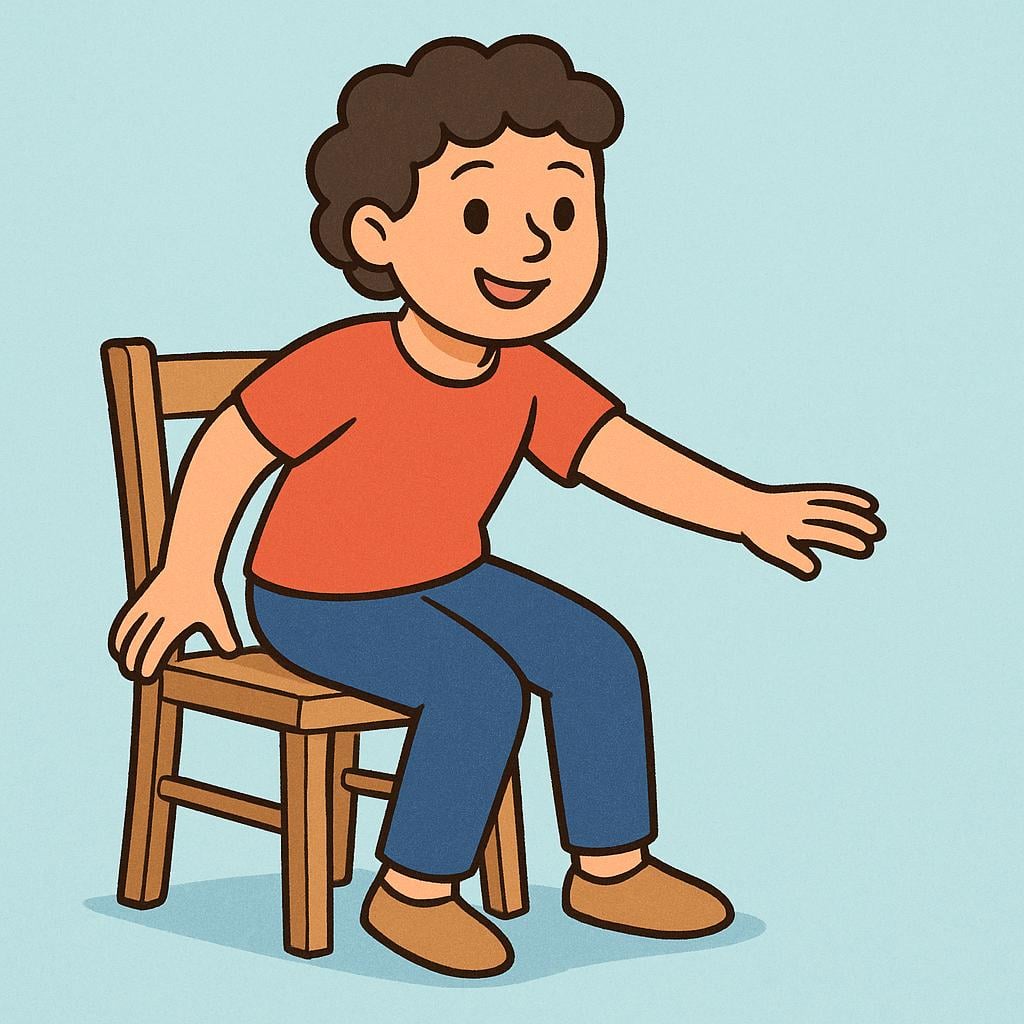
“siéntate” means “Sit down” in Spanish (Informal command to one person (tú)).
Sit down
📝 In Action
Por favor, siéntate aquí conmigo.
A1Please, sit down here with me.
¡Siéntate! La película va a empezar.
A1Sit down! The movie is about to start.
Si estás cansado, siéntate un rato.
A2If you're tired, sit down for a while.
Word Connections
Indicative
Present
Imperfect
Preterite
Subjunctive
Present Subjunctive
Imperfect Subjunctive
Translate to Spanish
Words that translate to "siéntate" in Spanish:
✏️ Quick Practice
Quick Quiz: siéntate
Question 1 of 1
You want to tell your new boss to have a seat. Which of the following is the most appropriate way to say it?
📚 More Resources
👥 Word Family
🎵 Rhymes
📚 Etymology
Comes from the Latin verb 'sedēre,' which means 'to sit.' The '-te' part is from the Latin 'te,' meaning 'you.' It's a combination of the command form of the verb and the pronoun for 'you'.
First recorded: Verb forms derived from 'sedēre' have been used since Old Spanish.
Cognates (Related words)
💡 Master Spanish
Take your Spanish to the next level. Read 200+ illustrated and narrated Spanish stories tailored to your level with the Inklingo app!
Frequently Asked Questions
What's the difference between 'siéntate' and 'siéntese'?
'Siéntate' is the informal command you use with friends, family, or people younger than you (the 'tú' form). 'Siéntese' is the formal command you use with strangers, older people, or in professional settings (the 'usted' form). The one you choose shows your relationship to the person.
Why is there an accent on siéntate?
The original command is 'sienta'. The natural stress is on the 'e' (siEn-ta). When you add 'te' to the end, you add another syllable. To keep the stress on the same original vowel, Spanish adds an accent mark. This is a rule that helps you pronounce it correctly: siÉn-ta-te.
How do I say 'Don't sit down'?
To make a negative command, you change the structure. Instead of 'siéntate', you say 'no te sientes'. Notice that the pronoun 'te' moves to before the verb, and the verb ending changes from '-a' to '-es'.