tambor
“tambor” means “drum” in Spanish. It has 2 different meanings depending on context:
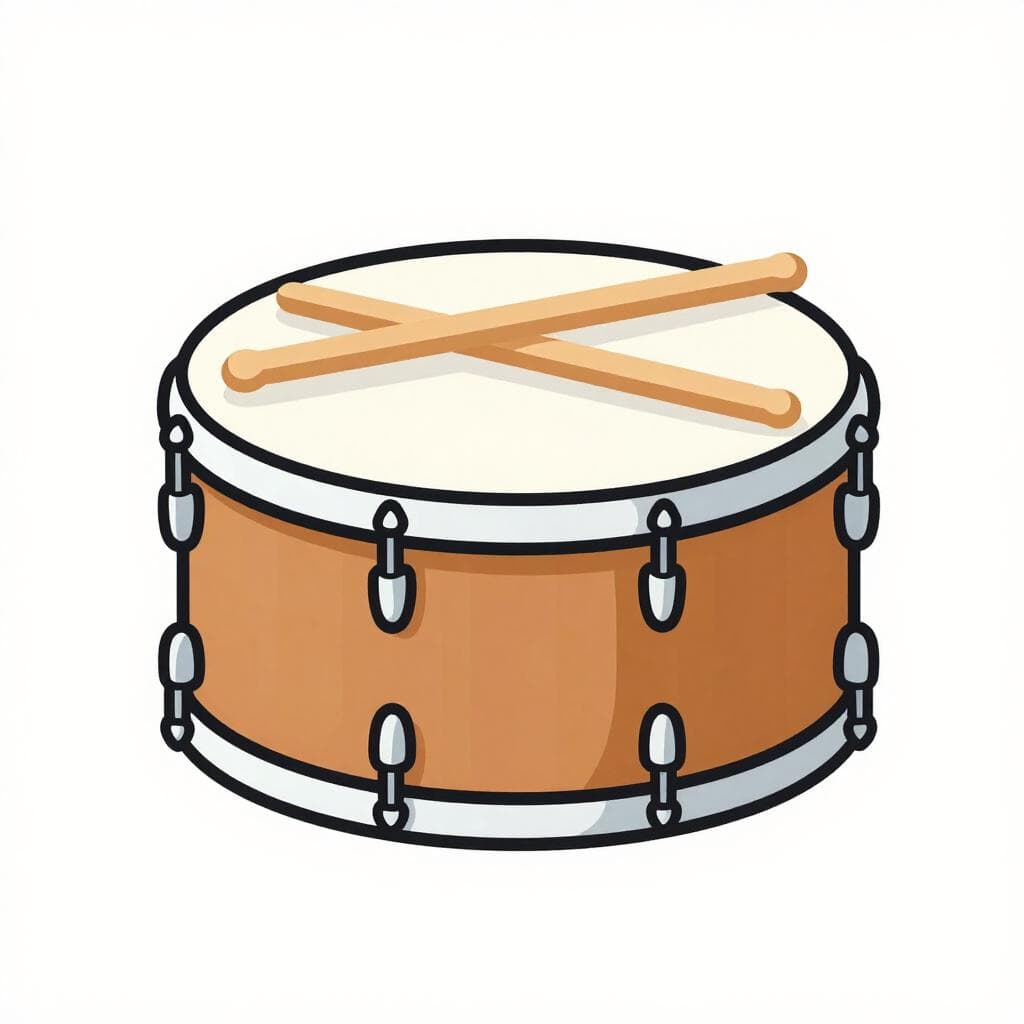

drumAlso: drummer
📝 In Action
El niño toca el tambor en la escuela.
A1The boy plays the drum at school.
Escuchamos el sonido de los tambores a lo lejos.
A2We heard the sound of the drums in the distance.
El primer tambor de la banda marcó el paso de la marcha.
B2The band's lead drummer set the pace for the march.
Word Connections
drumAlso: cylinder, drum

📝 In Action
La ropa está atrapada en el tambor de la lavadora.
B1The clothes are stuck in the washing machine drum.
Este coche todavía tiene frenos de tambor en las ruedas traseras.
B2This car still has drum brakes on the rear wheels.
La cúpula descansa sobre un tambor octogonal.
C1The dome rests on an octagonal drum.
Word Connections
✏️ Quick Practice
Quick Quiz: tambor
Question 1 of 3
Which verb is used correctly with 'tambor' to mean 'to play the drum'?
📚 More Resources
👥 Word Family
🎵 Rhymes
📚 Etymology
Likely from the Arabic 'tunbur', which itself comes from Persian. The word is 'onomatopoeic', meaning it was created to mimic the 'boom' sound the drum makes.
First recorded: 13th century
Cognates (Related words)
💡 Master Spanish
Take your Spanish to the next level. Read 200+ illustrated and narrated Spanish stories tailored to your level with the Inklingo app!
Frequently Asked Questions
What is the difference between 'tambor' and 'batería'?
'Tambor' refers to a single individual drum (like a snare drum). 'Batería' refers to a full drum set or drum kit used by a single drummer in a band.
Can 'tambor' refer to a person?
Yes, in specific contexts like military bands or traditional processions, 'el tambor' can refer to the person playing the instrument.
Is 'tambor' masculine or feminine?
It is masculine: 'el tambor' (singular) and 'los tambores' (plural).