trenes
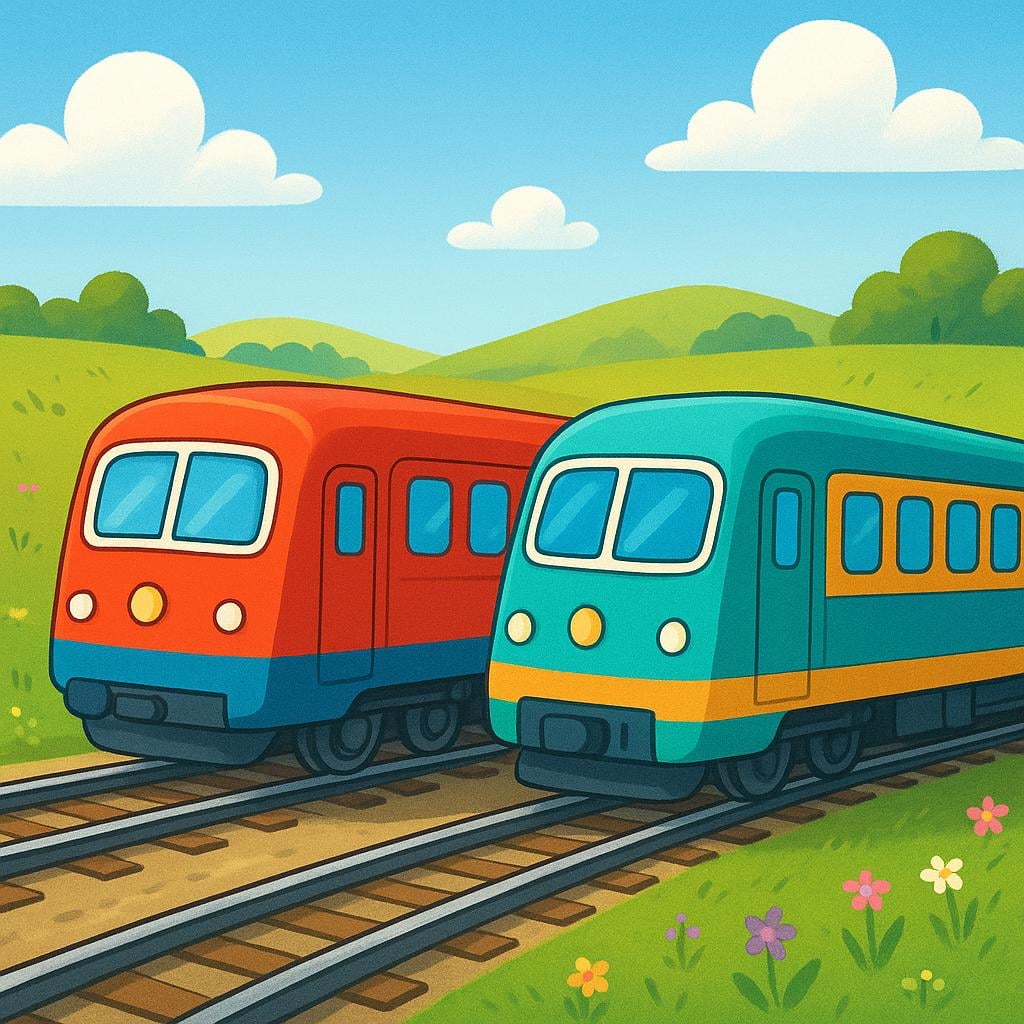
“trenes” means “trains” in Spanish (mode of transport).
trains
📝 In Action
Hay muchos trenes que van a la capital cada día.
A1There are many trains that go to the capital every day.
Los trenes de alta velocidad son muy rápidos.
A2High-speed trains are very fast.
Necesitamos comprar boletos para los trenes de la mañana.
A1We need to buy tickets for the morning trains.
Translate to Spanish
Words that translate to "trenes" in Spanish:
trains→✏️ Quick Practice
Quick Quiz: trenes
Question 1 of 1
Which sentence correctly uses 'trenes'?
📚 More Resources
👥 Word Family▼
📚 Etymology▼
'Tren' came into Spanish from Old French *train*, which meant 'the action of dragging or pulling.' It is related to the verb 'traer' (to bring/to drag).
First recorded: Mid-19th century (in the modern railway sense)
Cognates (Related words)
💡 Master Spanish
Take your Spanish to the next level. Read 200+ illustrated and narrated Spanish stories tailored to your level with the Inklingo app!
Frequently Asked Questions
How do I say 'train station' using 'trenes'?
You can say 'la estación de trenes' (the station of trains) or, more commonly, 'la estación de tren' (using the singular noun) to refer to the railway station.
Is 'trenes' used for subway systems?
Yes, but often in big cities, people specifically use the word 'metro' or 'subte' (depending on the country) to distinguish the underground system from long-distance railways.