tropezar
“tropezar” means “to trip” in Spanish. It has 2 different meanings depending on context:
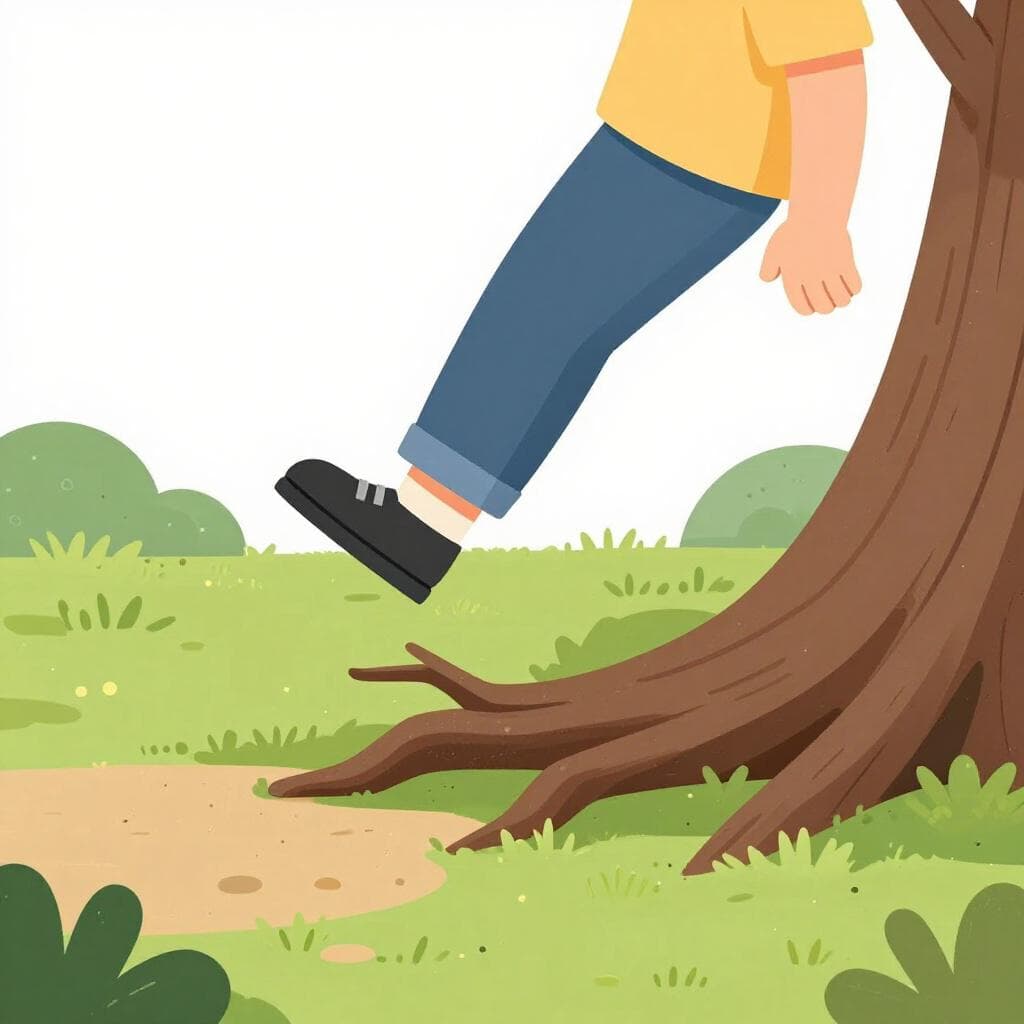

to trip
Also: to stumble
📝 In Action
Ten cuidado, no vayas a tropezar con el cable.
A2Be careful, don't trip over the cable.
Tropecé en la calle porque el suelo estaba irregular.
B1I tripped in the street because the ground was uneven.
Es fácil tropezar si no enciendes la luz.
A2It's easy to trip if you don't turn on the light.
to run into
Also: to come across
📝 In Action
Ayer tropecé con tu hermano en el supermercado.
B1Yesterday I ran into your brother at the supermarket.
Es probable que tropieces con mucha gente en el centro.
B1You will likely run into a lot of people downtown.
Subjunctive
Imperfect Subjunctive
Present Subjunctive
Indicative
Preterite
Imperfect
Present
Translate to Spanish
✏️ Quick Practice
Quick Quiz: tropezar
Question 1 of 3
How do you say 'I trip' in Spanish?
📚 More Resources
👥 Word Family▼
📚 Etymology▼
Likely from a combination of Germanic or Vulgar Latin roots related to 'trope' (a block or clog of wood), essentially meaning to hit a block.
First recorded: 13th century
Cognates (Related words)
💡 Master Spanish
Take your Spanish to the next level. Read 200+ illustrated and narrated Spanish stories tailored to your level with the Inklingo app!
Frequently Asked Questions
Is 'tropezar' different from 'caer'?
Yes. 'Tropezar' is the act of losing your footing or hitting an obstacle. 'Caer' (to fall) is what happens afterward if you don't recover your balance.
Why does it change from 'z' to 'c' in 'tropecé'?
Spanish spelling rules don't usually allow 'z' before 'e' or 'i'. When the conjugation ends in an 'e', the 'z' must change to 'c' to keep the same sound.
Can I use 'tropezar' to mean finding a solution?
Not usually. It is almost always used for finding problems (obstacles) or finding people by accident.