viceversa
“viceversa” means “vice versa” in Spanish (to indicate that the order of things mentioned can be reversed).
vice versa
Also: the other way around, conversely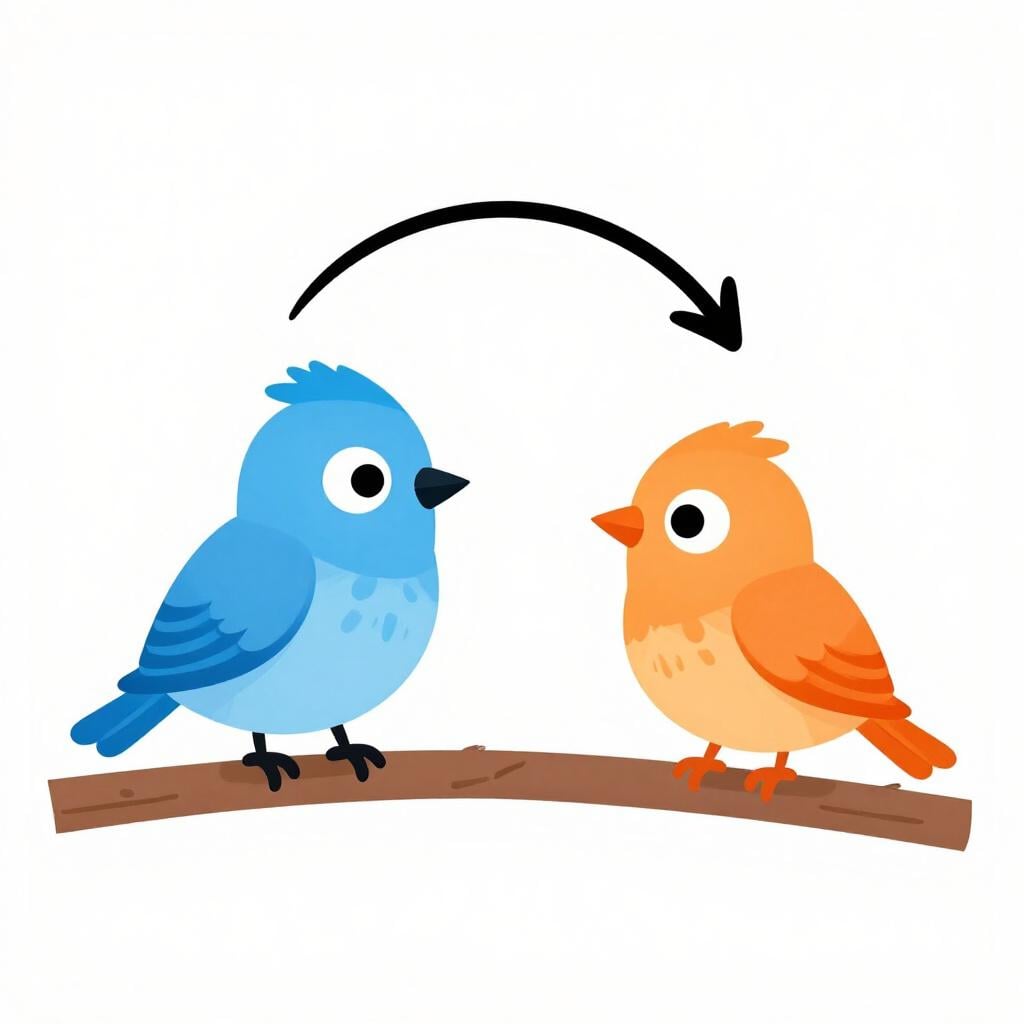
📝 In Action
Yo te ayudo con el español y tú me ayudas con el inglés, y viceversa.
A2I help you with Spanish and you help me with English, and vice versa.
Los perros entienden nuestras emociones y viceversa.
B1Dogs understand our emotions and the other way around.
El éxito a veces trae dinero, pero no siempre ocurre viceversa.
B2Success sometimes brings money, but it doesn't always happen the other way around.
Translate to Spanish
✏️ Quick Practice
Quick Quiz: viceversa
Question 1 of 3
Which of these is the correct spelling in Spanish?
📚 More Resources
👥 Word Family▼
🎵 Rhymes▼
📚 Etymology▼
From the Latin phrase 'vice versā', where 'vice' means 'in the place of' or 'change' and 'versā' means 'turned'. Literally, 'the order having been turned'.
First recorded: 17th century
Cognates (Related words)
💡 Master Spanish
Take your Spanish to the next level. Read 200+ illustrated and narrated Spanish stories tailored to your level with the Inklingo app!
Frequently Asked Questions
Is 'viceversa' formal?
It is neutral. You can use it in a scientific report or while chatting with friends at a café.
Does 'viceversa' change if I'm talking about women or plural groups?
No, it never changes. It always stays exactly the same regardless of who or what you are talking about.
Can I use 'viceversa' at the start of a sentence?
It is very rare. It almost always comes at the end of a thought because it refers back to something you just said.