


Pronouncing the 'h' and 'j'
Mistake: “Saying 'mi hija' as 'mee HEE-hah' or 'mee JEE-hah'.”
Correction: The 'h' is always silent, so it's 'mee EE-hah'. The 'j' sound is like the 'h' in 'hat' but made further back in your throat.
mee EE-hah
This is the most direct, standard, and universally understood way to say 'my daughter' in Spanish. It works in any situation, from a formal introduction to a casual conversation.

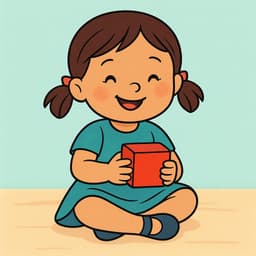
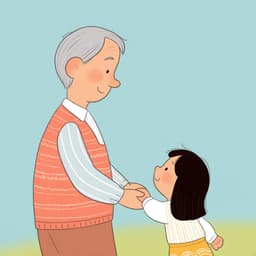
Whether introducing her as 'mi hija' or calling her 'mi nena', the bond between parent and child is a cherished part of Spanish-speaking culture.
my daughter — in Spanish
mee NEEN-yah
Literally 'my girl' or 'my little girl,' this is an extremely common and affectionate term of endearment. It's used for daughters of all ages, even adults, to show love and affection.
MEE-hah
A very common contraction of 'mi hija'. It's a warm, familiar, and deeply cultural term used constantly in everyday speech in Mexico and surrounding regions.
mee NAY-nah
Means 'my baby girl' or 'my little girl.' It's a very sweet and tender term of endearment, similar to 'mi niña' but perhaps a bit more gentle.
mee chee-KEE-tah
Means 'my little one.' It's a term of endearment that emphasizes her being small and cherished, regardless of her actual age.
mee preen-SAY-sah
Meaning 'my princess,' this is a classic, fairy-tale term of endearment used by parents to express how special and cherished their daughter is.
mee ah-MOR / mee VEE-dah / mee SYAY-loh
These are general, powerful terms of endearment: 'my love,' 'my life,' 'my heaven/sky.' While not exclusive to daughters, they are extremely common for parents to use with their children.
lah NEEN-yah day mees OH-hohs
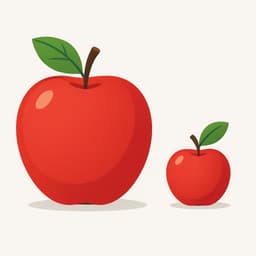
A beautiful, poetic expression that literally means 'the girl of my eyes.' It's the direct equivalent of the English idiom 'the apple of my eye.'
mee EE-hah mah-YOR / mee EE-hah may-NOR
These phrases mean 'my older daughter' and 'my younger daughter.' They are descriptive and used to specify which daughter you're talking about if you have more than one.
Here’s a quick guide to help you choose the best way to say 'my daughter' based on the situation.
| Phrase | Formality | Best For | Avoid When |
|---|---|---|---|
| mi hija | Neutral | Any situation, especially introductions or formal contexts. | Never necessary to avoid; it's always correct. |
| mi niña / mi nena | Informal | Expressing affection to your daughter or talking about her lovingly to friends and family. | In a very formal or professional introduction where it might sound too personal. |
| mija | Very Informal | Casual, everyday conversations in Mexico and Central America; shows warmth and familiarity. | Formal settings or in regions where it's not commonly used (like Spain or Argentina). |
| mi princesa | Informal / Affectionate | Moments of special pride or tenderness; very common from parents to young daughters. | Speaking in a non-family context where it could sound overly sentimental. |
The 'h' is silent and the 'j' sound (like a breathy 'h' from the back of the throat) can be new for English speakers, but they are consistent rules.
The structure is very simple and mirrors English: 'my' (mi) + 'daughter' (hija). No complex grammar involved.
While the basic phrase is easy, knowing which affectionate term to use ('mija', 'nena', 'niña') depends on region and context, adding a layer of cultural nuance.
Les presento a mi hija, Carolina. Acaba de graduarse de la universidad.
I'd like to introduce you to my daughter, Carolina. She just graduated from university.
Mija, ¿puedes venir a ayudarme con las compras, por favor?
Honey (my daughter), can you come help me with the groceries, please?
Mi niña está aprendiendo a tocar el piano. ¡Estoy tan orgullosa!
My little girl is learning to play the piano. I'm so proud!
Mi hija mayor vive en Madrid y mi hija menor todavía está en el colegio.
My older daughter lives in Madrid and my younger daughter is still in school.
In Spanish-speaking cultures, it's extremely common for parents to use affectionate nicknames like 'mi niña' or 'mi nena' for their daughters, even when they are fully grown adults. This is a normal expression of love and is not considered belittling or childish.
In Mexico and many parts of Central America, 'mija' (and 'mijo' for a son) is more than just a word; it's a cultural staple. It conveys familiarity, warmth, and affection instantly. You'll hear it not only from parents but also from grandparents, aunts, uncles, and even close family friends or elderly strangers addressing a younger person.
The frequent and loving use of terms for family members reflects the central role that family plays in most Hispanic cultures. Introducing and talking about one's children is a common and important part of social interaction.
Mistake: “Saying 'mi hija' as 'mee HEE-hah' or 'mee JEE-hah'.”
Correction: The 'h' is always silent, so it's 'mee EE-hah'. The 'j' sound is like the 'h' in 'hat' but made further back in your throat.
Mistake: “Referring to your daughter as 'mi hijo'. For example: 'Mi hijo, Ana, es doctora.'”
Correction: 'Mi hija, Ana, es doctora.'
Mistake: “Introducing your daughter to your new boss by saying, 'Esta es mija.'”
Correction: It's safer to say, 'Esta es mi hija.'
When in doubt, always use 'mi hija'. It is 100% correct in every situation and region. You can start using the more affectionate variations once you get a feel for the context and your relationship with the person you're speaking to.
Pay attention to how native speakers in a specific country or region talk about their children. You'll quickly pick up on whether 'mi nena', 'mi chiquita', or 'mija' is more common, which will help you sound more natural.
If you have more than one daughter, the plural is 'mis hijas' (mees EE-hahs). If you have a son and a daughter, the masculine plural 'mis hijos' is used to refer to the group, which is a key grammar point in Spanish.
'Mija' is the undisputed champion of informal, affectionate terms. It's used constantly in daily life, not just by parents but by almost any older person speaking to a younger female. It embodies a sense of community and warmth.
'Mi niña' is very common, but 'mija' is almost never used. The overall tone might be slightly more direct than in some Latin American countries.
'Nena' is an extremely common term of endearment. The intonation of Rioplatense Spanish has a distinctive melodic, almost Italian-sounding rhythm.
Affectionate terms are used very liberally. 'Mi nena' and 'mi chiquita' are extremely common. The pace of speech can be a challenge for learners.
¡Qué bonita es tu hija!
Your daughter is so beautiful!
Muchas gracias, estoy muy orgulloso/a de ella.
Thank you very much, I'm very proud of her.
¿Tienes hijos?
Do you have children?
Sí, tengo una hija. Se llama Lucía.
Yes, I have a daughter. Her name is Lucía.
¿Cuántos años tiene tu hija?
How old is your daughter?
Ella tiene quince años.
She is fifteen years old.
This connects the sound of the word to a positive emotion, making the 'EE-hah' pronunciation easier to remember and distinguishing it from the hard 'H' sound in English.
The biggest difference is the frequency and normalcy of using affectionate nicknames for daughters of all ages. In English, calling a 30-year-old daughter 'my little girl' might feel strange or infantilizing in many contexts, but in Spanish, 'mi niña' is a perfectly normal and loving expression for a daughter of any age. The line between a factual descriptor ('daughter') and a term of endearment is much more blurred in everyday Spanish.
This is the direct male counterpart and follows the same grammatical structure.
Learning the plural form ('mis hijos' or 'mis hijas') is the next logical step for talking about family.
After introducing your daughter, the next natural thing to say is her name.
This broadens your vocabulary from a specific family member to the family unit as a whole.
Question 1 of 4
You are in Mexico meeting a close family friend for a casual lunch. How would you most naturally introduce your daughter?
Knowing a phrase is one thing — using it at the right moment is another. Read 200+ illustrated and narrated Spanish stories to see phrases in the contexts where they actually belong.
Absolutely! It's very common and completely normal in Spanish-speaking cultures. These are terms of endearment that show love and are used for daughters of all ages, not just young children.
The main difference is formality and region. 'Mi hija' is the standard, neutral term used everywhere. 'Mija' is a casual, affectionate contraction that is extremely common in Mexico and Central America but not used much in places like Spain or Argentina.
You would say 'mis hijas' (mees EE-hahs). The possessive pronoun 'mi' changes to 'mis' to agree with the plural noun 'hijas'.
Yes, from a parent to a daughter, 'mi princesa' is a very common and sweet term of endearment. It's meant to show how special she is to you and is not considered strange in a family context.
In places like Mexico, 'mija' (and 'mijo' for men) has evolved into a general term of affection that older people often use when addressing younger people, regardless of relation. It's a way of being friendly and showing warmth, similar to how someone might say 'dear' or 'hon' in English.
Your son-in-law is 'mi yerno' (mee YER-noh). For example, 'Este es mi yerno, el esposo de mi hija.' (This is my son-in-law, my daughter's husband).
Strengthen the grammar behind this phrase:
Find similar phrases to expand your Spanish vocabulary:
Browse our complete collection of Spanish phrases organized by situation, from basic greetings to advanced conversations. Perfect for travelers, students, and anyone learning Spanish.
View All Spanish Phrases →