




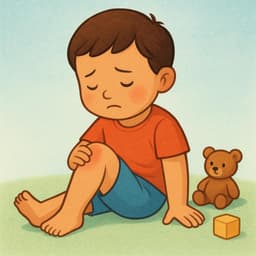

Using 'Estar' instead of 'Tener'
Mistake: “*Mis ojos están cansados.*”
Correction: Tengo los ojos cansados.
TEN-go lohs OH-hohs kahn-SAH-dohs
This is the most direct and universally understood way to say your eyes are tired. It literally translates to 'I have the tired eyes,' which is the standard way to talk about the state of body parts in Spanish.
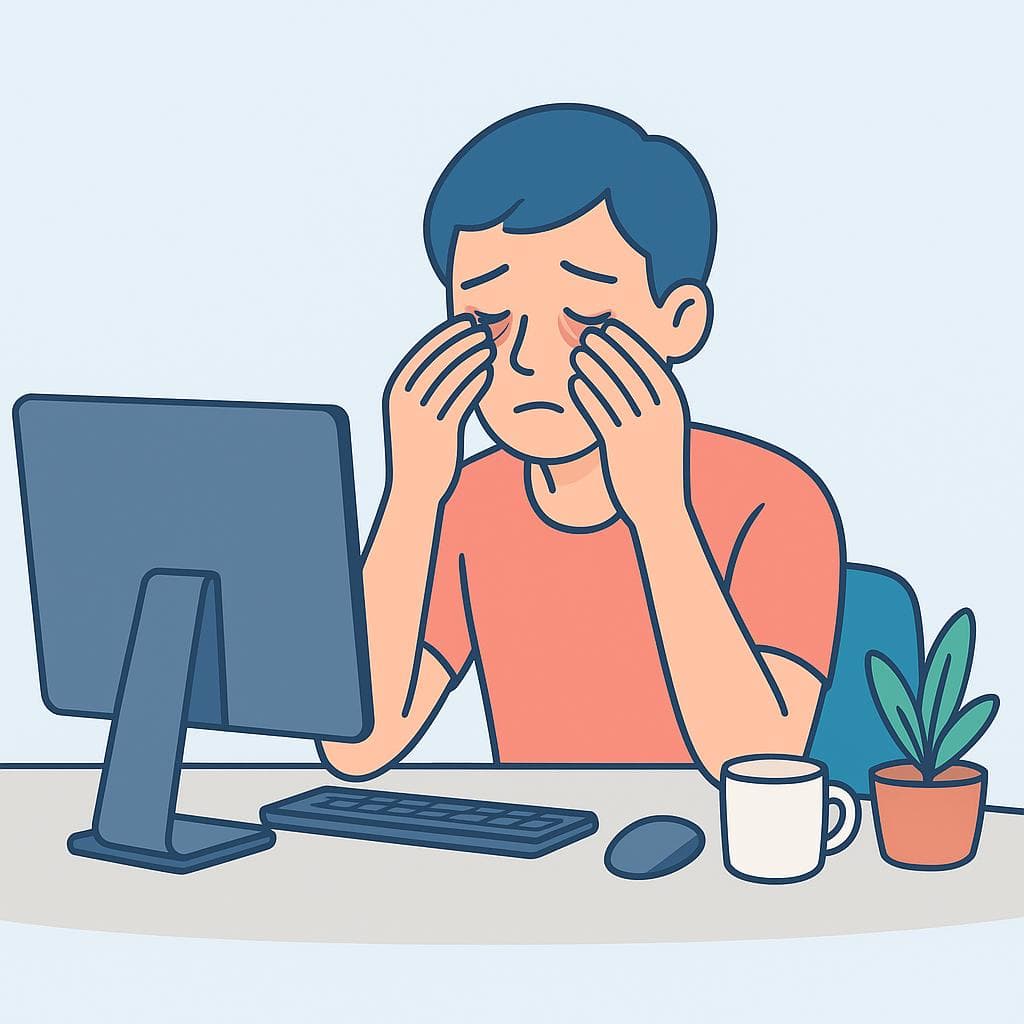
When you've been staring at a screen all day, you can say, 'Tengo los ojos cansados.'
My eyes are tired — in Spanish
TEN-go lah VEES-tah kahn-SAH-dah
This is an extremely common alternative that means 'I have tired sight' or 'My vision is tired.' It's often used interchangeably with 'Tengo los ojos cansados' for general eye fatigue.
seh meh KAHN-sahn lohs OH-hohs
This phrase means 'My eyes get tired.' It focuses more on the process or the action that causes the tiredness. The 'se me' part is a bit more advanced, but it makes you sound very natural.
see-EN-toh lohs OH-hohs peh-SAH-dohs
A very descriptive way to say 'I feel my eyes are heavy.' It conveys a strong sense of sleepiness or strain.
meh AR-den lohs OH-hohs
This specifically means 'My eyes are burning' or 'My eyes sting.' It's not just about being tired, but about a specific burning sensation.
meh DWEH-len lohs OH-hohs
This means 'My eyes hurt.' It implies pain or an ache, which is different from just being tired, but often related.
seh meh see-EH-rrahn lohs OH-hohs
A very common and slightly dramatic phrase meaning 'My eyes are closing.' It paints a clear picture that you're struggling to stay awake.
Here’s a quick comparison of the most common ways to talk about tired or sore eyes.
| Phrase | Literal Meaning | Best For | Avoid When |
|---|---|---|---|
| Tengo los ojos cansados. | I have the tired eyes. | General, all-purpose eye fatigue from any cause. | You want to describe a specific pain or burning sensation. |
| Tengo la vista cansada. | I have the tired sight. | Fatigue from visual tasks like reading or screen time. | The problem is a physical sensation like itching, not visual strain. |
| Me duelen los ojos. | The eyes hurt me. | Describing an actual ache or pain in your eyes. | Your eyes just feel heavy or sleepy but don't actually hurt. |
| Me arden los ojos. | The eyes burn me. | A stinging or burning sensation from allergies, smoke, or dryness. | The feeling is fatigue or a dull ache, not a sharp sting. |
| Se me cierran los ojos. | The eyes close themselves on me. | Expressing extreme sleepiness where you can't keep your eyes open. | You're just talking about eye strain; this is specifically about sleep. |
Fairly easy. The 'j' in 'ojos' is like the 'h' in 'hello', and the 'z' in 'cansados' (in Latin America) is an 's' sound. Both are manageable for English speakers.
The main hurdle is remembering to use 'Tener' + 'los' instead of the English structure 'My eyes are...'. Adjective agreement ('cansados' vs 'cansada') also requires attention.
The concept is universal and the expression is straightforward. There are no major cultural traps to fall into.
He estado en la computadora todo el día y ahora tengo los ojos cansados.
I've been on the computer all day and now my eyes are tired.
No puedo leer más, se me cansan los ojos muy rápido con esta luz.
I can't read anymore, my eyes get tired very quickly with this light.
Buenas noches, me voy a dormir. Siento los ojos pesados y se me cierran solos.
Good night, I'm going to sleep. I feel my eyes are heavy and they're closing on their own.
Doctor, últimamente tengo la vista muy cansada y me duelen los ojos al final del día.
Doctor, lately my vision has been very tired and my eyes hurt at the end of the day.
In English, you say 'My eyes ARE tired,' using the verb 'to be.' In Spanish, it's much more common to say 'I HAVE tired eyes' ('Tengo los ojos cansados'). This 'tener' (to have) + [body part] + [adjective] structure is used for many physical states, like 'tengo las manos frías' (I have cold hands).
The phrase 'tengo la vista cansada' is interesting because it has two meanings. It can mean temporary eye strain from an activity, but it's also the common, non-medical term for presbyopia—the age-related condition that makes it hard to see things up close. Context is everything!
Notice how it's 'Tengo LOS ojos cansados' (I have THE tired eyes), not 'mis ojos' (my eyes). When talking about your own body parts, Spanish uses the definite article ('el', 'la', 'los', 'las') because it's already obvious whose eyes you're talking about. Using 'mis' sounds redundant to a native speaker.
Mistake: “*Mis ojos están cansados.*”
Correction: Tengo los ojos cansados.
Mistake: “Tengo *mis* ojos cansados.”
Correction: Tengo *los* ojos cansados.
Mistake: “*Tengo los ojos cansada.* or *Tengo la vista cansado.*”
Correction: Tengo los ojos cansados. / Tengo la vista cansada.
Don't just default to 'cansados.' If your eyes are bothering you in a specific way, use a more precise verb. 'Me arden' for a burning feeling (allergies, smoke) or 'me duelen' for a deeper ache or pain will communicate your feeling much more clearly.
The phrase 'Se me cansan los ojos' is perfect for explaining what causes the fatigue. Follow it with 'cuando...' (when...) or 'con...' (with...) to sound very fluent. For example, 'Se me cansan los ojos con el sol' (My eyes get tired with the sun).
To emphasize just how tired your eyes are, simply add 'muy' (very) before the adjective. For example, 'Tengo los ojos muy cansados' or 'Tengo la vista muy cansada.' This is a simple way to add more feeling to your statement.
The phrase 'Tengo la vista cansada' is extremely common, perhaps even more so than 'ojos cansados' for everyday strain. 'Hecho polvo' (made of dust) is a colloquial way to say something is wrecked or exhausted.
All the standard variations are used frequently. 'Ya no aguanto los ojos' (I can't stand my eyes anymore) is a common, slightly more informal way to express severe fatigue or irritation.
The structure 'Estoy con...' (I am with...) is a bit more common here than in other regions. 'Estar liquidado/a' is a very common slang term for being completely wiped out or exhausted.
¿Por qué? ¿No dormiste bien anoche?
Why? Didn't you sleep well last night?
No, me quedé trabajando hasta tarde.
No, I stayed up working late.
Deberías tomar un descanso.
You should take a break.
Sí, tienes razón. Voy a descansar un poco.
Yes, you're right. I'm going to rest a bit.
A lo mejor necesitas usar gotas para los ojos.
Maybe you need to use eye drops.
Buena idea, creo que tengo algunas.
Good idea, I think I have some.
This silly visual connects the sound of 'cansados' to a memorable image of something you might stare at, causing eye strain.
This links the key verb 'Tengo' with a physical action and the feeling of tiredness, making the grammatical structure more memorable.
The biggest mental shift for English speakers is moving from 'to be' to 'to have'. You don't say your eyes *are* tired; you say you *have* tired eyes. The second major difference is using 'the' (`los`) instead of 'my' (`mis`) for body parts, which feels unnatural at first but is standard in Spanish.
Why it''s different: A direct, word-for-word translation like 'Mis ojos están cansados' uses the wrong verb ('estar' instead of 'tener') and sounds like a mistake made by a non-native speaker.
Use instead: Always use 'Tengo los ojos cansados' for the most natural and correct phrasing.
This is the general feeling that often accompanies tired eyes. Learn 'Estoy cansado/a'.
This practices the 'me duele(n)' structure, which is essential for talking about aches and pains.
This is the natural solution to being tired. Learn 'Necesito descansar'.
This is a common reason for being tired, and a great way to continue the conversation.
Question 1 of 3
You've been reading a book for hours and your eyes feel strained. What's the most common and natural way to say this?
Knowing a phrase is one thing — using it at the right moment is another. Read 200+ illustrated and narrated Spanish stories to see phrases in the contexts where they actually belong.
It's a key difference between Spanish and English grammar. For describing the state of your own body parts, Spanish uses the verb 'tener' (to have) plus a definite article ('los'), not the verb 'estar' (to be) with a possessive pronoun ('mis'). It's a fundamental pattern you'll see for many physical feelings.
They are often used interchangeably for general eye strain. However, 'ojos cansados' refers more to the physical eyes themselves, while 'vista cansada' refers to your sense of sight or vision. Also, be aware that 'vista cansada' is the common term for presbyopia (age-related farsightedness).
While a native speaker would understand you, it sounds a bit unnatural. Because you say 'Tengo' ('I have'), it's already clear the eyes belong to you. Spanish avoids this redundancy by using 'los' (the) instead of 'mis' (my). Stick with 'los ojos' to sound more fluent.
For an itchy feeling, you would say 'Me pican los ojos.' The verb 'picar' means 'to itch' or 'to sting.' This is another great example of the 'me + verb + body part' structure, similar to 'me duelen los ojos'.
Absolutely. All the main variations like 'Tengo los ojos cansados' and 'Tengo la vista cansada' are neutral in formality. You can say them to your boss, a doctor, or a friend without any issue. They are simple statements of a physical feeling.
Strengthen the grammar behind this phrase:
Dive deeper into related topics:
Find similar phrases to expand your Spanish vocabulary:
Browse our complete collection of Spanish phrases organized by situation, from basic greetings to advanced conversations. Perfect for travelers, students, and anyone learning Spanish.
View All Spanish Phrases →