Ya nos cargó el payaso
yah nohs kar-GOH el pah-YAH-so
🎨 Literal vs. Figurative
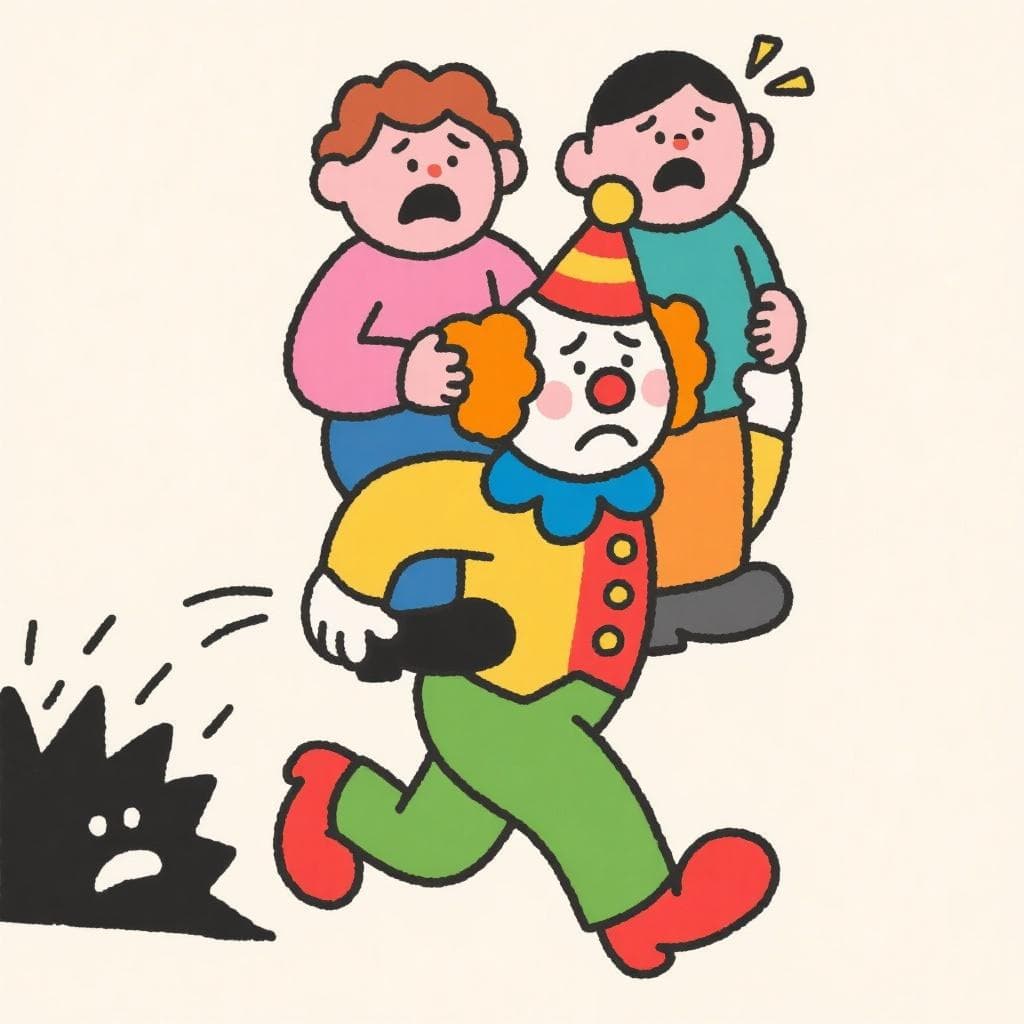
Literally, the phrase means 'The clown has already carried us'.
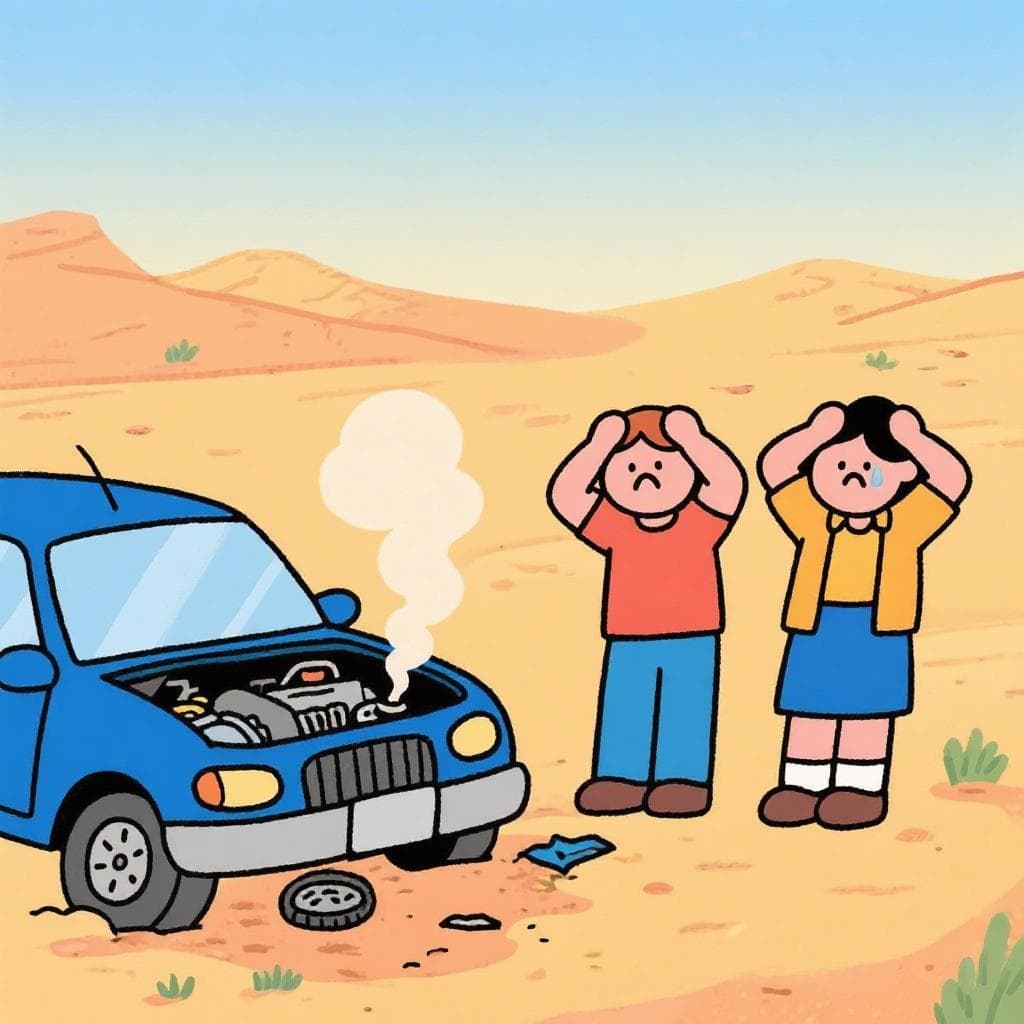
In reality, it means you're in a terrible, hopeless situation, that 'you're done for'.
Key Words in This Idiom:


📝 In Action
Se nos acabó la gasolina en medio de la nada y no hay señal. Ahora sí, ya nos cargó el payaso.
C1We ran out of gas in the middle of nowhere and there's no signal. Now we're really toast.
El jefe descubrió el error en el reporte. A Juan ya se lo cargó el payaso.
C1The boss discovered the mistake in the report. Juan is totally done for.
Perdí mi pasaporte un día antes del vuelo. ¡Ya me cargó el payaso!
C1I lost my passport the day before the flight. I'm so screwed!
📜 Origin Story
This phrase likely comes from the world of Mexican rodeo. In the 'jaripeo' (a form of bull riding), rodeo clowns have the dangerous job of distracting the bull if a rider falls. Their role is to save the rider's life. In a tragic scenario where the rider is badly injured or killed, the clown might be the one to carry him out of the arena. Therefore, if 'the clown carries you,' it means the worst has already happened.
⭐ Usage Tips
For Ultimate Doom
Use this phrase to express a sense of finality and hopelessness. It's for situations that are beyond repair, not for minor inconveniences. It often carries a tone of dark humor and resignation.
Change the Pronoun
While 'nos' (us) is common, you can easily change the person affected. 'Ya te cargó el payaso' means 'You're screwed,' and 'Ya lo cargó el payaso' means 'He's done for.' The verb 'cargó' stays the same.
❌ Common Pitfalls
Using it for Small Problems
Mistake: “Saying 'Se me cayó el café, ya me cargó el payaso.' (I spilled my coffee, I'm done for.)”
Correction: This is an overstatement. The phrase is reserved for serious, game-over situations like getting fired, failing a class, or facing a major disaster. Using it for small things makes you sound overly dramatic.
📚 Related Grammar
Want to understand the grammar behind this idiom? Explore these lessons for a deep dive:
Using Direct and Indirect Pronouns Together
This idiom is very flexible because you can change the person affected using pronouns like 'me' (I'm done for) or 'nos' (we're done for); the example 'A Juan ya se lo cargó el payaso' shows a complex pronoun combination.
The Preterite Tense: Regular Verbs
The verb 'cargó' (carried) is in the simple past tense, which is crucial because it emphasizes that the bad event is a completed action and the resulting disaster is now irreversible.
🌎 Where It''s Used
Mexico
Quintessentially Mexican. It is extremely common and instantly understood by virtually all Mexicans. It's a hallmark of the country's colloquial language.
Latin America
Largely specific to Mexico. While it might be understood in some border areas or by people exposed to Mexican media, it is not used natively in most other Latin American countries.
✏️ Quick Practice
Quick Quiz: Ya nos cargó el payaso
Question 1 of 1
If your friend says 'Rompí mi laptop y no guardé el proyecto final. Ya me cargó el payaso,' what is she expressing?
🗣️ Practice Pronunciation
Want to sound more natural when using this idiom? Practice your Spanish pronunciation with our collection of tongue twisters.
Browse Spanish Tongue Twisters →🏷️ Tags
Hear idioms come alive
Idioms make sense in context. Read 200+ illustrated and narrated Spanish stories to see idioms used naturally by characters — and build the ear native speakers have.
Frequently Asked Questions
Can 'ya nos cargó el payaso' refer to someone dying?
Yes, absolutely. It's often used as a colloquial, slightly dark and humorous euphemism for death. If you say 'A Don Carlos ya se lo cargó el payaso,' it's an informal way of saying that Don Carlos has passed away.
Is this phrase offensive?
It's not offensive, but it is very informal slang. You would use it with friends and family, but it would be out of place in a professional or formal setting like a business meeting or an academic paper.