"El muerto al hoyo y el vivo al bollo."
el MWEHR-toh al OH-yoh ee el VEE-voh al BOH-yoh
The dead to the pit and the living to the feast.
💡 Understanding the Quote
"El muerto al hoyo y el vivo al bollo."
🎨 Visual Representation
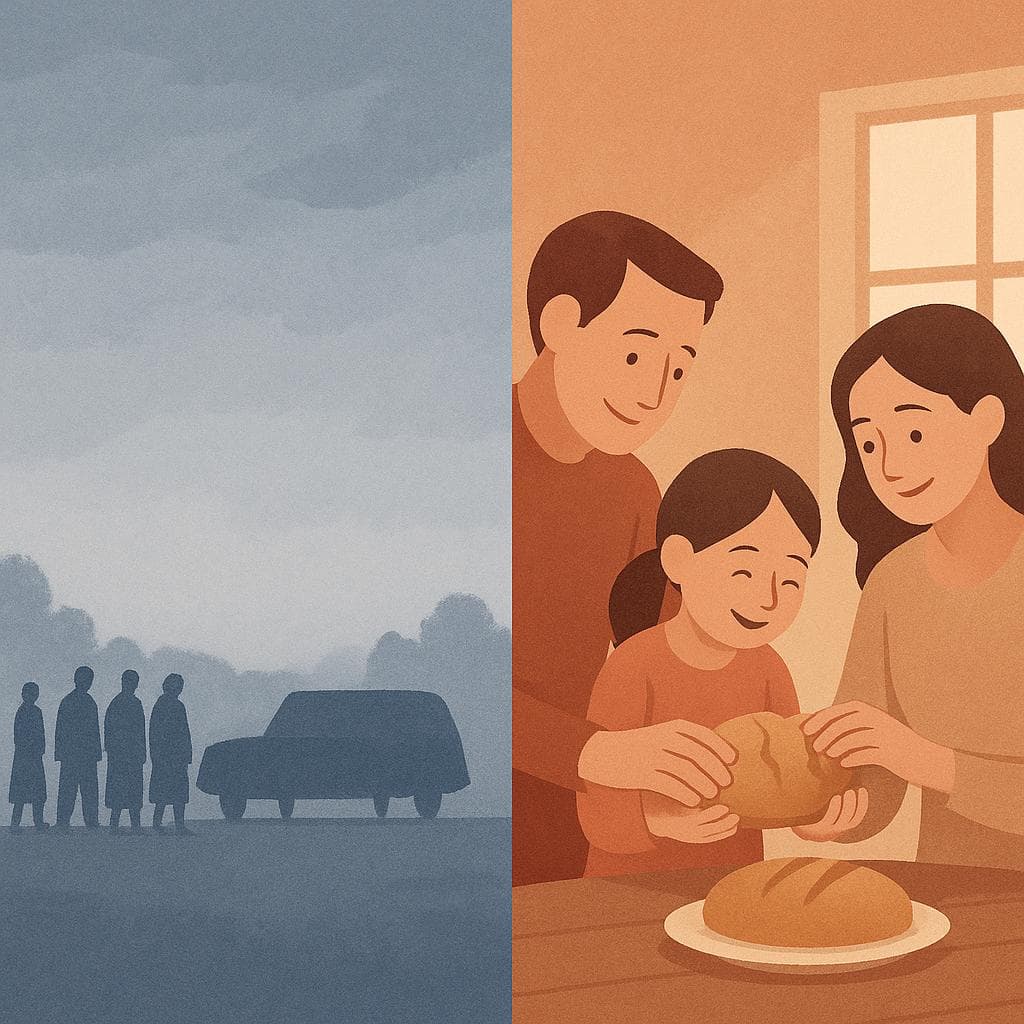
The proverb captures the pragmatic idea that life, with its daily needs, must continue even in the face of loss.
🔑 Key Words



📖 Context
This is a traditional Spanish proverb ('refrán') with anonymous origins, passed down through generations as folk wisdom.
📝 In Action
Sé que es un día triste, pero como se suele decir, el muerto al hoyo y el vivo al bollo. Tenemos que comer algo.
B2I know it's a sad day, but as they say, the dead to the pit and the living to the feast. We have to eat something.
Lamento tu pérdida, pero no puedes dejar de cuidarte. El muerto al hoyo y el vivo al bollo.
C1I'm sorry for your loss, but you can't stop taking care of yourself. Life goes on.
✍️ About the Author
📜 Historical Context
This saying comes from Spanish folk wisdom, reflecting a historically pragmatic view of life and death. In times when life was precarious, it was essential for the community to focus on the survival and well-being of the living, even while mourning the dead.
🌍 Cultural Significance
This proverb is a cornerstone of Spanish pragmatism. It's not meant to be callous or disrespectful; rather, it's a blunt but powerful affirmation of life. It acknowledges grief but emphasizes the undeniable responsibilities and needs of those who remain.
📚 Literary Analysis
The proverb's power comes from its concise, balanced structure, a technique called parallelism. It creates a sharp contrast between 'muerto' (dead) and 'vivo' (living), and their respective destinations: 'hoyo' (pit/grave) and 'bollo' (a sweet bun, representing food and life's pleasures). The rhyme between 'hoyo' and 'bollo' makes it catchy and memorable.
⭐ Usage Tips
Use with Care and Empathy
This phrase is best used among close friends or family after a suitable period of mourning has passed. It can sound insensitive if used too soon or with someone who is not ready to hear it. It's a way to gently nudge someone back toward the routines of life.
Beyond Literal Death
While its origin is about death, it can be used more metaphorically to mean 'put the past behind you and focus on current needs.' For example, after a project fails or a relationship ends, it can mean it's time to move on.
🔗 Related Quotes
✏️ Quick Practice
Quick Quiz: El muerto al hoyo y el vivo al bollo.
Question 1 of 2
What is the core message of 'El muerto al hoyo y el vivo al bollo'?
🏷️ Categories
Themes:
Go from quotes to whole stories
A quote can move you. A story can change how you think in Spanish. Read 200+ illustrated and narrated Spanish stories tailored to your level.
Frequently Asked Questions
Is this saying considered disrespectful to the dead?
Within its cultural context, it's generally not seen as disrespectful. It's understood as a realistic and pragmatic acceptance that life must continue for the living. However, its appropriateness depends heavily on the timing and the relationship with the person you're speaking to.
What does 'bollo' mean here?
Literally, a 'bollo' is a bun or pastry. In the proverb, it's used metonymically—a part representing the whole—to signify food, sustenance, and the simple pleasures and necessities of life that the living must attend to.