How to Say "bruise" in Spanish
The most common Spanish word for “bruise” is “cardenal” — use this term for a visible bruise or contusion, especially one that is dark in color, resulting from a physical impact.
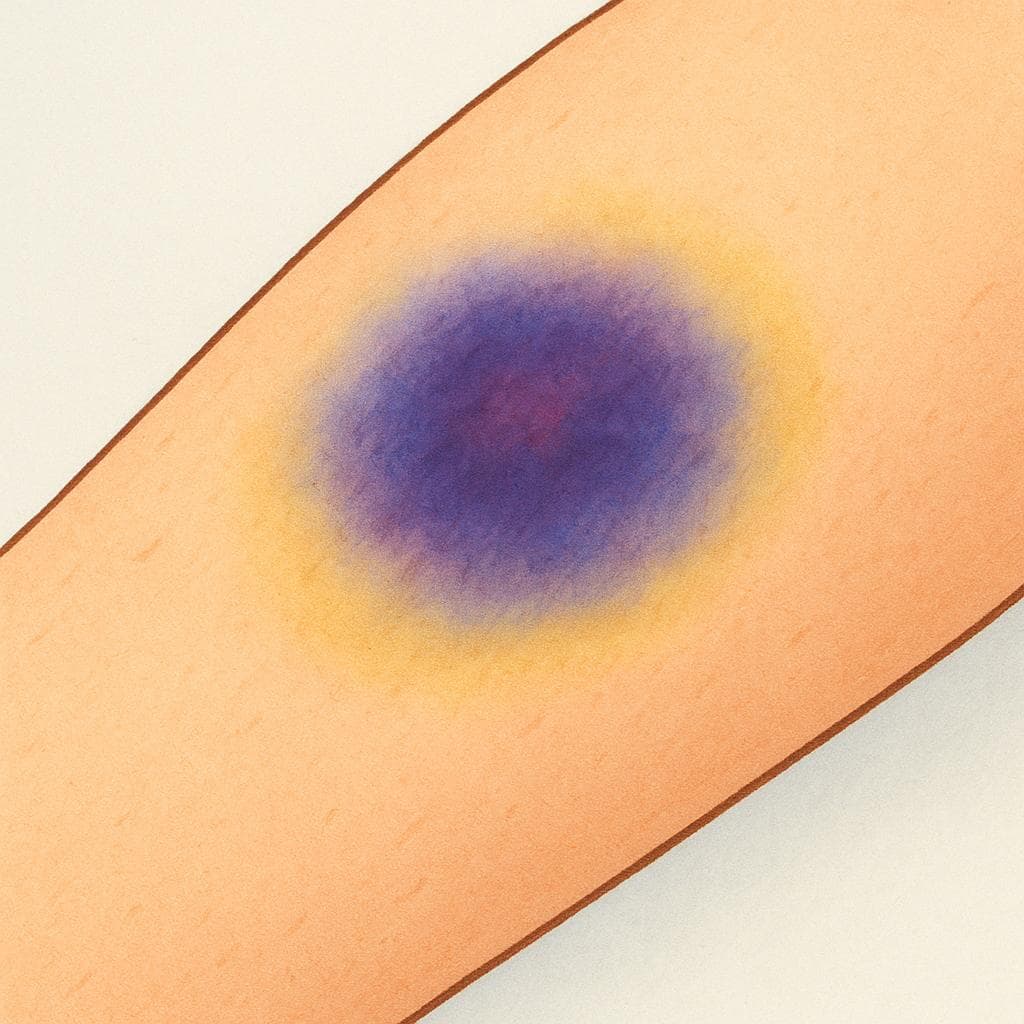
cardenal
kar-deh-NALLkaɾ.ðeˈnal
Examples
Me caí y ahora tengo un cardenal grande en la pierna.
I fell and now I have a big bruise on my leg.
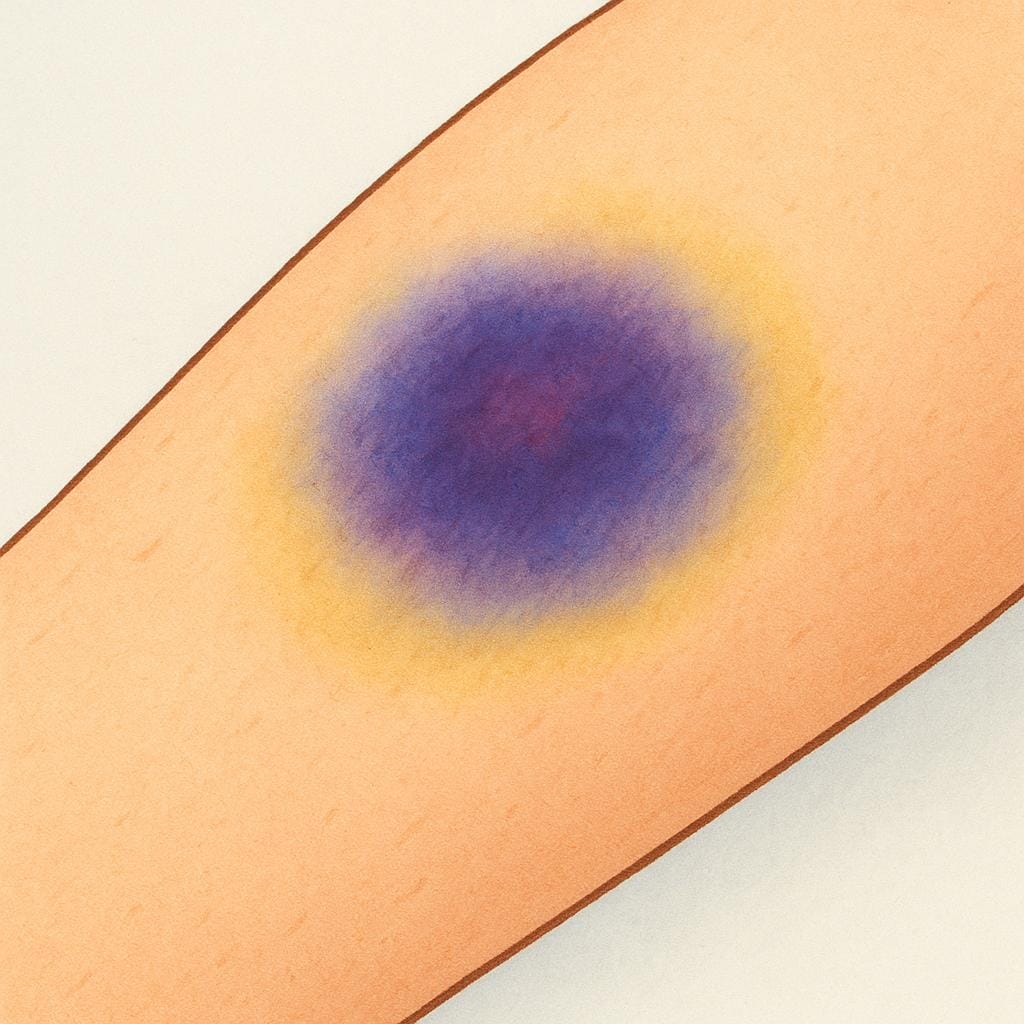
El golpe le dejó un cardenal morado.
The hit left him a purple bruise.
Color Connection
This meaning comes from the deep reddish-purple color associated with both the church official's robes and the bird, which is similar to the color of a fresh bruise.
contusión
Examples
El jugador se retiró del campo con una contusión en la rodilla.
The player left the field with a bruise on his knee.
morado
mo-rah-dohmoˈɾaðo
Examples
Me salió un morado en el brazo después de la caída.
I got a bruise on my arm after the fall.
Tienes un morado muy grande en la pierna.
You have a very big bruise on your leg.
El golpe fue fuerte, pero el morado ya está desapareciendo.
The hit was hard, but the bruise is already disappearing.
Using 'tener' vs 'haber'
Use 'tener un morado' to say you have a bruise, and 'me salió un morado' to say one appeared on you.
Confusing with 'moreno'
Mistake: “Saying 'tengo un moreno' to mean a bruise.”
Correction: 'Moreno' refers to a tan or dark hair; use 'morado' for a bruise.
moretón
Examples
Me salió un moretón en el brazo.
I got a bruise on my arm.
Informal vs. Formal Terms
Learn Spanish with Inklingo
Interactive stories, personalized learning, and more.