How to Say "corroded" in Spanish
The most common Spanish word for “corroded” is “oxidado” — use 'oxidado' when referring to something that has become damaged by rust or oxidation, indicating a state of decay, most commonly seen with metals.
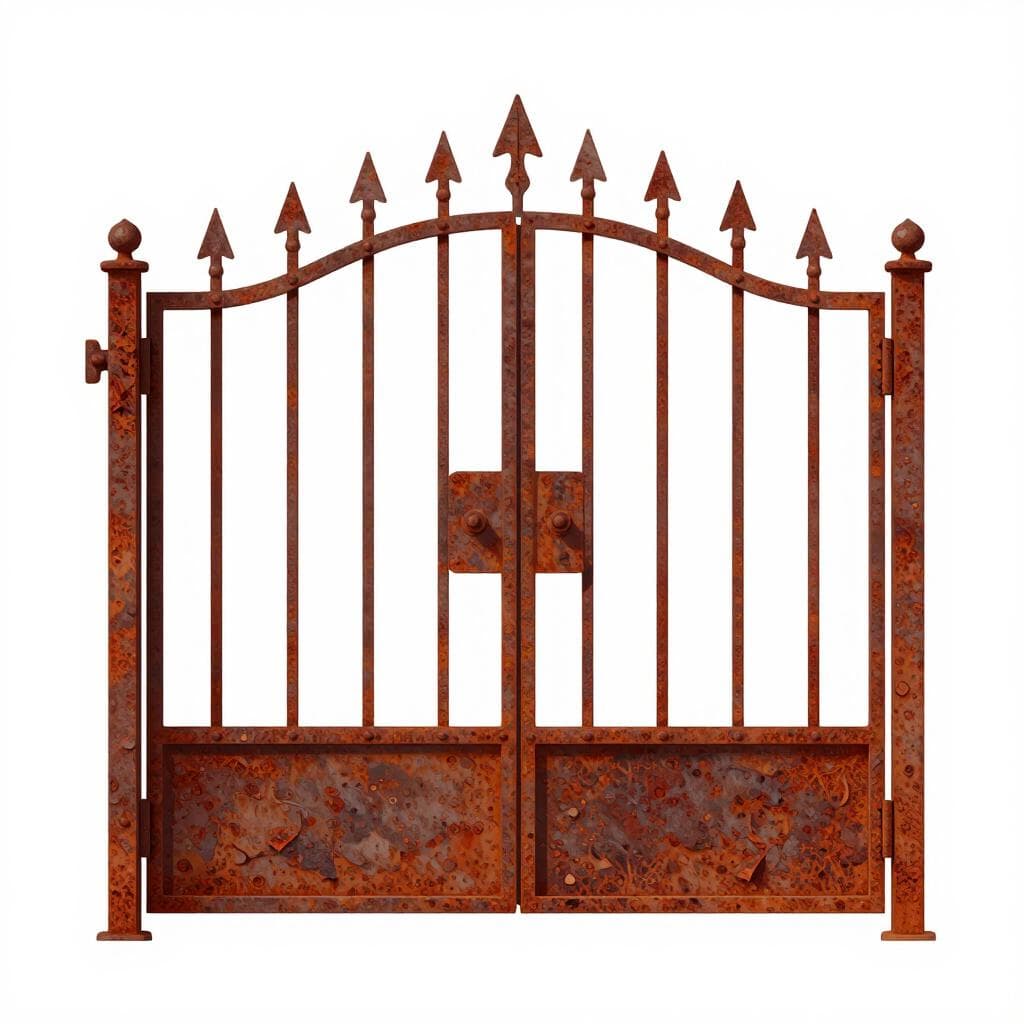
oxidado
oh-ksee-DAH-dohoksiˈdaðo

Examples
El viejo puente de hierro estaba completamente oxidado.
The old iron bridge was completely rusted.
El clavo está muy oxidado.
The nail is very rusty.
No uses ese martillo oxidado, se puede romper.
Don't use that rusty hammer; it might break.
El viejo puente de hierro parece oxidado y peligroso.
The old iron bridge looks rusty and dangerous.
Matching the word to the object
This word must change to match what you are talking about. Use 'oxidado' for masculine items (el clavo) and 'oxidada' for feminine items (la llave).
Using 'Estar' for states
Since rust is usually a condition that happened over time, we almost always use the verb 'estar' (to be) rather than 'ser'.
Using 'Ser' for rust
Mistake: “El metal es oxidado.”
Correction: El metal está oxidado. Use 'estar' because you are describing the current state of the metal, not its permanent identity.
Examples
La acidez del limón se ha comido el esmalte del anillo.
The acidity of the lemon has eaten away at the ring's enamel.
Rust vs. Eaten Away
Learn Spanish with Inklingo
Interactive stories, personalized learning, and more.