How to Say "enchanted" in Spanish
The most common Spanish word for “enchanted” is “encantado” — use this when referring to someone being delighted, pleased, or very happy about something, like receiving a gift or hearing good news.


encantado
en-kahn-TAH-doheŋkanˈt̪aðo

Examples
Estaba encantado con el regalo que le hicieron.
He was delighted with the gift they gave him.
Dicen que hay un pozo encantado en el bosque.
They say there is an enchanted well in the forest.
Volvimos de las vacaciones absolutamente encantados.
We returned from vacation absolutely charmed (or delighted).
La novela me ha encantado, la he leído dos veces.
The novel has delighted me; I have read it twice.
Used with 'Estar' or 'Ser'
Use 'estar' (e.g., 'estoy encantado') to talk about a current feeling or temporary state of happiness. Use 'ser' (e.g., 'es un lugar encantado') to describe a permanent quality, like being magical.
Forming Perfect Tenses
To show an action completed in the past, 'encantado' is combined with a form of the verb 'haber' (to have), such as 'he encantado' (I have enchanted) or 'había encantado' (I had enchanted).
Participle Gender
Mistake: “Using 'encantado' instead of 'encantada' when forming perfect tenses (e.g., *La bruja ha encantada*).”
Correction: When forming perfect tenses with 'haber', the past participle ('encantado') is invariable—it *always* ends in -o and never changes for gender or number.
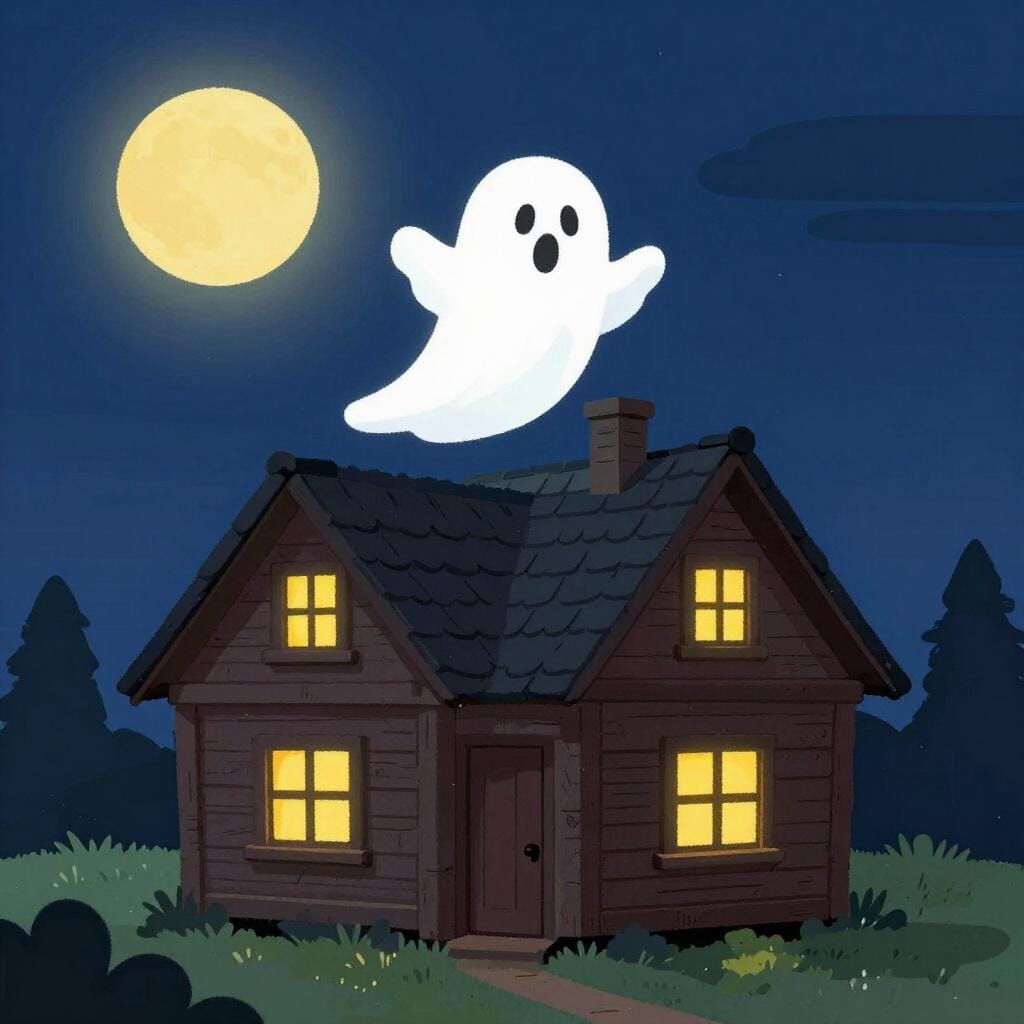
embrujado
em-brew-HA-doembɾuˈxaðo
Examples
El castillo embrujado está en la cima de la montaña.
The haunted castle is at the top of the mountain.
Dicen que este bosque está embrujado por un antiguo espíritu.
They say this forest is haunted by an ancient spirit.
Él parecía embrujado por la extraña melodía de la flauta.
He seemed bewitched by the strange melody of the flute.
Matching Endings
Because this word describes a noun, its ending changes. Use 'embrujado' for masculine words (el libro) and 'embrujada' for feminine words (la casa).
Using 'Estar' for Haunted Places
When saying a house is haunted, use 'estar' (the 'to be' for conditions). For example: 'La casa está embrujada.' It describes the state of the house.
Using 'ser' for haunted locations
Mistake: “La casa es embrujada.”
Correction: La casa está embrujada. In Spanish, being haunted is treated like a condition or state, so we use 'estar' instead of 'ser'.
mágico
Examples
El mago usó una varita mágica para hacer desaparecer el conejo.
The magician used a magic wand to make the rabbit disappear.
encantado
Examples
La novela me ha encantado, la he leído dos veces.
The novel has delighted me; I have read it twice.
Encantado vs. Embrujado
Related Translations
Learn Spanish with Inklingo
Interactive stories, personalized learning, and more.