How to Say "fan" in Spanish
The most common Spanish word for “fan” is “fan” — use 'fan' for a general admiration of a person, team, or activity, especially when borrowing the English term directly into Spanish.






fan
fahnfan

Examples
Ella es una gran fan de los libros de ciencia ficción.
She is a big fan of science fiction books.
Los fans hicieron fila toda la noche para ver la película.
The fans lined up all night to see the movie.
Mi hermano es el fan número uno de ese equipo de fútbol.
My brother is the number one fan of that soccer team.
Gender Usage
"Fan" is the same word whether you are talking about a man (el fan) or a woman (la fan). Only the article (el/la) changes to match the person's gender.
Plural Form
Mistake: “Using *fanes* as the plural.”
Correction: The correct plural is *fans*, following the English spelling, which is accepted in Spanish. Example: *los fans*.
aficionado
ah-fee-thyo-NAH-dohafiθjoˈnaðo

Examples
Mi hermano es un gran aficionado al Real Madrid.
My brother is a big Real Madrid fan.
Los aficionados llenaron el estadio para ver el partido.
The fans filled the stadium to watch the game.
Using the 'a' link
When you want to say what you are a fan of, always use 'a' (to) followed by the thing you love. For example: 'aficionado a la música'.
Don't forget the 'a'
Mistake: “Soy aficionado la fotografía.”
Correction: Soy aficionado a la fotografía. You need the 'a' to connect the person to the interest.
admirador
ad-mee-rah-doraðmiɾaˈðoɾ

Examples
Él es un gran admirador de la música clásica.
He is a big admirer of classical music.
Recibió una carta de un admirador secreto.
She received a letter from a secret admirer.
Soy un ferviente admirador de tu talento.
I am a fervent admirer of your talent.
Changing Gender
To talk about a woman, simply change the ending to 'admiradora'. The word 'admirador' specifically refers to a male.
Admirador vs. Fan
Mistake: “Using 'fan' for everything.”
Correction: Use 'admirador' for a more respectful or romantic tone; 'fan' is often used for sports or pop culture.
seguidor
seh-ghee-DOHRseɣiˈðoɾ

Examples
Ella tiene más de un millón de seguidores en su cuenta.
She has more than a million followers on her account.
Soy un fiel seguidor de ese equipo de fútbol desde niño.
I have been a loyal fan of that soccer team since I was a child.
El candidato habló ante una multitud de seguidores.
The candidate spoke before a crowd of supporters.
The '-dor' ending
In Spanish, adding '-dor' to a verb root is a common way to describe a person who performs that action. Here, 'seguir' (to follow) becomes 'seguidor' (follower).
Making it plural
Since the word ends in a consonant (r), you simply add '-es' to the end to talk about more than one person: 'seguidores'.
Confusing 'follower' with 'next'
Mistake: “Using 'seguidor' to mean 'the next day'.”
Correction: Use 'siguiente' for 'next' and 'seguidor' only for a person who follows someone else.
fanático
Examples
Mi hermano es un fanático del Real Madrid.
My brother is a Real Madrid fan.
entusiasta
en-too-syas-tahentuˈsjasta

Examples
Él es un entusiasta del cine clásico.
He is a classic cinema enthusiast.
La convención reunió a miles de entusiastas de la tecnología.
The convention gathered thousands of technology enthusiasts.
Como entusiasta de la cocina, siempre compro especias nuevas.
As a cooking enthusiast, I always buy new spices.
Using 'de'
When you are an enthusiast 'of' something, always use the word 'de' after entusiasta.
Missing the 'the'
Mistake: “Soy entusiasta de música.”
Correction: Soy entusiasta de la música. In Spanish, we usually include 'the' (el/la) when talking about a general topic you like.
apasionado
ah-pah-syoh-NAH-dohapasjoˈnaðo

Examples
Es un apasionado de los coches clásicos.
He is a classic car enthusiast.
Como apasionado de la cocina, siempre pruebo recetas nuevas.
As a cooking enthusiast, I'm always trying new recipes.
Los apasionados del fútbol llenaron el estadio.
The soccer fans filled the stadium.
Connecting to the Subject
When used as a noun, it is almost always followed by 'de' to indicate the area of interest (e.g., 'un apasionado de la historia').
Don't forget the 'de'
Mistake: “Es un apasionado la música.”
Correction: Say 'Es un apasionado DE la música'. In Spanish, you need 'de' to connect the person to their hobby.
ventilador
ben-tee-lah-DORbentilaˈðoɾ
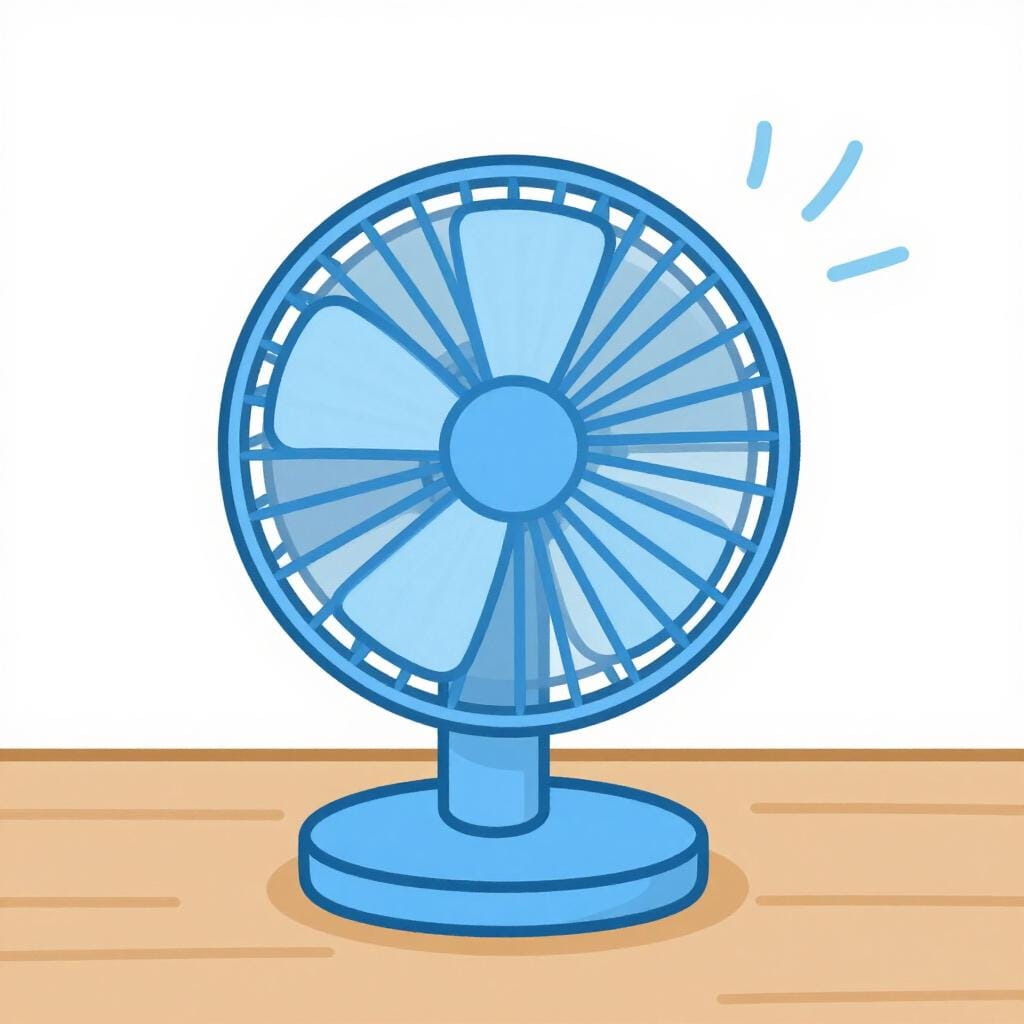
Examples
Hace mucho calor, por favor enciende el ventilador.
It is very hot; please turn on the fan.
Compramos un ventilador de techo para el dormitorio.
We bought a ceiling fan for the bedroom.
El ruido del ventilador no me deja dormir.
The noise from the fan won't let me sleep.
Masculine Word
This word is masculine, so always use 'el' or 'un'. For example, 'el ventilador' or 'un ventilador nuevo'.
Plural Form
Since it ends in a consonant, just add '-es' to make it plural: 'los ventiladores'.
Fan vs. Hand Fan
Mistake: “Using 'abanico' for an electric fan in Spain.”
Correction: In Spain, 'abanico' is usually a handheld folding fan. Use 'ventilador' for the electric device to be clear.
Distinguishing between 'fan' and 'aficionado'/'admirador'
Related Translations
Learn Spanish with Inklingo
Interactive stories, personalized learning, and more.