How to Say "handstand" in Spanish
The most common Spanish word for “handstand” is “pino” — use 'pino' when referring to the physical act of balancing on one's hands as a form of exercise or stunt.
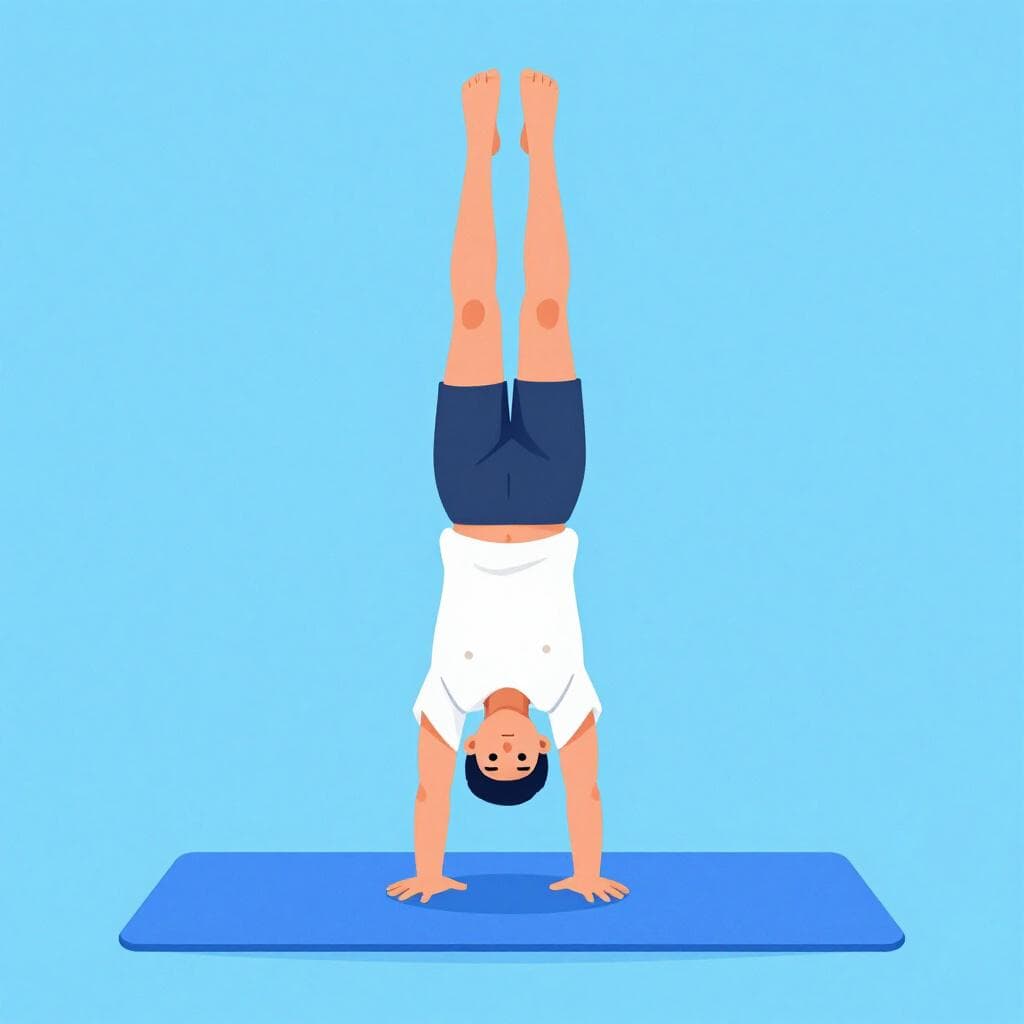
pino
pee-noˈpino

Examples
¡Mira, puedo hacer el pino!
Look, I can do a handstand!
Mira, ¡puedo hacer el pino!
Look, I can do a handstand!
El niño intentó hacer el pino en el césped.
The boy tried to do a handstand on the grass.
Hacer el pino requiere mucha fuerza en los brazos.
Doing a handstand requires a lot of arm strength.
Action Verb Pairing
This meaning is almost always used with the action word 'hacer' (to do/make).
Being vs. Doing
Mistake: “Saying 'soy un pino' to mean you are upside down.”
Correction: Say 'estoy haciendo el pino' (I am doing a handstand).
vertical
ber-tee-KAHLbeɾ.tiˈkal
Examples
Traza la vertical desde el punto A.
Draw the vertical line starting from point A.
El gimnasta mantuvo la vertical por diez segundos.
The gymnast held the handstand for ten seconds.
The feminine noun
When used as a noun to mean 'vertical line' or 'handstand', it is almost always feminine: 'la vertical'.
Confusing handstand terms
Mistake: “Hacer el vertical.”
Correction: Hacer la vertical. It is a feminine noun when referring to the exercise.
Pino vs. Vertical
Related Translations
Learn Spanish with Inklingo
Interactive stories, personalized learning, and more.