How to Say "knock" in Spanish
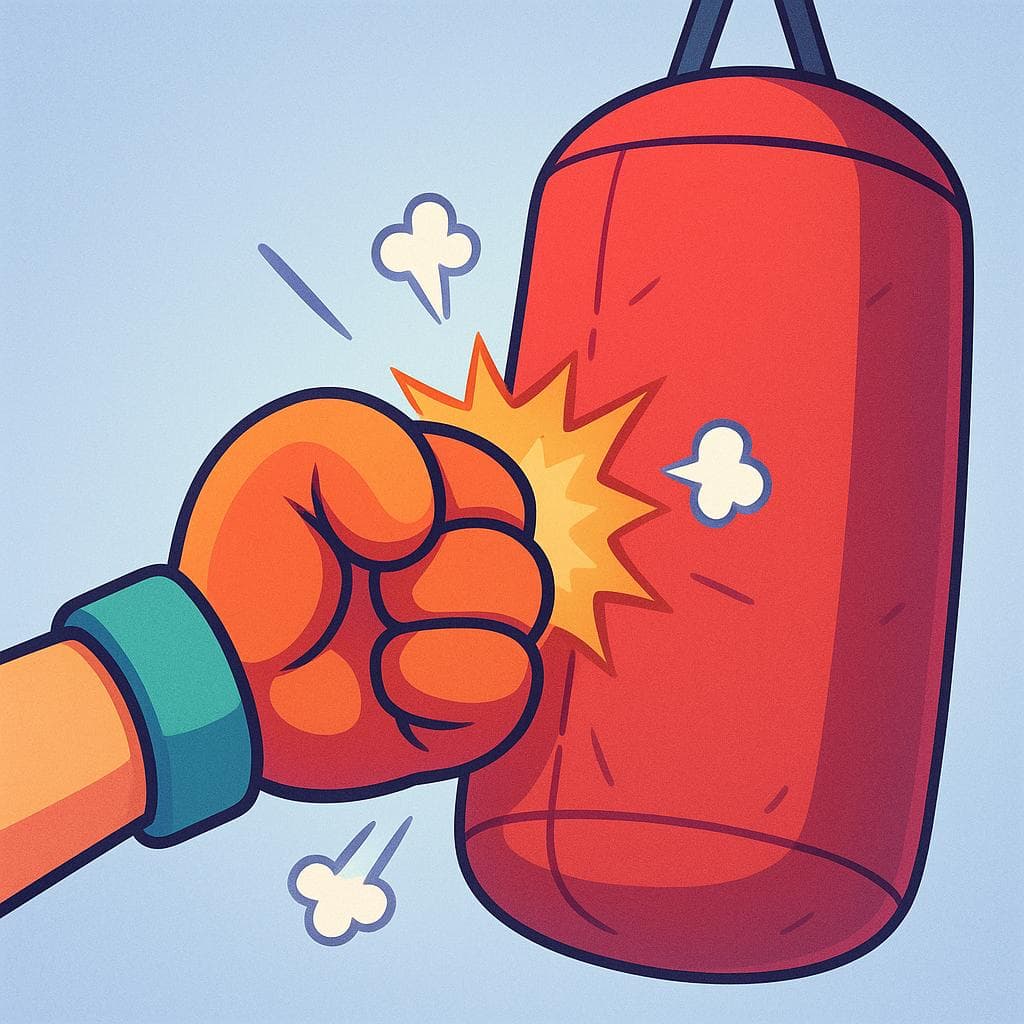
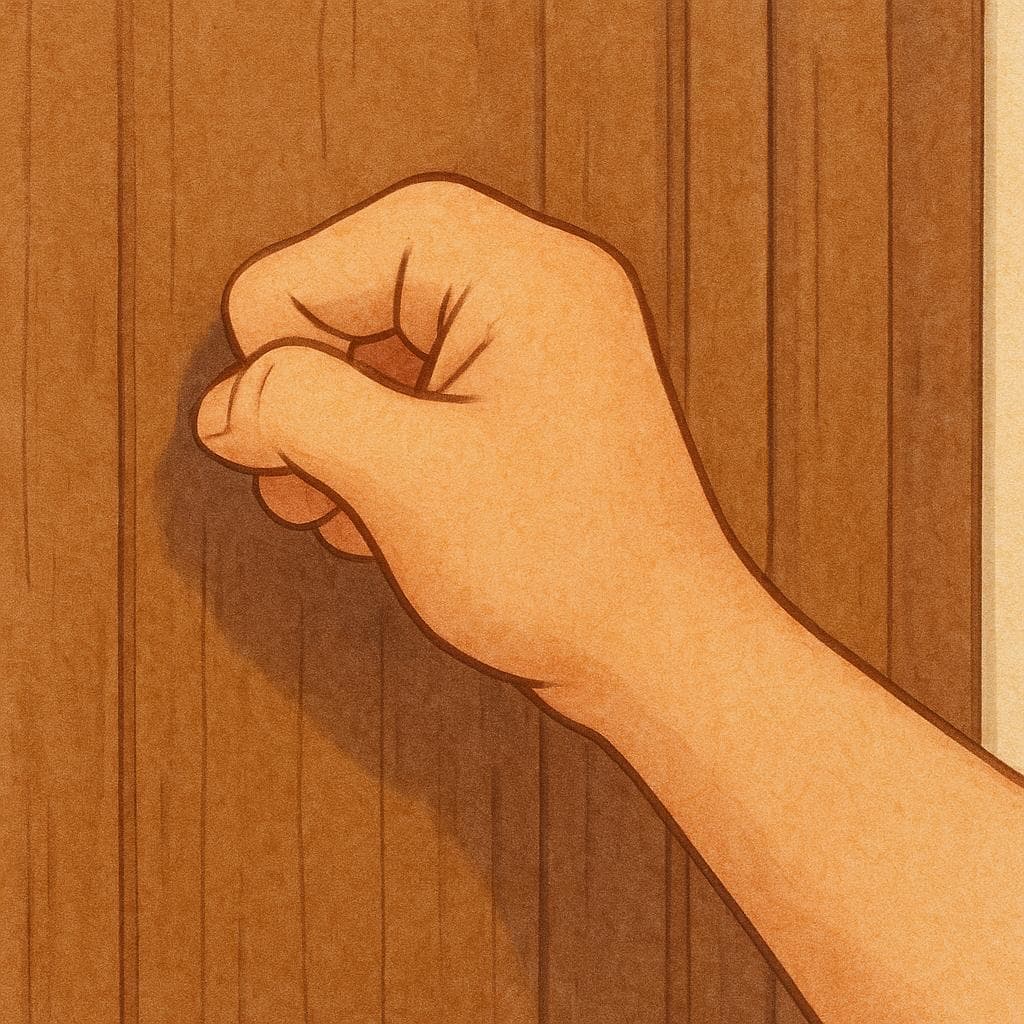
The most common Spanish word for “knock” is “golpe” — use 'golpe' for a forceful hit or blow, especially to a surface like a door or a person's head.



golpe
GOHL-pehˈɡolpe
Examples
El cartero dio un fuerte golpe en la puerta.
The mailman gave a strong knock on the door.
Recibió un fuerte golpe en la cabeza al caer.
He received a strong blow to the head when falling.
Oímos un golpe en la puerta y fuimos a abrir.
We heard a knock at the door and went to open it.
La caja se cayó con un gran golpe.
The box fell with a big thump/bang.
Masculine Noun Rule
Even though 'golpe' ends in 'e', it is always a masculine noun, meaning you must use 'el' or 'un' before it (e.g., el golpe, un golpe).
Confusing 'Golpear'
Mistake: “Using 'golpear' (the verb, to hit) instead of the noun 'golpe' when describing the action itself, like saying 'el golpear' for 'a hit'.”
Correction: Use the noun: 'Fue un golpe muy fuerte.' (It was a very strong hit.)
llame
YAH-meh / SHAH-meh (in certain regions)ˈʎa.me
Examples
Llame a la puerta antes de entrar, por favor.
Knock on the door before entering, please.
Llame antes de entrar.
Knock before entering (formal command).
Dudo que alguien llame a la puerta a esta hora.
I doubt anyone would knock on the door at this hour.
Es crucial que llame con calma y espere.
It is crucial that you knock calmly and wait.
Always use 'a'
When talking about knocking, you always use the preposition 'a' followed by the location: 'llamar a la puerta' (knock at the door).
toquen
TOH-kehnˈtoken

Examples
No toquen la puerta; el bebé está durmiendo.
Don't knock on the door; the baby is sleeping.
No toquen nada en el museo, por favor.
Don't touch anything in the museum, please.
Espero que ellos toquen mi canción favorita.
I hope they play my favorite song.
Diles que toquen la puerta antes de entrar.
Tell them to knock on the door before coming in.
Why the 'qu' spelling?
The letter 'c' sounds like an 's' when it is next to an 'e'. Since the original verb is 'tocar' (with a hard 'k' sound), we change the 'c' to 'qu' so the sound stays the same when we add the 'en' ending.
When to use 'toquen'
Use this form when you are giving a command to a group of people (you all) or when you are expressing a wish or doubt about 'them' or 'you all'.
Toquen vs. Tocan
Mistake: “Using 'tocan' for commands.”
Correction: Use 'toquen' for commands and 'tocan' for simple facts. Say '¡No toquen!' (Don't touch!) instead of '¡No tocan!'
llamado
ya-MA-doʎaˈma.ðo

Examples
Escuché un llamado en la puerta y abrí.
I heard a knock on the door and opened it.
Recibí un llamado de mi hermana.
I received a call from my sister.
Escuchamos un llamado a la puerta en medio de la noche.
We heard a knock on the door in the middle of the night.
El director hizo un llamado a todos los empleados para una reunión urgente.
The director made a call to all employees for an urgent meeting.
`llamado` vs. `llamada` for 'phone call'
Mistake: “Using `un llamado` for a phone call in Spain.”
Correction: In Spain, `una llamada` is almost always used for a phone call. In Latin America, `un llamado` and `una llamada` are often used interchangeably, though `llamada` is still very common.
coco
KOH-kohˈkoko

Examples
Le dio un coco amistoso en la cabeza a su amigo.
He gave his friend a friendly knock on the head.
Quiero beber agua de coco, está muy refrescante.
I want to drink coconut water, it is very refreshing.
¡Ten cuidado! Te vas a dar un golpe en el coco.
Be careful! You're going to hit your head.
Mi abuelo tiene un coco increíble para las matemáticas.
My grandfather has an incredible brain/knack for math.
Masculine Noun Rule
Even though 'coco' ends in -o, which usually signals a masculine noun, remember that it is always used with the masculine article: 'el coco' (the coconut/head).
Confusing 'Head' Meanings
Mistake: “Using 'coco' in formal situations when you mean 'cabeza'.”
Correction: Use 'coco' only in informal talk when referring to the head or intellect. 'Cabeza' is the standard, neutral word for the body part.
Golpe vs. Llamado/Llame
Learn Spanish with Inklingo
Interactive stories, personalized learning, and more.