How to Say "knocking" in Spanish
The most common Spanish word for “knocking” is “tocando” — use this when referring to the act of tapping or striking a surface, most commonly a door, to get someone's attention.
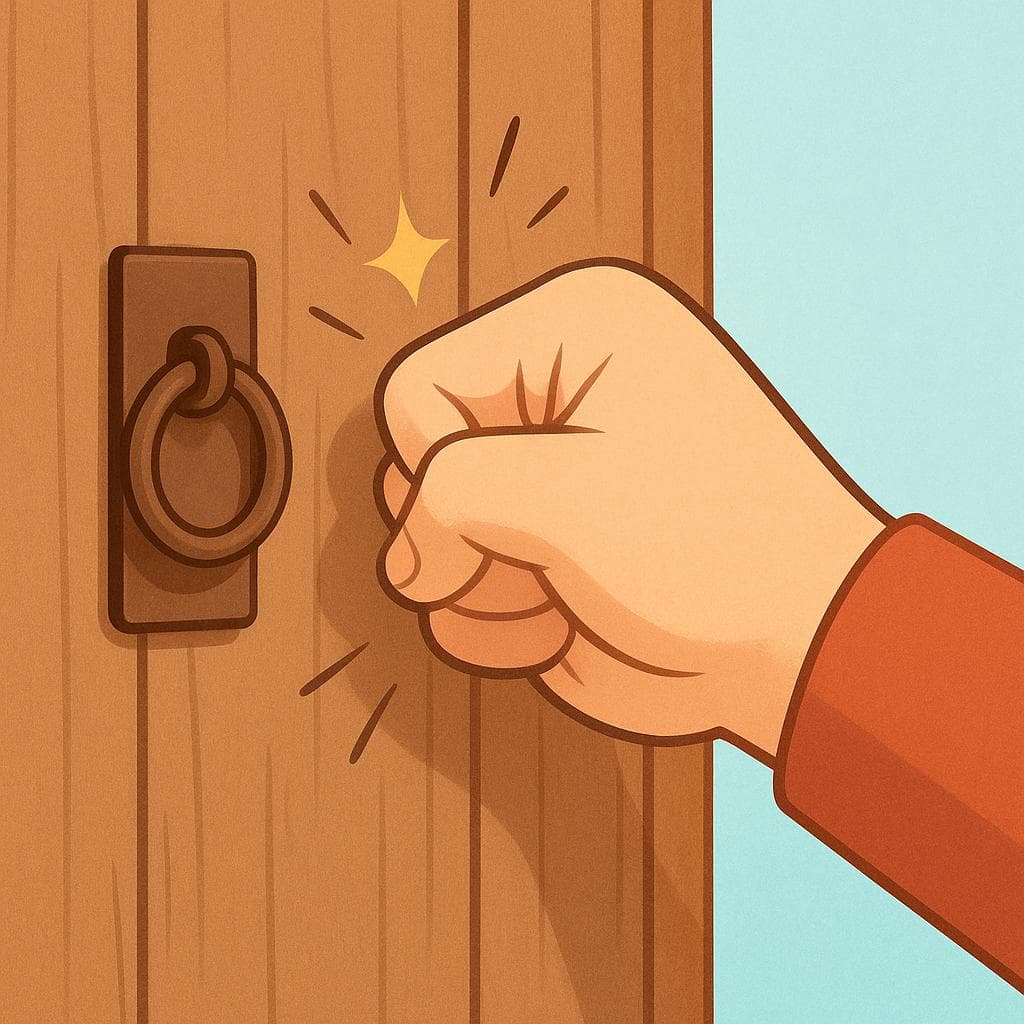

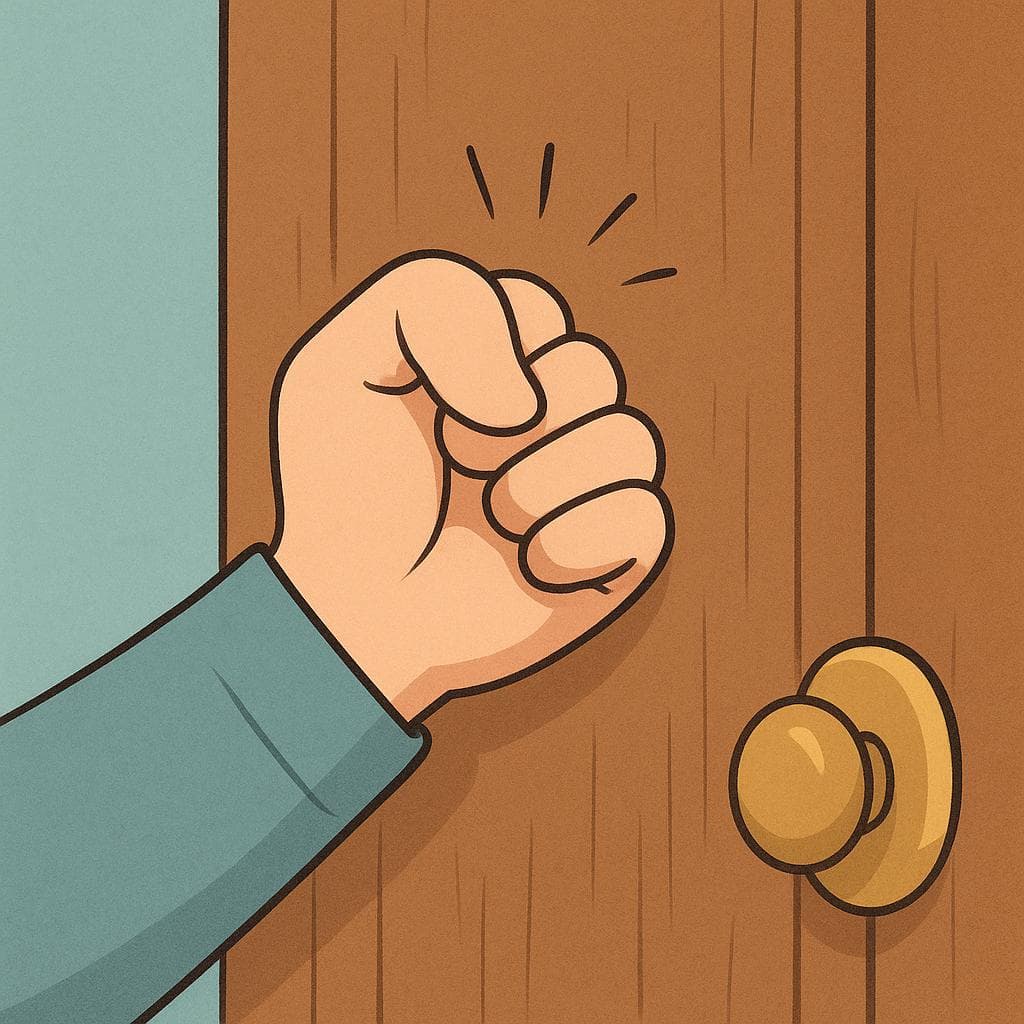
tocando
toh-KAHN-dohtoˈkando
Examples
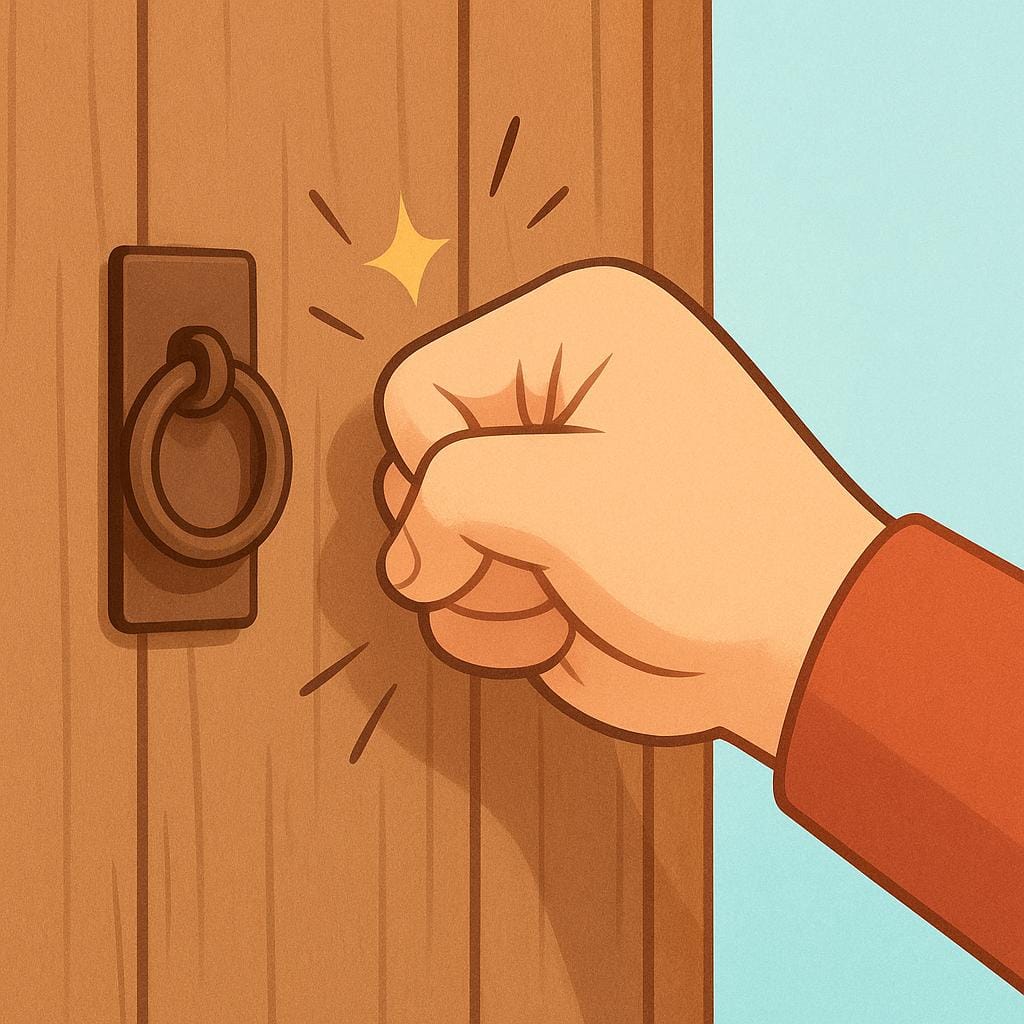
¿Quién está tocando la puerta a estas horas?
Who is knocking on the door at this hour?
La campana de la iglesia está tocando las doce.
The church bell is ringing twelve (o'clock).
Ahora le está tocando a Juan hacer la limpieza.
Now it is Juan's turn to do the cleaning. (Lit: Now it is touching Juan to do the cleaning.)
Impersonal Duty (Tocarle a alguien)
When used with an indirect object pronoun (like 'le' or 'me'), 'tocar' means something is a duty or obligation for that person. 'Me está tocando' means 'It is my turn/duty right now'.
llamando
yah-MAHN-dohʝaˈman.do

Examples
Oigo ruido, alguien está llamando a la puerta principal.
I hear noise, someone is knocking at the main door.
La ambulancia está llamando la atención con su sirena.
The ambulance is drawing attention with its siren (by calling/sounding the alarm).
Knocking vs. Phoning
When 'llamar' means 'knocking,' it almost always needs the little word 'a' (like 'at' in English) before the thing being knocked on: 'llamando a la puerta'.
golpeando
gohl-peh-AHN-dohgolpeˈando
Examples
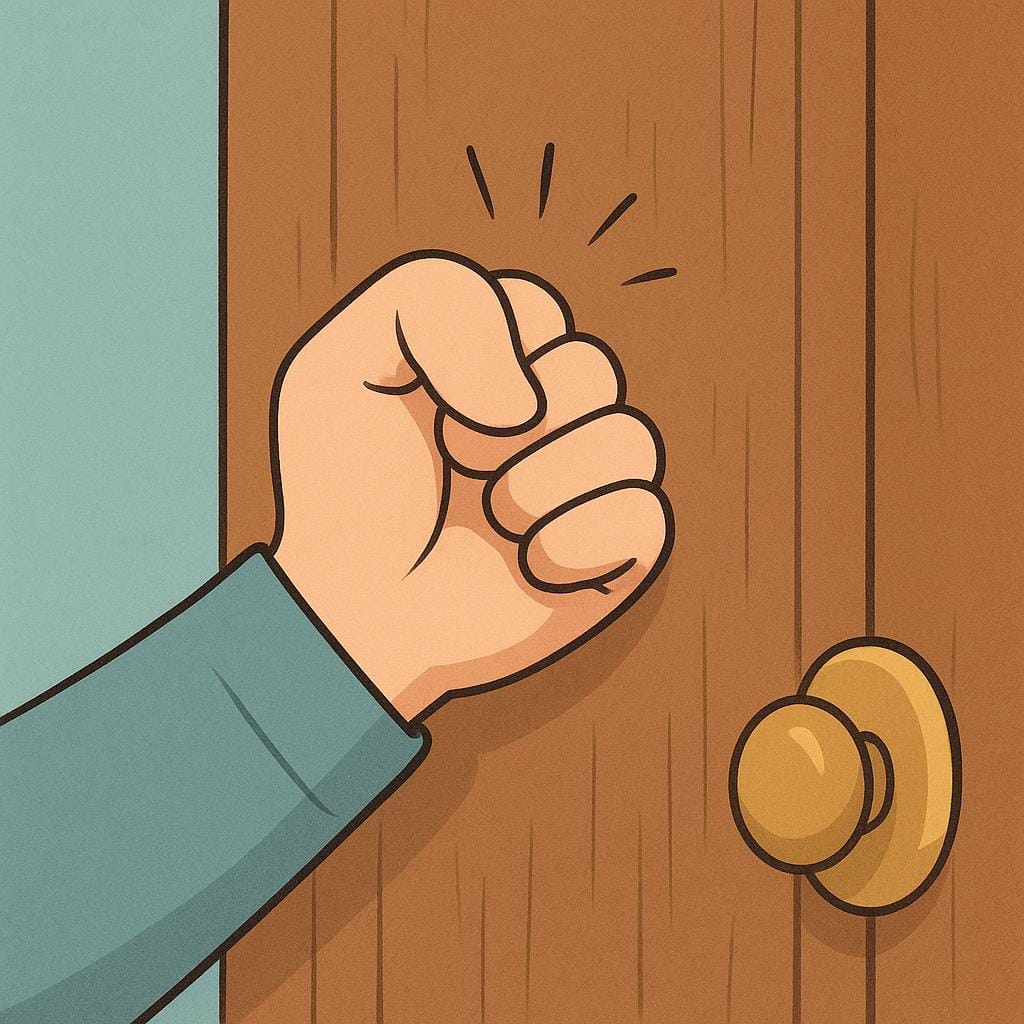
Escuché a alguien golpeando la entrada principal.
I heard someone knocking at the main entrance.
Estuvo golpeando por diez minutos hasta que abrieron.
He was knocking for ten minutes until they opened.
Choosing between 'tocando' and 'golpeando'
Related Translations
Learn Spanish with Inklingo
Interactive stories, personalized learning, and more.