How to Say "marionette" in Spanish
The most common Spanish word for “marionette” is “marioneta” — use 'marioneta' when referring to a puppet specifically controlled by strings from above.
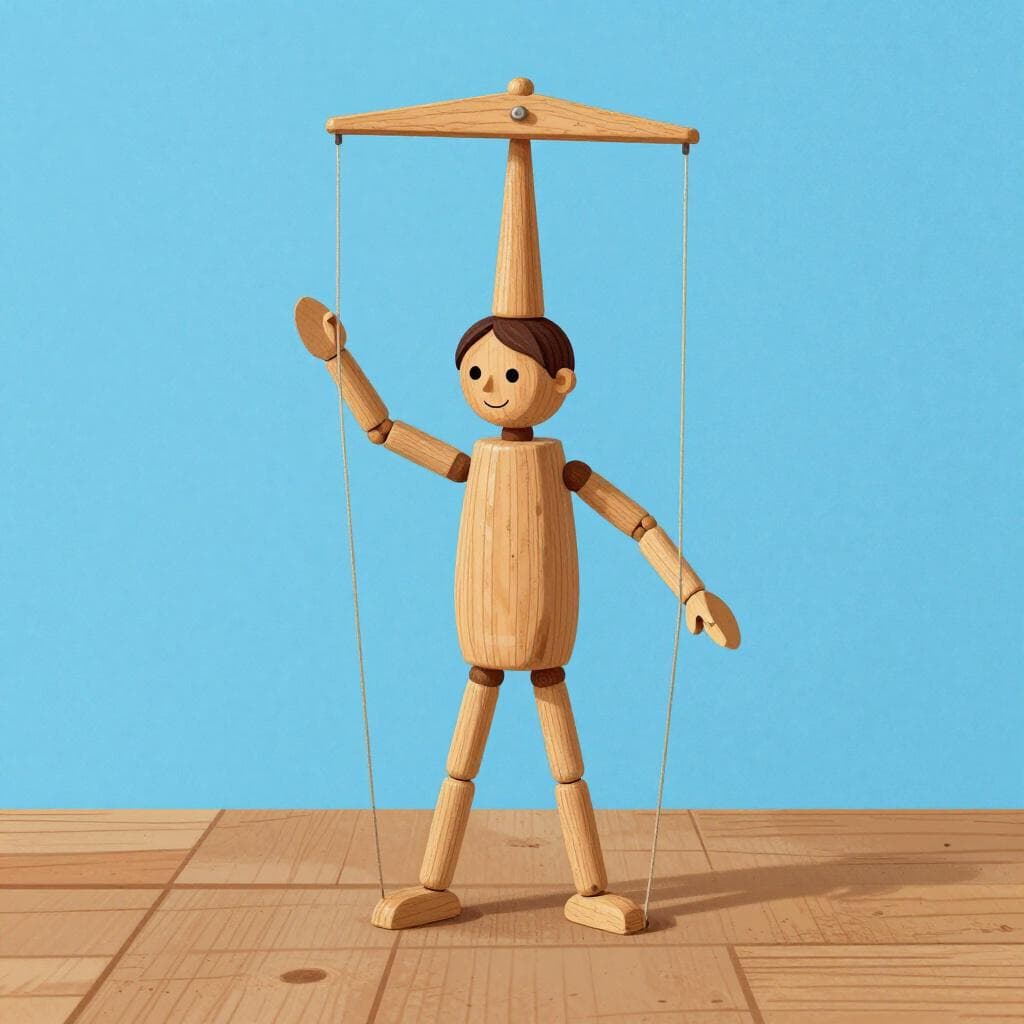
Use 'marioneta' when referring to a puppet specifically controlled by strings from above.
Learn more →Use 'títere' for puppets in general, but it can also specifically refer to string-controlled puppets, especially in certain regional contexts or when referring to the broader concept of puppetry.
Learn more →mah-ryo-NEH-tahmaɾjoˈneta

Examples
El niño hace bailar a su marioneta.
The boy makes his puppet dance.
Vimos una obra de marionetas en el parque.
We saw a puppet play in the park.
El marionetista mueve los hilos con mucha habilidad.
The puppeteer moves the strings with great skill.
Always Feminine
This word is always feminine ('la marioneta'), even if the puppet looks like a man or is played with by a boy.
Plural Form
To talk about more than one, simply add an 's' to the end: 'las marionetas'.
Marioneta vs. Muñeca
Mistake: “Using 'muñeca' to describe a string puppet.”
Correction: Use 'marioneta' for puppets with strings; 'muñeca' is specifically for a doll that you hold.
títere
Examples
El niño juega con un títere de calcetín.
The boy is playing with a sock puppet.
Marioneta vs. Títere
While both can refer to string puppets, 'marioneta' is the more direct and universally understood term for a puppet controlled by strings. 'Títere' is broader and can encompass other types of puppets as well, making 'marioneta' the safer choice if you're specifically thinking of a traditional string puppet.
Related Translations
Learn Spanish with Inklingo
Interactive stories, personalized learning, and more.