How to Say "puppet" in Spanish
The most common Spanish word for “puppet” is “títere” — use this word for a puppet, especially one manipulated by hands (like a sock puppet) or strings, and also for a person who is controlled by another.
Use this word for a puppet, especially one manipulated by hands (like a sock puppet) or strings, and also for a person who is controlled by another.
Learn more →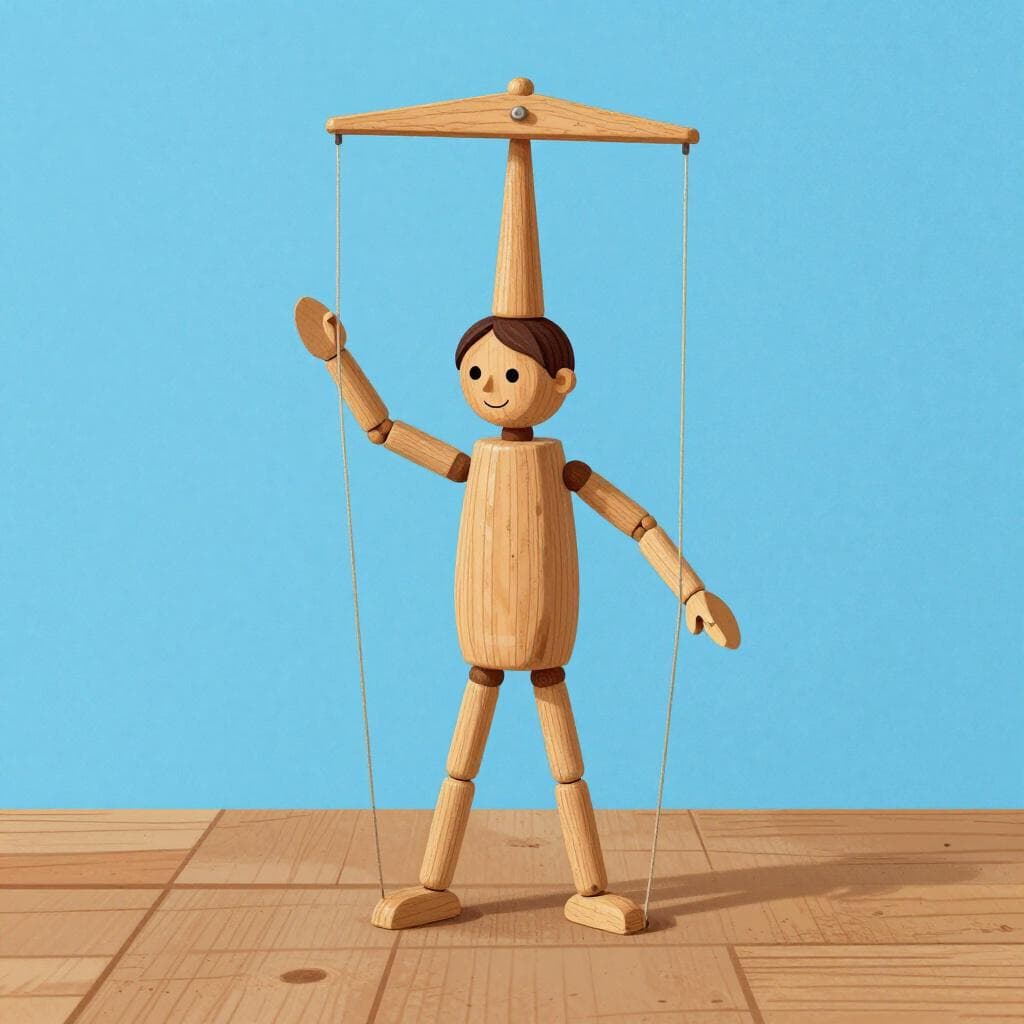
Use this word for a puppet moved by strings, often in a theatrical context, and also for a person who is controlled by someone else.
Learn more →títere
Examples
El niño juega con un títere de calcetín.
The boy is playing with a sock puppet.
mah-ryo-NEH-tahmaɾjoˈneta

Examples
El director es solo una marioneta del dueño de la empresa.
The director is just a puppet of the company owner.
El niño hace bailar a su marioneta.
The boy makes his puppet dance.
Vimos una obra de marionetas en el parque.
We saw a puppet play in the park.
El marionetista mueve los hilos con mucha habilidad.
The puppeteer moves the strings with great skill.
Always Feminine
This word is always feminine ('la marioneta'), even if the puppet looks like a man or is played with by a boy.
Plural Form
To talk about more than one, simply add an 's' to the end: 'las marionetas'.
Describing Men
Even when describing a man, the word remains 'una marioneta'. You would say 'Él es una marioneta', never 'un marioneto'.
Marioneta vs. Muñeca
Mistake: “Using 'muñeca' to describe a string puppet.”
Correction: Use 'marioneta' for puppets with strings; 'muñeca' is specifically for a doll that you hold.
Gender confusion
Mistake: “Saying 'Él es un marioneta'.”
Correction: Always use 'una marioneta' because the word itself is feminine regardless of who it describes.
títere
Examples
No quiero ser un títere en sus manos.
I don't want to be a puppet in their hands.
mah-ryo-NEH-tahmaɾjoˈneta
Examples
El director es solo una marioneta del dueño de la empresa.
The director is just a puppet of the company owner.
El niño hace bailar a su marioneta.
The boy makes his puppet dance.
Vimos una obra de marionetas en el parque.
We saw a puppet play in the park.
El marionetista mueve los hilos con mucha habilidad.
The puppeteer moves the strings with great skill.
Always Feminine
This word is always feminine ('la marioneta'), even if the puppet looks like a man or is played with by a boy.
Plural Form
To talk about more than one, simply add an 's' to the end: 'las marionetas'.
Describing Men
Even when describing a man, the word remains 'una marioneta'. You would say 'Él es una marioneta', never 'un marioneto'.
Marioneta vs. Muñeca
Mistake: “Using 'muñeca' to describe a string puppet.”
Correction: Use 'marioneta' for puppets with strings; 'muñeca' is specifically for a doll that you hold.
Gender confusion
Mistake: “Saying 'Él es un marioneta'.”
Correction: Always use 'una marioneta' because the word itself is feminine regardless of who it describes.
Títere vs. Marioneta Figurative Use
While both words can mean a person controlled by another, "títere" is often more common and versatile for this figurative sense. "Marioneta" specifically evokes the image of strings, so it's used when emphasizing external control, like a puppet master.
Related Translations
Learn Spanish with Inklingo
Interactive stories, personalized learning, and more.