How to Say "masters" in Spanish
The most common Spanish word for “masters” is “dueños” — use 'dueños' when referring to people who own something, like a business or property, or when talking about figurative control or dominance.

dueños
Examples
Los dueños de la panadería abren a las seis de la mañana.
The owners of the bakery open at six in the morning.
amos
AH-mohsˈamos

Examples
Los perros siempre se alegran de ver a sus amos.
Dogs are always happy to see their owners.
Ellos son los amos del negocio.
They are the masters of the business.
Using the Plural Form
'Amos' is the plural of 'amo'. Use it to refer to a group of men or a mixed group of men and women who own something.
Don't confuse with 'to love'
Mistake: “Using 'amos' to mean 'we love'.”
Correction: Say 'amamos' for 'we love'. 'Amos' only means owners or masters.
maestros
mah-ES-trohsmaˈestros
Examples
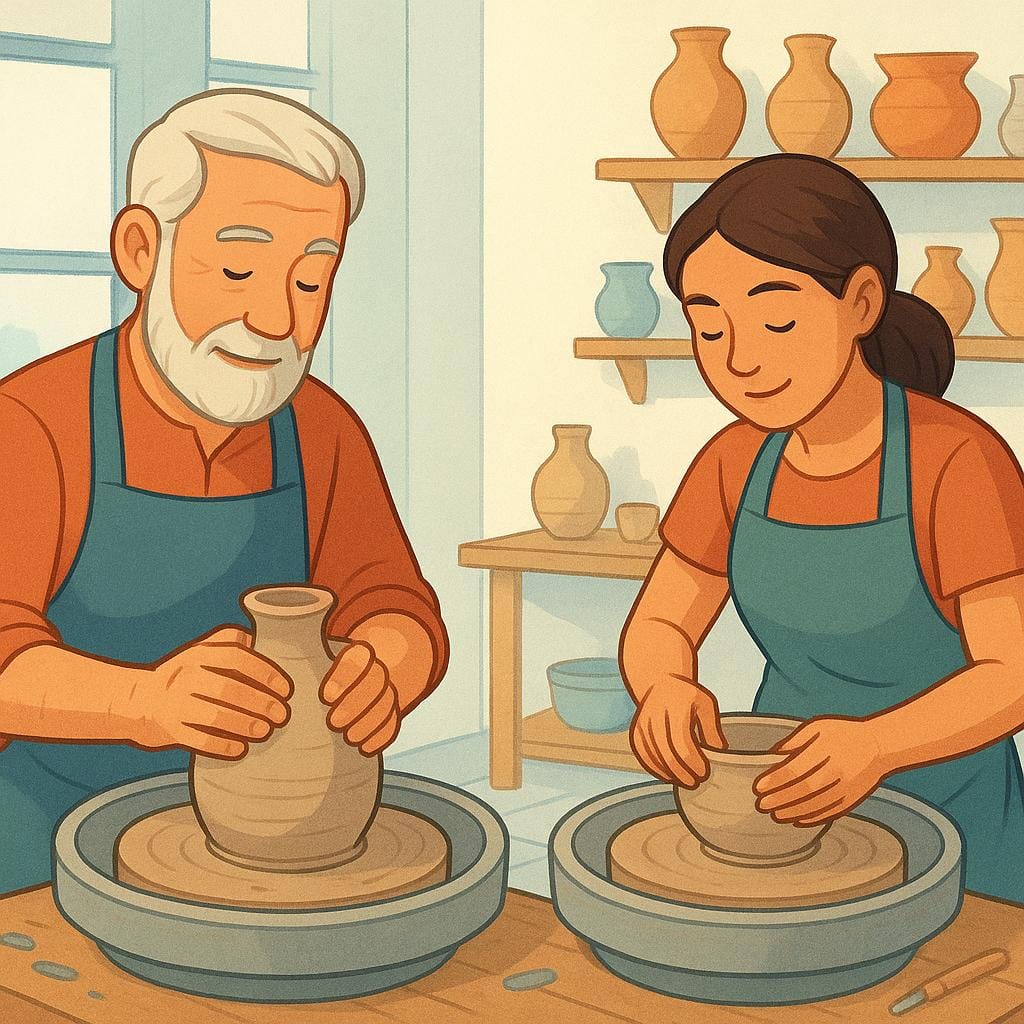
Los viejos maestros de la carpintería enseñaron a los jóvenes.
The old masters of carpentry taught the young people.
Los maestros de obra revisaron los planos antes de empezar.
The foremen (or lead builders) reviewed the blueprints before starting.
The Root of Mastery
This meaning shows how the idea of 'teaching' is related to the idea of 'mastery.' If you are a 'maestro,' you are so skilled you could teach others.
Owners vs. Masters
Related Translations
Learn Spanish with Inklingo
Interactive stories, personalized learning, and more.