How to Say "sides" in Spanish
The most common Spanish word for “sides” is “lados” — use 'lados' when referring to the physical edges or surfaces of an object, or for different points of view in a discussion or argument.

lados
lah-dohsˈlaðos

Examples
Los cuatro lados de la caja deben ser sellados.
The four sides of the box must be sealed.
Me duele la espalda y los lados del cuerpo.
My back and the sides of my body hurt.
Puso el libro con los lados hacia arriba.
He placed the book with the sides facing up.
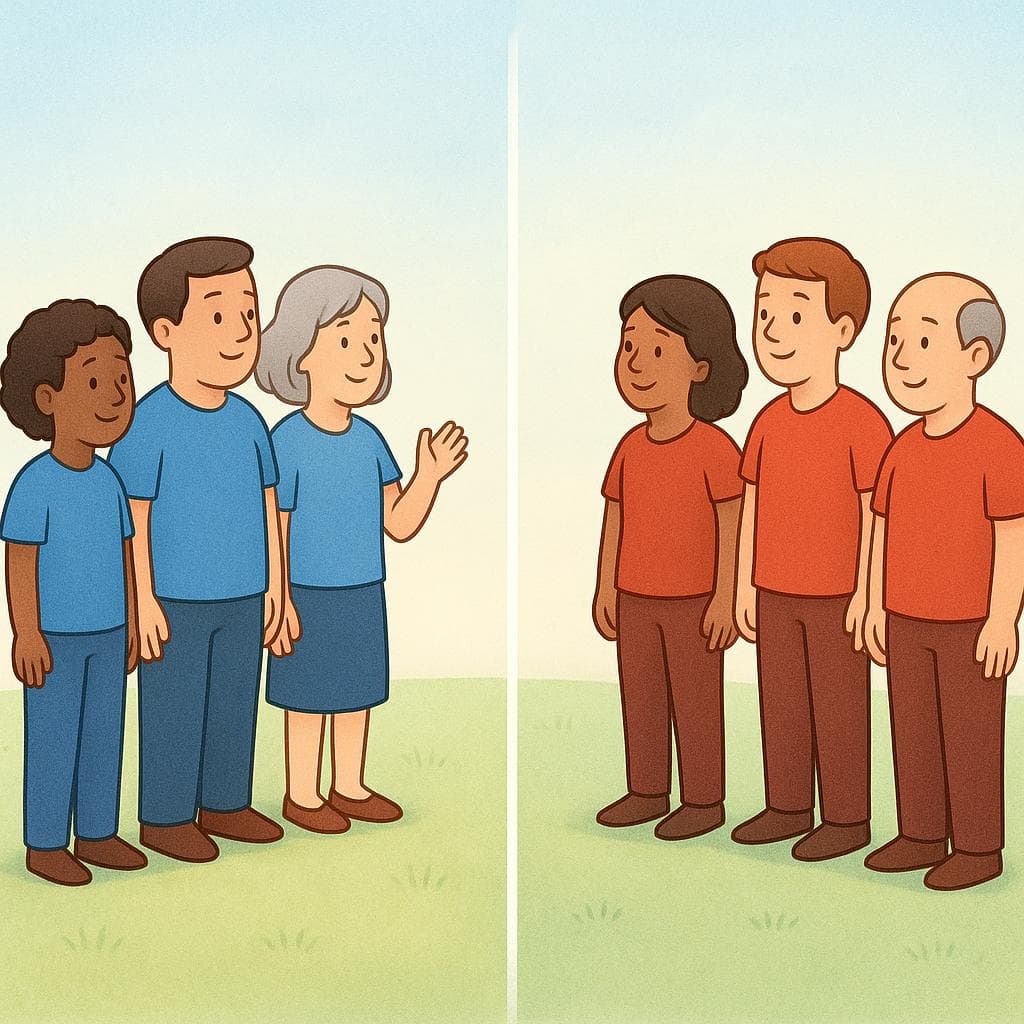
Los dos lados de la discusión no pueden llegar a un acuerdo.
The two sides of the discussion cannot reach an agreement.
Masculine Plural
Since the singular form is 'el lado' (masculine), the plural 'lados' always uses the masculine article 'los'.
Figurative Use
'Lados' is often used figuratively to mean 'viewpoints' or 'groups' when discussing disagreements, much like 'sides' in English.
Confusing Gender
Mistake: “La lados (using the feminine article).”
Correction: Use the masculine article: Los lados. Think of it as 'The sides (male).'
partes
PAR-tessˈpaɾ.tes
Examples
El coche necesita partes nuevas.
The car needs new parts.
Me gustan todas las partes de la película.
I like all the parts of the movie.
Ambas partes están de acuerdo con los términos.
Both sides agree with the terms.
Always Feminine
'Partes' comes from the word 'la parte', which is a feminine noun. So, even though it ends in '-es', you should use feminine words like 'las' or 'unas' with it: 'las partes', not 'los partes'.
Party vs. Parts
Mistake: “Voy a dos partes este fin de semana.”
Correction: Voy a dos fiestas este fin de semana. 'Partes' means pieces or sides. For a celebration, always use 'fiesta'.
caras
KAH-rasˈkaɾas
Examples
Las niñas tienen caras muy felices.
The girls have very happy faces.
Tiramos la moneda para ver qué sale, ¿caras o cruces?
We toss the coin to see what comes up, heads or tails?
Me gusta ver las caras de la gente cuando reciben regalos.
I like seeing people's faces when they receive gifts.
Plural Noun
This is the plural form of the feminine noun 'cara' (face/side). In Spanish, nouns must match the number of people or things (one cara, many caras).
Gender Confusion
Mistake: “Los caras (The faces)”
Correction: Use the feminine article 'las' because 'cara' is a feminine word: 'Las caras'.
aspectos
ahs-PEHK-tohsasˈpektos
Examples
Hay muchos aspectos positivos en tu trabajo.
There are many positive aspects in your work.
Debemos considerar todos los aspectos del problema.
We must consider all sides of the problem.
Este plan cubre los aspectos más importantes.
This plan covers the most important features.
Gender and Number
Since it ends in -os, it is masculine and plural. Use 'los' or 'unos' with it.
Avoid 'Expects'
Mistake: “Thinking 'aspectos' means 'expectations'.”
Correction: Use 'expectativas' for things you hope for; 'aspectos' is only for parts or features of a thing.
bandas
BAHN-dahsˈbandas
Examples
Las bandas rivales se enfrentaron en la calle.
The rival gangs faced off in the street.
Ambas bandas en el parlamento buscan un acuerdo.
Both sides in parliament are looking for an agreement.
Referring to People
When 'bandas' refers to groups of people (like gangs or political factions), it maintains its feminine plural form, even if the groups consist only of men.
Lados vs. Aspectos
Related Translations
Learn Spanish with Inklingo
Interactive stories, personalized learning, and more.