How to Say "edges" in Spanish
The most common Spanish word for “edges” is “lados” — use 'lados' when referring to the sides of a geometric shape, like a square, rectangle, or cube.

lados
lah-dohsˈlaðos

Examples
Los cuatro lados de la caja deben ser sellados.
The four sides of the box must be sealed.
Me duele la espalda y los lados del cuerpo.
My back and the sides of my body hurt.
Puso el libro con los lados hacia arriba.
He placed the book with the sides facing up.
Masculine Plural
Since the singular form is 'el lado' (masculine), the plural 'lados' always uses the masculine article 'los'.
Confusing Gender
Mistake: “La lados (using the feminine article).”
Correction: Use the masculine article: Los lados. Think of it as 'The sides (male).'
veras
beh-ras'be.ɾas
Examples
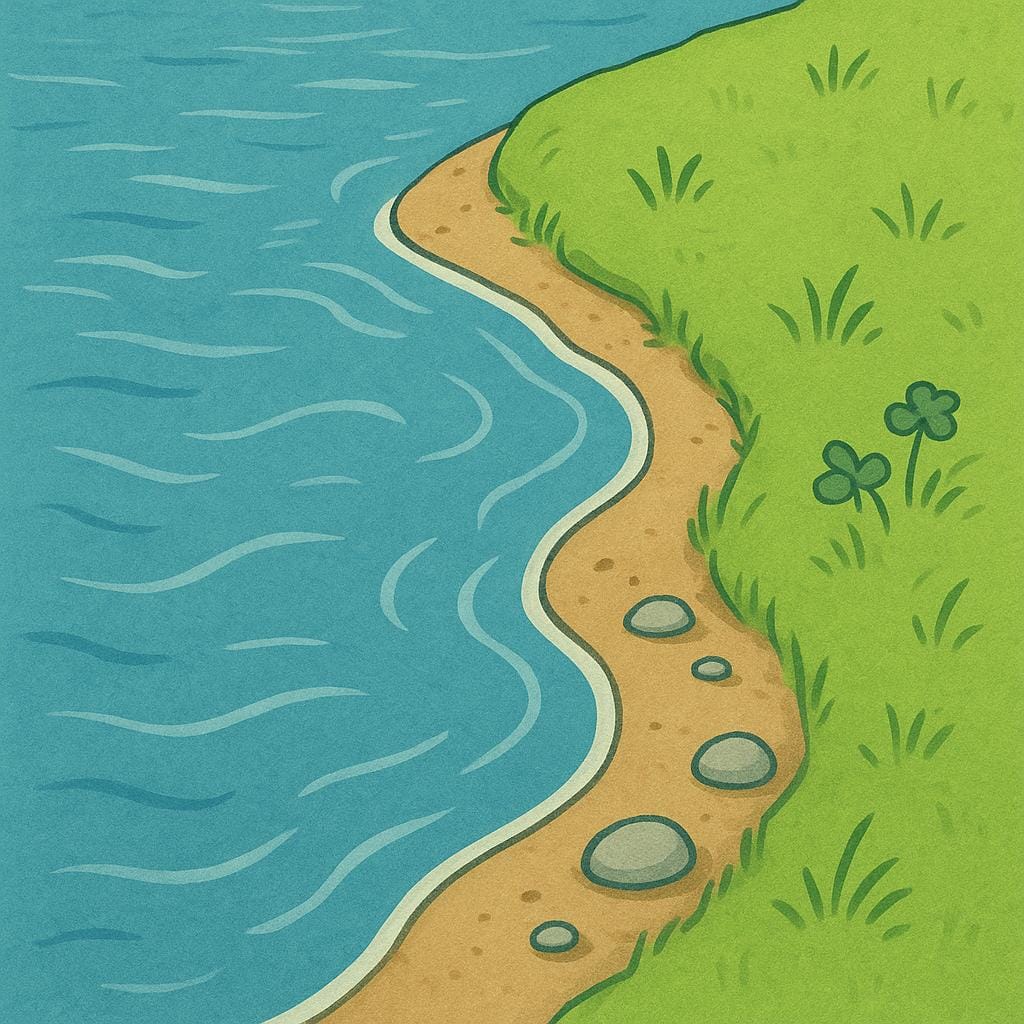
Caminamos por las veras del río al atardecer.
We walked along the riverbanks at sunset.
El pueblo se encuentra en las veras del bosque.
The town is located on the edges of the forest.
Geometric vs. Natural Edges
Related Translations
Learn Spanish with Inklingo
Interactive stories, personalized learning, and more.