How to Say "studies" in Spanish
The most common Spanish word for “studies” is “estudios” — use this word for general academic schooling, the duration of your education, or for academic papers and research reports.




estudios
es-TOO-dee-osesˈtuðjos

Examples
¿Cuántos años de estudios tienes?
How many years of schooling do you have?
Mis estudios de bachillerato terminaron el año pasado.
My high school studies finished last year.
Necesitas terminar tus estudios para conseguir ese trabajo.
You need to finish your studies to get that job.
Los nuevos estudios confirman la tendencia del mercado.
The new research/studies confirm the market trend.
Always Plural
When referring to the process or length of your academic career (schooling), Spanish almost always uses the plural form 'estudios,' even if the idea feels singular in English.
Using 'Estudio' for Education
Mistake: “Hice mi estudio en la universidad. (I did my study at the university.)”
Correction: Hice mis estudios en la universidad. (The singular 'estudio' means a single 'study session' or 'a studio.')
carreras
kah-RREH-rahskaˈreɾas

Examples
¿Qué carreras universitarias te interesan más?
Which university studies (degrees/majors) interest you the most?
Mis hijos están en la universidad y estudian dos carreras diferentes.
My children are in university and are studying two different degrees.
Studies vs. Job
When talking about the path you took in school (like 'my major'), use 'carrera' (singular) or 'carreras' (plural). When talking about your actual job or professional life, 'carrera' (singular) is usually enough.
Using 'trabajos'
Mistake: “Estudio tres trabajos.”
Correction: Use 'Estudio tres carreras' (I study three degrees). 'Trabajo' refers to a job or work itself.
investigaciones
in-ves-ti-ga-SYO-nesim.bes.ti.ɣaˈsjo.nes

Examples
Las investigaciones policiales revelaron nuevos datos.
The police investigations revealed new data.
El equipo médico ha publicado diez investigaciones este año.
The medical team has published ten research studies this year.
Necesitamos más fondos para continuar con nuestras investigaciones.
We need more funding to continue with our research (studies).
Pluralizing 'Research'
This word is the plural form of 'investigación.' Unlike English, where 'research' is often treated as a singular mass noun, Spanish frequently uses the plural 'investigaciones' when talking about multiple projects or areas of study.
Using the Singular for Multiple Studies
Mistake: “El departamento tiene muchas investigación.”
Correction: El departamento tiene muchas investigaciones. (Remember to use the plural ending -es when talking about multiple distinct projects.)
prepara
preh-PAH-rahpɾeˈpaɾa
Examples
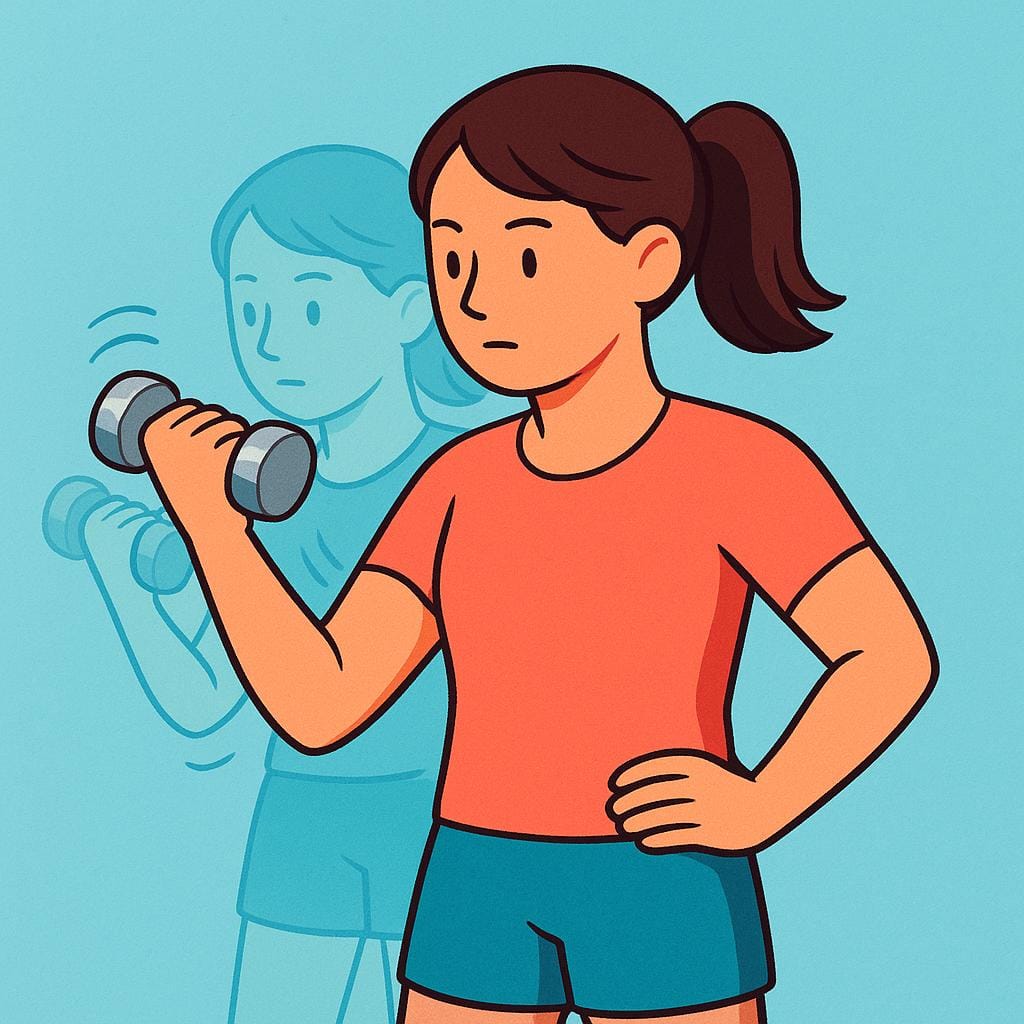
La atleta prepara su cuerpo para los Juegos Olímpicos.
The athlete trains her body for the Olympic Games.
Mi hijo prepara el examen de ingreso a la universidad.
My son is studying for the university entrance exam.
Mental Preparation
When 'prepara' is used for studying or training, it focuses on the mental or physical work being done to achieve a future goal, not just setting up objects.
lea
LEY-ahˈle.a

Examples
Por favor, Señor, lea este contrato con atención.
Please, Sir, read this contract carefully (formal command).
Es importante que ella lea las noticias todos los días.
It is important that she read (or reads) the news every day.
Ojalá yo lea ese libro antes de la reunión.
I hope I read that book before the meeting.
The Formal Command (Usted)
When you politely give an instruction to one person you address as 'Usted,' use 'lea.' This is the equivalent of the English imperative ('Read!').
Expressing Wishes and Necessity
'Lea' is the special verb form (the subjunctive) used after phrases that express desire, necessity, or doubt, such as 'Quiero que...' (I want that...) or 'Es necesario que...' (It is necessary that...).
Mixing up Formal and Informal Commands
Mistake: “Using 'lee' when addressing a boss or elder formally: 'Señora, lee esto.'”
Correction: Use 'lea' for formal commands: 'Señora, **lea** esto.' The 'tú' command is 'lee,' but the 'usted' command is 'lea.'
Confusing 'estudios' with 'carreras'
Related Translations
Learn Spanish with Inklingo
Interactive stories, personalized learning, and more.