How to Say "to garnish" in Spanish
The most common Spanish word for “to garnish” is “adornar” — use 'adornar' when referring to adding decorative elements to food to make it look more appealing.

ah-dor-NARaðoɾˈnaɾ

Examples
Vamos a adornar el pastel con frutas frescas.
We are going to garnish the cake with fresh fruit.
Queremos adornar la casa para la fiesta de mañana.
We want to decorate the house for tomorrow's party.
Ella adorna su cabello con flores de colores.
She decorates her hair with colorful flowers.
El cocinero adornó el postre con hojas de menta.
The chef garnished the dessert with mint leaves.
Using 'con' to describe materials
When you want to say what you are decorating with, use the word 'con' (with) right after 'adornar'.
Confusing with 'decorar'
Mistake: “Using 'adornar' only for houses.”
Correction: 'Decorar' is common for interior design and painting, while 'adornar' is usually used for adding small ornaments, accessories, or festive details.
deh-koh-RAHRdekoˈɾaɾ

Examples
Decoraron la mesa con flores para la cena.
They decorated the table with flowers for the dinner.
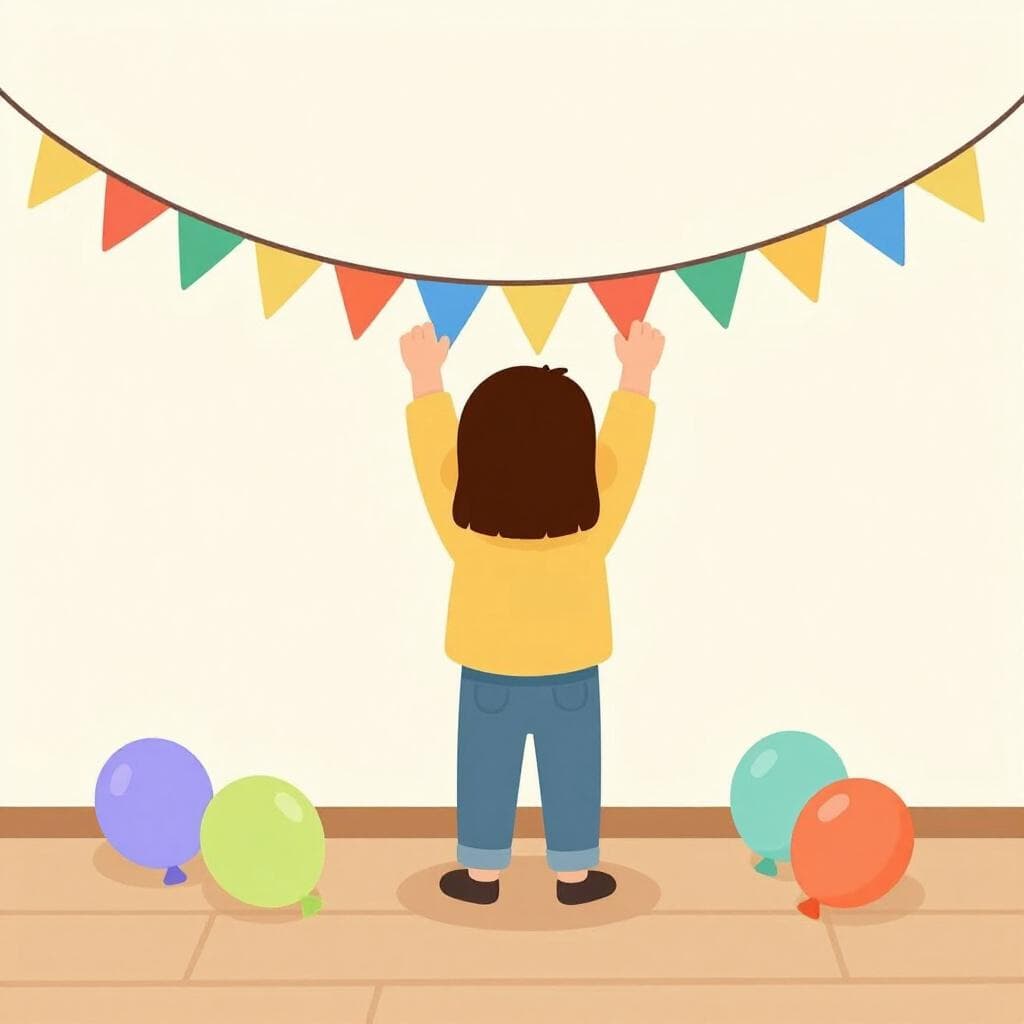
Queremos decorar la sala con globos para la fiesta.
We want to decorate the living room with balloons for the party.
Ella decora pasteles de forma profesional.
She decorates cakes professionally.
Si decoras tu habitación con colores claros, se verá más grande.
If you decorate your room with light colors, it will look bigger.
Decorating 'With'
When you want to say what you are using to decorate, use the word 'con' (with). For example: 'Decorar con flores' (To decorate with flowers).
A Regular Pattern
Good news! This word follows the standard pattern for verbs ending in -ar, so there are no tricky stem changes to memorize.
Decorar vs. Maquillar
Mistake: “Voy a decorar mi cara para la fiesta.”
Correction: Voy a maquillarme para la fiesta.
Confusing 'adornar' and 'decorar' for food
Learners often confuse 'adornar' and 'decorar' when talking about food. Remember that 'adornar' is the specific verb for adding decorative elements to food, while 'decorar' is more general and usually applies to spaces or events.
Related Translations
Learn Spanish with Inklingo
Interactive stories, personalized learning, and more.