How to Say "to land" in Spanish
The most common Spanish word for “to land” is “aterrizar” — use this word when referring to an aircraft, bird, or spacecraft coming down to the ground.
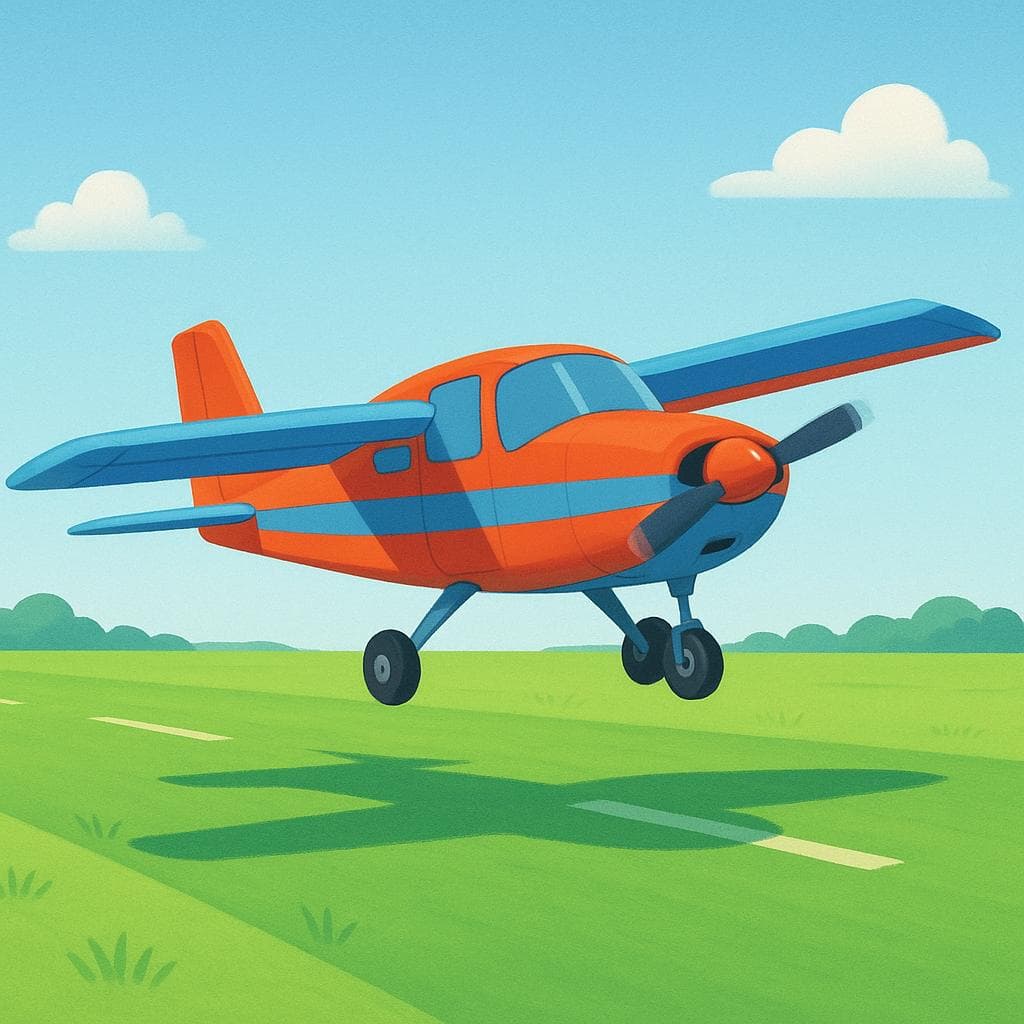
Use this word when referring to an aircraft, bird, or spacecraft coming down to the ground.
Learn more →
Use this word when something or someone falls after jumping or losing balance, not specifically for aircraft.
Learn more →
This word is specifically for passengers or cargo arriving on shore from a boat or ship.
Learn more →ah-teh-ree-SAHRateɾiˈsaɾ

Examples
El avión va a aterrizar en diez minutos.
The plane is going to land in ten minutes.
El piloto aterrizó la nave perfectamente a pesar del viento.
The pilot landed the craft perfectly despite the wind.
Vimos a un águila aterrizar en la cima de la montaña.
We saw an eagle land on the top of the mountain.
Spelling Change Rule (Z to C)
To keep the 'z' sound clear when followed by the vowel 'e', the 'z' changes to a 'c'. This happens in the 'yo' form of the past tense (yo aterricé) and throughout the entire present subjunctive (que yo aterrice).
Forgetting the Z->C Change
Mistake: “The common error is writing 'yo aterrizé' in the past tense.”
Correction: Always change the 'z' to 'c' when the next vowel is 'e': 'yo aterricé'. This rule applies to all verbs ending in -zar.
kah-EHRkaˈeɾ

Examples
Ten cuidado, no vayas a caer por las escaleras.
Be careful, don't go and fall down the stairs.
El libro se me cayó de la mesa.
The book fell off the table (on me).
Siempre caigo enfermo en invierno.
I always fall ill in winter.
The 'G' in 'Yo'
In the present tense, the 'yo' form is irregular: 'caigo'. This is a common pattern for verbs ending in -aer, -eer, or -oír, like 'traer' (to bring).
Preterite Spelling Change
Mistake: “The third person singular/plural often incorrectly uses an 'i': *el caío*”
Correction: The correct forms are 'él cayó' and 'ellos cayeron'. The 'i' changes to a 'y' when unstressed between vowels.
de-sem-bar-kardesembarˈkaɾ

Examples
Los pasajeros comenzaron a desembarcar a las ocho de la mañana.
The passengers began to disembark at eight in the morning.
No olvides tu pasaporte antes de desembarcar del avión.
Don't forget your passport before getting off the plane.
El ejército planeaba desembarcar en la costa al amanecer.
The army planned to land on the coast at dawn.
The 'C' to 'QU' Spelling Swap
To keep the hard 'K' sound, the 'c' changes to 'qu' before an 'e'. This happens in the 'yo' form of the past (desembarqué) and all forms of the 'wishes/commands' form (subjunctive).
Use with 'En'
When saying where you land or get off, use the word 'en' (in/at). Example: 'Desembarcar en la isla' (To land on the island).
Spelling Error in the Past
Mistake: “Yo desembarcé ayer.”
Correction: Yo desembarqué ayer. We use 'qu' to make sure it doesn't sound like 'desem-bar-SAY'.
Aircraft vs. Falling
Learners often confuse 'aterrizar' (for planes) with 'caer' (for falling). Remember, 'aterrizar' is exclusively for things that fly and come down controlled, like planes or birds. 'Caer' is a general fall.
Related Translations
Learn Spanish with Inklingo
Interactive stories, personalized learning, and more.