How to Say "to wash" in Spanish
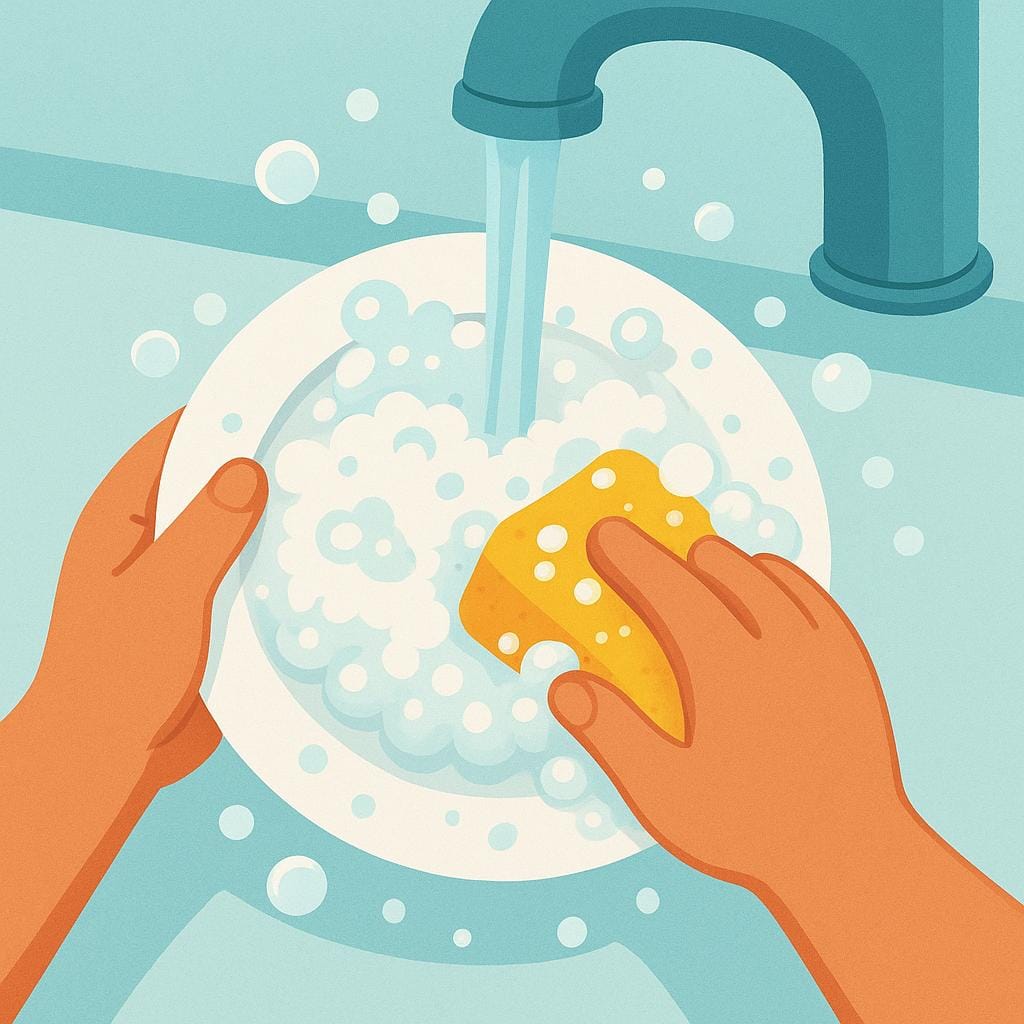
The most common Spanish word for “to wash” is “lavar” — use 'lavar' when cleaning inanimate objects or specific body parts that are not part of a full bath, like hands or hair.

lah-VARlaˈβaɾ
Examples
Necesito lavar el coche antes del viaje.
I need to wash the car before the trip.
Ella lava la ropa todos los sábados por la mañana.
She washes the clothes every Saturday morning.
Estamos lavando las verduras para la cena.
We are washing the vegetables for dinner.
Using 'Se' for Body Parts
When you wash yourself or a body part, you must add 'se' (or 'me,' 'te,' etc.) before the verb. This makes it a reflexive verb: 'Me lavo la cara' (I wash my face).
The Difference from 'Limpiar'
'Lavar' almost always involves water and soap (like washing a shirt). 'Limpiar' is a general term for cleaning, which might mean dusting, sweeping, or washing.
Forgetting the Reflexive Pronoun
Mistake: “Yo lavo la cara. (I wash the face [maybe someone else's?])”
Correction: Yo me lavo la cara. (I wash my face.) Remember to use 'me' when the action comes back to you.
bañar
Examples
Tengo que bañar al perro porque está muy sucio.
I have to bathe the dog because he is very dirty.
Choosing Between 'Lavar' and 'Bañar'
The most common mistake is using 'lavar' for bathing a person or pet. Remember, 'bañar' specifically refers to the act of bathing someone or an animal, while 'lavar' is for cleaning objects or parts of the body (like washing hands).
Related Translations
Learn Spanish with Inklingo
Interactive stories, personalized learning, and more.