How to Say "to weave" in Spanish
The most common Spanish word for “to weave” is “tejer” — use 'tejer' when referring to the creation of fabric by hand or machine (like knitting or crocheting) or when metaphorically weaving a story, plan, or complex situation.

Use 'tejer' when referring to the creation of fabric by hand or machine (like knitting or crocheting) or when metaphorically weaving a story, plan, or complex situation.
Learn more →
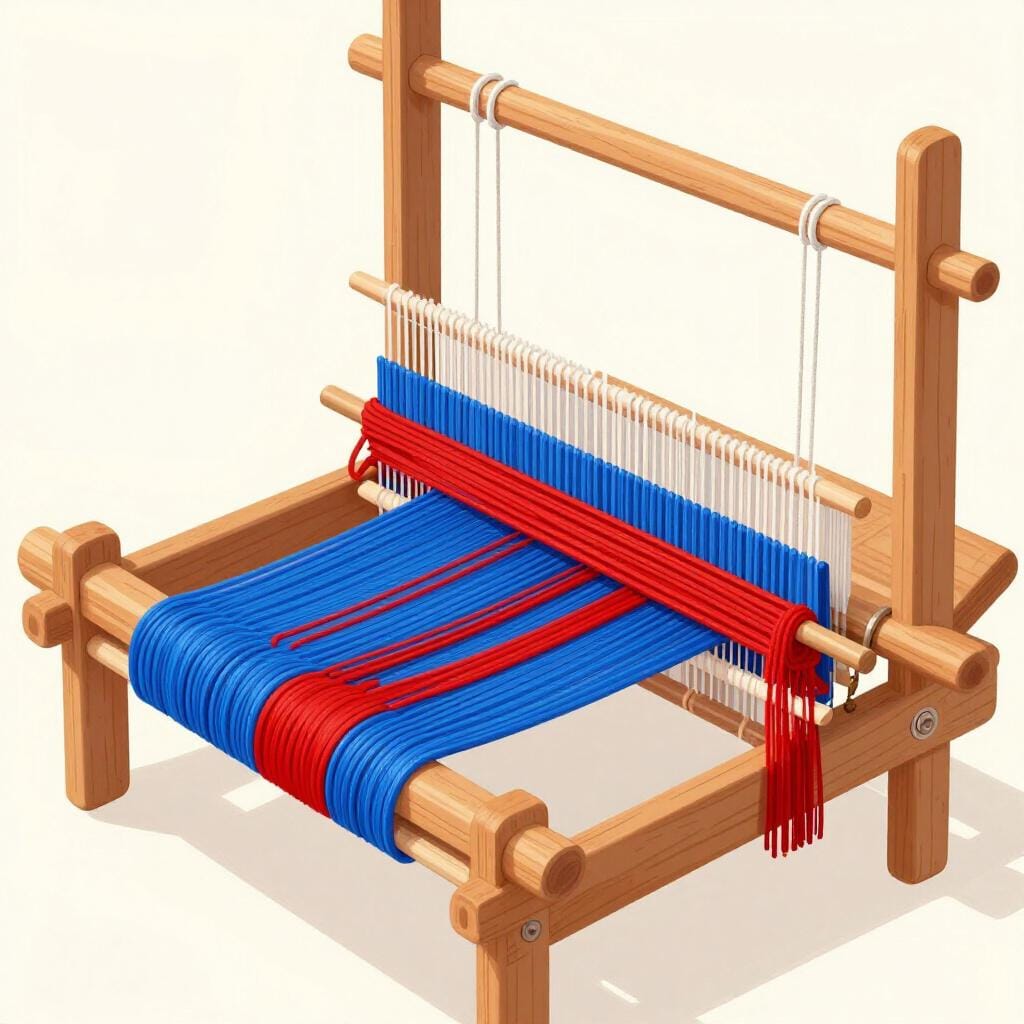
Use 'tramar' specifically when describing the physical process of interlacing threads, often on a loom, as in creating textiles or tapestries.
Learn more →te-HERteˈxeɾ

Examples
Mi abuela me teje un suéter de lana para el invierno.
My grandmother is knitting me a wool sweater for the winter.
Las arañas tejen sus telas con mucha paciencia.
Spiders weave their webs with a lot of patience.
Aprendí a tejer usando dos agujas largas.
I learned to knit using two long needles.
El autor supo tejer una historia llena de misterio.
The author knew how to weave a story full of mystery.
A Regular '-er' Verb
Tejer follows the normal rules for verbs ending in -er, just like 'comer.' You don't have to worry about weird spelling changes in the middle!
Consistent Spelling with 'j'
Unlike some verbs that switch between 'g' and 'j', tejer always keeps its 'j' in every form, like 'yo tejo' or 'que tú tejas.'
Using 'Tejer' for Abstract Ideas
Just like in English, you can 'weave' something that isn't physical, like a friendship or a secret plan.
Tejer vs. Coser
Mistake: “Using 'tejer' for sewing a button.”
Correction: Use 'coser' for sewing with a needle and thread. Use 'tejer' for creating fabric from yarn (knitting/weaving).
te-HERteˈxeɾ
Examples
El autor supo tejer una historia llena de misterio.
The author knew how to weave a story full of mystery.
Mi abuela me teje un suéter de lana para el invierno.
My grandmother is knitting me a wool sweater for the winter.
Las arañas tejen sus telas con mucha paciencia.
Spiders weave their webs with a lot of patience.
Aprendí a tejer usando dos agujas largas.
I learned to knit using two long needles.
A Regular '-er' Verb
Tejer follows the normal rules for verbs ending in -er, just like 'comer.' You don't have to worry about weird spelling changes in the middle!
Consistent Spelling with 'j'
Unlike some verbs that switch between 'g' and 'j', tejer always keeps its 'j' in every form, like 'yo tejo' or 'que tú tejas.'
Using 'Tejer' for Abstract Ideas
Just like in English, you can 'weave' something that isn't physical, like a friendship or a secret plan.
Tejer vs. Coser
Mistake: “Using 'tejer' for sewing a button.”
Correction: Use 'coser' for sewing with a needle and thread. Use 'tejer' for creating fabric from yarn (knitting/weaving).
tra-MARtɾaˈmaɾ
Examples
El artesano trama la seda para crear un tapiz.
The artisan weaves the silk to create a tapestry.
Es difícil tramar hilos tan finos a mano.
It is difficult to weave such fine threads by hand.
La máquina trama el algodón automáticamente.
The machine weaves the cotton automatically.
Specific Context
While 'tejer' is the general word for knitting or weaving, 'tramar' specifically refers to the horizontal threads (the weft) being passed through the vertical ones.
Overusing Tramar
Mistake: “Voy a tramar un suéter.”
Correction: Voy a tejer un suéter. Use 'tejer' for clothing; 'tramar' is mostly for the technical process of making the fabric itself.
General vs. Specific Weaving
Learners often overuse 'tejer' for all types of weaving. Remember that while 'tejer' covers knitting, crocheting, and figurative weaving, 'tramar' is the more precise term for the mechanical interlacing of threads on a loom.
Related Translations
Learn Spanish with Inklingo
Interactive stories, personalized learning, and more.