Koniugacja patinar Tryb warunkowy
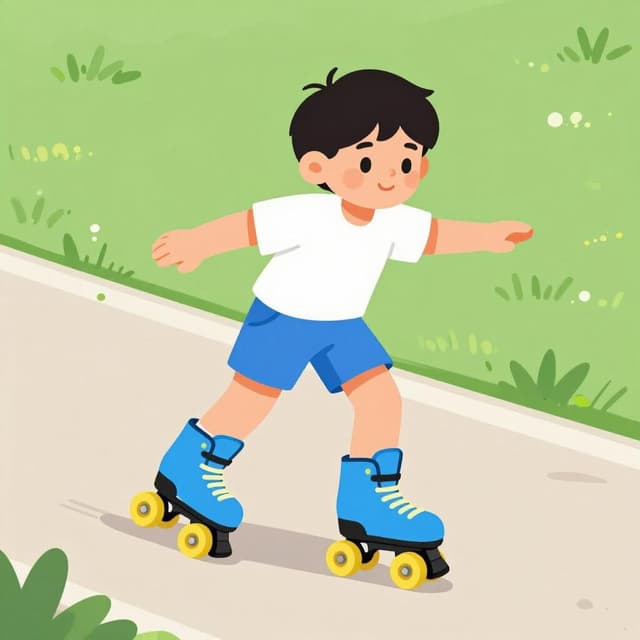
patinar — to skate
The conditional tense of patinar is: patinaría, patinarías, patinaría, patinaríamos, patinaríais, patinarían.
Formy patinar Tryb warunkowy
Kiedy używać Tryb warunkowy
Use the conditional for hypothetical situations ('I would skate'), polite requests ('Would you skate with me?'), or to express what someone would do in the past ('He said he would skate').
Uwagi dotyczące patinar w czasie Tryb warunkowy
Patinar is regular in the conditional tense. The stem is the infinitive 'patinar', and the endings are the standard conditional endings.
Przykładowe zdania
Yo patinaría si tuviera patines nuevos.
I would skate if I had new skates.
yo
¿Patinarías conmigo en la pista?
Would you skate with me at the rink?
tú
Ella dijo que patinaría con nosotros.
She said she would skate with us.
él/ella/usted
Ellos patinarían más si hiciera mejor tiempo.
They would skate more if the weather were better.
ellos/ellas/ustedes
Częste błędy
Błąd: Using the imperfect subjunctive 'patinara' instead of the conditional 'patinaría' for 'would'.
Poprawnie: Use 'patinaría' for the meaning of 'would skate' in hypothetical or polite contexts.
Dlaczego: The conditional expresses what is possible or likely under certain circumstances ('would'), while the imperfect subjunctive often expresses unreal or contrary-to-fact situations.
Błąd: Confusing 'patinaría' (yo/él/ella/usted) with 'patinarían' (ellos/ellas/ustedes).
Poprawnie: Add the '-n' for the plural form: 'patinarían'.
Dlaczego: This is a common error with regular verbs; the plural requires the final '-n'.
Opanuj hiszpańskie czasowniki w kontekście
Zapamiętywanie tabel to dopiero początek. Przeczytaj ponad 200 ilustrowanych i udźwiękowionych hiszpańskich historii, aby zobaczyć czasowniki takie jak 'patinar' używane naturalnie — w czasach, których się uczysz.
Powiązane czasy
Czas teraźniejszy
yo: patino
The present tense of patinar is: patino, patinas, patina, patinamos, patináis, patinan.
Czas przeszły prosty
yo: patiné
The preterite of patinar is regular: patiné, patinaste, patinó, patinamos, patinasteis, patinaron.
Czas przeszły niedokonany
yo: patinaba
The imperfect tense of patinar is: patinaba, patinabas, patinaba, patinábamos, patinabais, patinaban.
Czas przyszły
yo: patinaré
The future tense of patinar is: patinaré, patinarás, patinará, patinaremos, patinaréis, patinarán.
Tryb Subj. teraźniejszy
yo: patine
The present subjunctive of patinar is: patine (yo/él/ella/usted), patines (tú), patinemos (nosotros), patinéis (vosotros), patinen (ellos/ellas/ustedes).
Tryb Subj. przeszły niedokonany
yo: patinara
The imperfect subjunctive of patinar has two forms: patinara/patinaras/patinara/patináramos/patinarais/patinaran and patinase/patinases/patinase/patinásemos/patinaseis/patinasen.
Tryb rozkazujący (twierdzący)
yo: patina
The imperative of patinar is: patina (tú), patine (usted), patinemos (nosotros), patinad (vosotros), patinen (ustedes).
Tryb rozkazujący (przeczący)
yo: no patines
The negative imperative of patinar uses 'no' + present subjunctive: no patines (tú), no patine (usted), no patinemos (nosotros), no patinéis (vosotros), no patinen (ustedes).