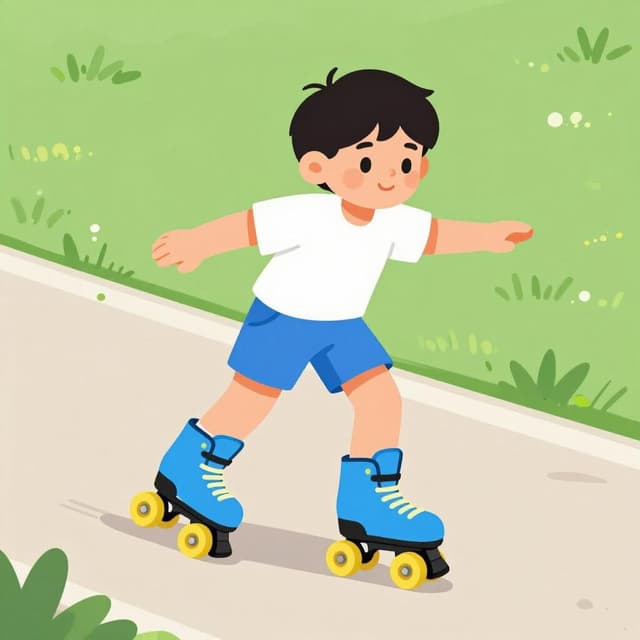
Koniugacja patinar Tryb rozkazujący (twierdzący)
patinar — to skate
The imperative of patinar is: patina (tú), patine (usted), patinemos (nosotros), patinad (vosotros), patinen (ustedes).
Formy patinar Tryb rozkazujący (twierdzący)
Kiedy używać Tryb rozkazujący (twierdzący)
Use the affirmative imperative to give direct commands or instructions. For 'patinar', it's telling someone to skate, like 'Skate!' or 'Let's skate!'
Uwagi dotyczące patinar w czasie Tryb rozkazujący (twierdzący)
Patinar is regular in the affirmative imperative. Note that the 'usted' and 'él/ella/usted' forms in the present subjunctive are used here for the usted command.
Przykładowe zdania
¡Patina con cuidado!
Skate carefully!
tú
Patinemos en el parque.
Let's skate in the park.
nosotros
¡Patinad con vuestros amigos!
Skate with your friends!
vosotros
Señora, patine por el carril derecho.
Ma'am, skate in the right lane.
usted
Częste błędy
Błąd: Using the infinitive 'patinar' for a command.
Poprawnie: Use the specific imperative form, like 'patina' for 'tú'.
Dlaczego: The infinitive is the base form of the verb and isn't used for direct commands.
Błąd: Confusing 'patina' (tú) with 'patine' (usted/subjunctive).
Poprawnie: For an informal command to one person, use 'patina'. For a formal command, use 'patine'.
Dlaczego: These are distinct forms with different uses and pronunciations.
Opanuj hiszpańskie czasowniki w kontekście
Zapamiętywanie tabel to dopiero początek. Przeczytaj ponad 200 ilustrowanych i udźwiękowionych hiszpańskich historii, aby zobaczyć czasowniki takie jak 'patinar' używane naturalnie — w czasach, których się uczysz.
Powiązane czasy
Czas teraźniejszy
yo: patino
The present tense of patinar is: patino, patinas, patina, patinamos, patináis, patinan.
Czas przeszły prosty
yo: patiné
The preterite of patinar is regular: patiné, patinaste, patinó, patinamos, patinasteis, patinaron.
Czas przeszły niedokonany
yo: patinaba
The imperfect tense of patinar is: patinaba, patinabas, patinaba, patinábamos, patinabais, patinaban.
Czas przyszły
yo: patinaré
The future tense of patinar is: patinaré, patinarás, patinará, patinaremos, patinaréis, patinarán.
Tryb warunkowy
yo: patinaría
The conditional tense of patinar is: patinaría, patinarías, patinaría, patinaríamos, patinaríais, patinarían.
Tryb Subj. teraźniejszy
yo: patine
The present subjunctive of patinar is: patine (yo/él/ella/usted), patines (tú), patinemos (nosotros), patinéis (vosotros), patinen (ellos/ellas/ustedes).
Tryb Subj. przeszły niedokonany
yo: patinara
The imperfect subjunctive of patinar has two forms: patinara/patinaras/patinara/patináramos/patinarais/patinaran and patinase/patinases/patinase/patinásemos/patinaseis/patinasen.
Tryb rozkazujący (przeczący)
yo: no patines
The negative imperative of patinar uses 'no' + present subjunctive: no patines (tú), no patine (usted), no patinemos (nosotros), no patinéis (vosotros), no patinen (ustedes).