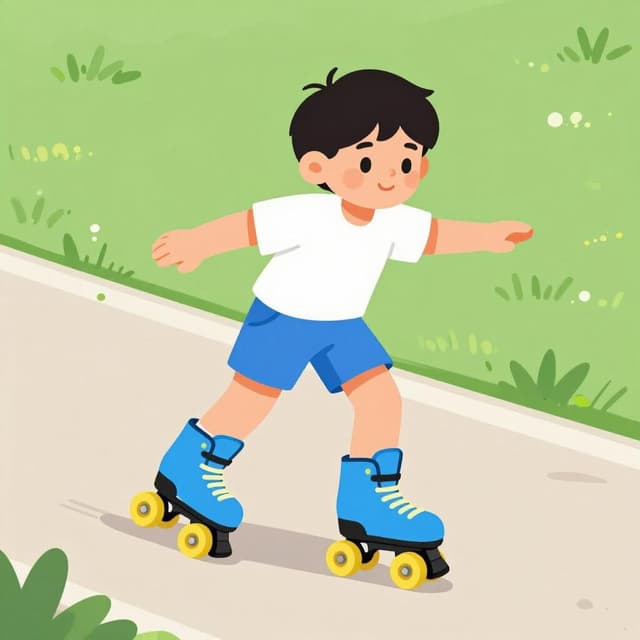
Koniugacja patinar Czas przeszły prosty
patinar — to skate
The preterite of patinar is regular: patiné, patinaste, patinó, patinamos, patinasteis, patinaron.
Formy patinar Czas przeszły prosty
Kiedy używać Czas przeszły prosty
Use the preterite to talk about the action of skating as a completed event in the past. For example, 'I skated yesterday' or 'They skated for an hour'.
Uwagi dotyczące patinar w czasie Czas przeszły prosty
Patinar is a regular -ar verb and follows the standard conjugation pattern in the preterite.
Przykładowe zdania
Ayer patiné en el parque.
Yesterday I skated in the park.
yo
¿Patinaste mucho cuando eras niño?
Did you skate a lot when you were a child?
tú
Ella patinó hasta que se cansó.
She skated until she got tired.
él/ella/usted
Mis amigos patinaron en la pista de hielo.
My friends skated on the ice rink.
ellos/ellas/ustedes
Częste błędy
Błąd: Using the imperfect 'patinaba' instead of the preterite 'patiné'.
Poprawnie: Use 'patiné' for a specific, completed action like 'I skated yesterday'.
Dlaczego: The preterite marks a single, finished event, while the imperfect describes ongoing or habitual past actions.
Błąd: Forgetting the accent on 'patinó' (él/ella/usted).
Poprawnie: The third-person singular preterite form 'patinó' needs an accent on the 'o'.
Dlaczego: The accent indicates the stress falls on the final syllable, distinguishing it from other verb forms.
Opanuj hiszpańskie czasowniki w kontekście
Zapamiętywanie tabel to dopiero początek. Przeczytaj ponad 200 ilustrowanych i udźwiękowionych hiszpańskich historii, aby zobaczyć czasowniki takie jak 'patinar' używane naturalnie — w czasach, których się uczysz.
Powiązane czasy
Czas teraźniejszy
yo: patino
The present tense of patinar is: patino, patinas, patina, patinamos, patináis, patinan.
Czas przeszły niedokonany
yo: patinaba
The imperfect tense of patinar is: patinaba, patinabas, patinaba, patinábamos, patinabais, patinaban.
Czas przyszły
yo: patinaré
The future tense of patinar is: patinaré, patinarás, patinará, patinaremos, patinaréis, patinarán.
Tryb warunkowy
yo: patinaría
The conditional tense of patinar is: patinaría, patinarías, patinaría, patinaríamos, patinaríais, patinarían.
Tryb Subj. teraźniejszy
yo: patine
The present subjunctive of patinar is: patine (yo/él/ella/usted), patines (tú), patinemos (nosotros), patinéis (vosotros), patinen (ellos/ellas/ustedes).
Tryb Subj. przeszły niedokonany
yo: patinara
The imperfect subjunctive of patinar has two forms: patinara/patinaras/patinara/patináramos/patinarais/patinaran and patinase/patinases/patinase/patinásemos/patinaseis/patinasen.
Tryb rozkazujący (twierdzący)
yo: patina
The imperative of patinar is: patina (tú), patine (usted), patinemos (nosotros), patinad (vosotros), patinen (ustedes).
Tryb rozkazujący (przeczący)
yo: no patines
The negative imperative of patinar uses 'no' + present subjunctive: no patines (tú), no patine (usted), no patinemos (nosotros), no patinéis (vosotros), no patinen (ustedes).