Koniugacja patinar Czas przyszły
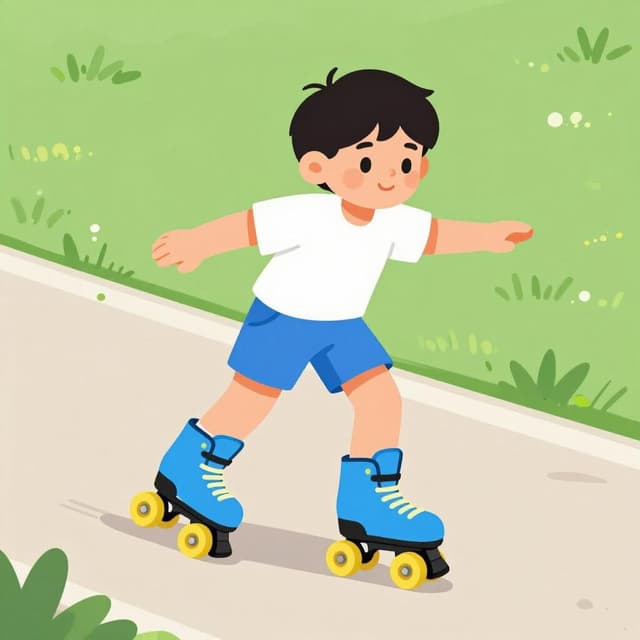
patinar — to skate
The future tense of patinar is: patinaré, patinarás, patinará, patinaremos, patinaréis, patinarán.
Formy patinar Czas przyszły
Kiedy używać Czas przyszły
Use the future tense to talk about actions that will happen. It can also express probability or conjecture, like 'He will probably skate' or 'I wonder if she skates'.
Uwagi dotyczące patinar w czasie Czas przyszły
Patinar is regular in the future tense. The stem is the infinitive 'patinar', and the endings are the standard future endings.
Przykładowe zdania
Mañana patinaré con mis amigos.
Tomorrow I will skate with my friends.
yo
¿Patinarás en la nueva pista?
Will you skate at the new rink?
tú
Él patinará en el campeonato este año.
He will skate in the championship this year.
él/ella/usted
Ellos patinarán más si practican.
They will skate more if they practice.
ellos/ellas/ustedes
Częste błędy
Błąd: Using the present tense 'patino' to express future actions.
Poprawnie: For definite future actions, use the future tense 'patinaré'.
Dlaczego: While the present can sometimes imply future, the explicit future tense is clearer and often required.
Błąd: Forgetting the accent on 'patinará' (él/ella/usted).
Poprawnie: The accent on the final 'á' is crucial for the third-person singular future form.
Dlaczego: The accent marks the stressed syllable and distinguishes it from other forms.
Opanuj hiszpańskie czasowniki w kontekście
Zapamiętywanie tabel to dopiero początek. Przeczytaj ponad 200 ilustrowanych i udźwiękowionych hiszpańskich historii, aby zobaczyć czasowniki takie jak 'patinar' używane naturalnie — w czasach, których się uczysz.
Powiązane czasy
Czas teraźniejszy
yo: patino
The present tense of patinar is: patino, patinas, patina, patinamos, patináis, patinan.
Czas przeszły prosty
yo: patiné
The preterite of patinar is regular: patiné, patinaste, patinó, patinamos, patinasteis, patinaron.
Czas przeszły niedokonany
yo: patinaba
The imperfect tense of patinar is: patinaba, patinabas, patinaba, patinábamos, patinabais, patinaban.
Tryb warunkowy
yo: patinaría
The conditional tense of patinar is: patinaría, patinarías, patinaría, patinaríamos, patinaríais, patinarían.
Tryb Subj. teraźniejszy
yo: patine
The present subjunctive of patinar is: patine (yo/él/ella/usted), patines (tú), patinemos (nosotros), patinéis (vosotros), patinen (ellos/ellas/ustedes).
Tryb Subj. przeszły niedokonany
yo: patinara
The imperfect subjunctive of patinar has two forms: patinara/patinaras/patinara/patináramos/patinarais/patinaran and patinase/patinases/patinase/patinásemos/patinaseis/patinasen.
Tryb rozkazujący (twierdzący)
yo: patina
The imperative of patinar is: patina (tú), patine (usted), patinemos (nosotros), patinad (vosotros), patinen (ustedes).
Tryb rozkazujący (przeczący)
yo: no patines
The negative imperative of patinar uses 'no' + present subjunctive: no patines (tú), no patine (usted), no patinemos (nosotros), no patinéis (vosotros), no patinen (ustedes).