Koniugacja patinar Tryb Subj. teraźniejszy
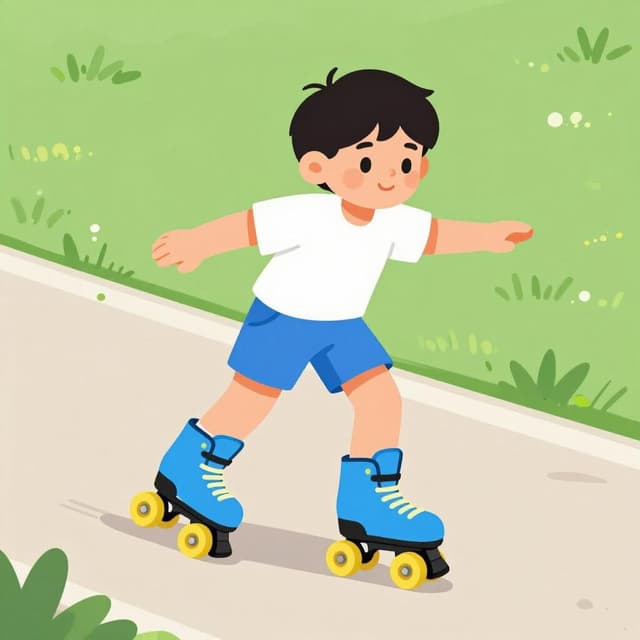
patinar — to skate
The present subjunctive of patinar is: patine (yo/él/ella/usted), patines (tú), patinemos (nosotros), patinéis (vosotros), patinen (ellos/ellas/ustedes).
Formy patinar Tryb Subj. teraźniejszy
Kiedy używać Tryb Subj. teraźniejszy
Use the present subjunctive after expressions of doubt, desire, emotion, or uncertainty, or in negative commands. For 'patinar', it's like 'I want you to skate' or 'It's unlikely that they skate'.
Uwagi dotyczące patinar w czasie Tryb Subj. teraźniejszy
Patinar is regular in the present subjunctive. The forms are derived from the 'yo' form of the present indicative ('patino').
Przykładowe zdania
Espero que patines bien.
I hope you skate well.
tú
Dudo que patinemos en el hielo sin caernos.
I doubt we will skate on the ice without falling.
nosotros
Quiero que ellos patinen en el campeonato.
I want them to skate in the championship.
ellos/ellas/ustedes
No creo que usted patine mucho.
I don't think you skate much.
Częste błędy
Błąd: Using the present indicative instead of the present subjunctive.
Poprawnie: After verbs of wishing, doubting, or emotion, use the present subjunctive, e.g., 'Espero que patines'.
Dlaczego: These trigger phrases require the subjunctive mood to express uncertainty or subjective feelings.
Błąd: Confusing 'patine' (yo/él/ella/usted) with 'patines' (tú).
Poprawnie: Remember the 's' at the end for the 'tú' form: 'patines'.
Dlaczego: The 's' is a key differentiator between the formal/third-person singular and the informal second-person singular.
Opanuj hiszpańskie czasowniki w kontekście
Zapamiętywanie tabel to dopiero początek. Przeczytaj ponad 200 ilustrowanych i udźwiękowionych hiszpańskich historii, aby zobaczyć czasowniki takie jak 'patinar' używane naturalnie — w czasach, których się uczysz.
Powiązane czasy
Czas teraźniejszy
yo: patino
The present tense of patinar is: patino, patinas, patina, patinamos, patináis, patinan.
Czas przeszły prosty
yo: patiné
The preterite of patinar is regular: patiné, patinaste, patinó, patinamos, patinasteis, patinaron.
Czas przeszły niedokonany
yo: patinaba
The imperfect tense of patinar is: patinaba, patinabas, patinaba, patinábamos, patinabais, patinaban.
Czas przyszły
yo: patinaré
The future tense of patinar is: patinaré, patinarás, patinará, patinaremos, patinaréis, patinarán.
Tryb warunkowy
yo: patinaría
The conditional tense of patinar is: patinaría, patinarías, patinaría, patinaríamos, patinaríais, patinarían.
Tryb Subj. przeszły niedokonany
yo: patinara
The imperfect subjunctive of patinar has two forms: patinara/patinaras/patinara/patináramos/patinarais/patinaran and patinase/patinases/patinase/patinásemos/patinaseis/patinasen.
Tryb rozkazujący (twierdzący)
yo: patina
The imperative of patinar is: patina (tú), patine (usted), patinemos (nosotros), patinad (vosotros), patinen (ustedes).
Tryb rozkazujący (przeczący)
yo: no patines
The negative imperative of patinar uses 'no' + present subjunctive: no patines (tú), no patine (usted), no patinemos (nosotros), no patinéis (vosotros), no patinen (ustedes).